
Key Takeaways
- Seattle is home to advanced fertility centers known for innovation and technology-driven treatment.
- Clinics offer comprehensive services including IVF, IUI, egg freezing, donor programs and surrogacy support.
- Costs in Seattle fall around the national average but vary based on protocols and add-ons.
- Clinic selection should be based on success rates, lab quality, physician expertise and patient experience.
- Strong support exists for single parents by choice and LGBTQ+ intended parents.
Seattle, Washington has quickly become a leading fertility destination on the West Coast. With a mix of top-tier research facilities, experienced reproductive endocrinologists, inclusive care models and robust third-party reproduction programs, the city offers exceptional support for anyone looking to build their family.
In this guide, we break down everything you need to know when searching for fertility clinics near you in Seattle — from treatment types to real patient experiences, costs, expert advice and key factors to consider before choosing a clinic.
Why Seattle Is a Growing Fertility Hub
Seattle clinics benefit from:
- Proximity to medical research and biotech innovation
- Highly trained embryology teams
- Strong fertility preservation culture
- Comprehensive donor and surrogacy resources
- Inclusive services for diverse families
The region is especially known for excellence in lab technology, cryopreservation and personalized embryo transfer protocols.
Common Fertility Services Offered in Seattle
1. IVF (In Vitro Fertilization)
Treatments include standard IVF, mild stimulation IVF, ICSI, assisted hatching and PGT (genetic testing).
2. IUI (Intrauterine Insemination)
A cost-effective first-step option for many individuals and couples.
3. Egg Freezing & Fertility Preservation
A strong choice for women pursuing career flexibility, medical preservation or future planning.
4. Donor Programs
Seattle clinics support:
- Egg donors
- Sperm donors
- Embryo donation
5. Surrogacy Support Services
Most clinics coordinate medical screening, legal referrals and gestational carrier cycles.
6. Male Fertility Diagnostics
Including DNA fragmentation testing, sperm retrieval and coordination with urologists.
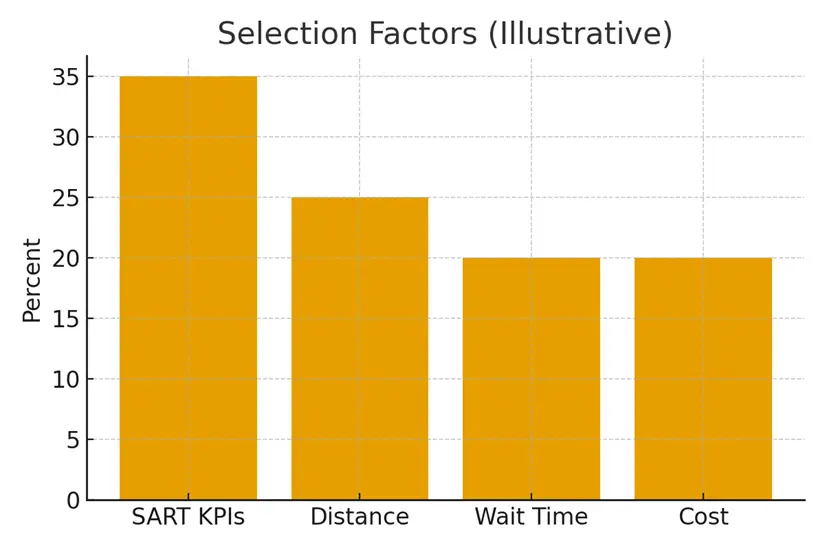
How to Evaluate Fertility Clinics in Seattle
1. Success Rates
Look at age-specific IVF outcomes, clinic-level lab performance and live birth rates per transfer.
2. Lab Quality
Time-lapse incubators, vitrification techniques and AI-driven embryo selection improve results.
3. Communication & Support
Fertility journeys are emotionally demanding — clinics with highly responsive teams offer better patient experience.
4. Cost Transparency
In Seattle, average costs include:
- IVF: $14,000–$21,000 per cycle
- IUI: $800–$1,600
- Egg Freezing: $8,000–$12,000
- Surrogacy Programs: Vary based on agency, donor cycles and carrier compensation
5. Inclusivity & Legal Knowledge
Washington State has supportive laws for third-party reproduction.
Case Study: “Laura’s Egg Freezing Success at Age 34”
Laura, a tech professional in Seattle, decided to freeze her eggs to preserve future options. After her consultation, she underwent ovarian reserve testing and started a personalized stimulation protocol.
Her clinic retrieved 20 mature eggs, giving her long-term flexibility and peace of mind. Laura credits the clinic’s transparency and nursing support for making the process stress-free.
Testimonials
1. Maya, Seattle, WA
“My clinic explained every step of IVF in detail. Their patient portal and communication were exceptional. I felt supported the whole way.”
2. Jonas & Christopher, Bellevue, WA
“As a same-sex couple pursuing surrogacy, we needed clarity. Our clinic helped coordinate donor selection and GC screenings — extremely inclusive and helpful.”
3. Jenna, Redmond, WA
“Egg freezing felt overwhelming at first, but the clinic’s team made it easy. The embryologists were patient and informative, and the entire process felt empowering.”
Expert Quote
“Seattle’s fertility ecosystem thrives on innovation. Patients benefit from advanced lab technology, thoughtful protocols and a culture of personalized care.”
— Dr. Rashmi Gulati
Related Links
- Fertility Clinics Near Me — Dallas–Fort Worth (TX)
- Fertility Clinics Near Me — San Francisco Bay Area (CA)
- Fertility Clinics Near Me — Boston (MA)
- Fertility Clinics Near Me — Washington, DC & NoVA
Glossary
ART: Assisted Reproductive Technology
PGT-A: Genetic testing for chromosomal abnormalities
FET: Frozen Embryo Transfer
ICSI: Intracytoplasmic Sperm Injection
GC: Gestational Carrier
AMH: Hormone used to estimate ovarian reserve
FAQ
Q. Are fertility clinics in Seattle known for high IVF success rates?
Ans. Yes. Seattle clinics often report strong outcomes, largely due to advanced lab systems and experienced embryologists. Success depends on individual factors like age, AMH levels and embryo quality.
Q. Does insurance cover fertility treatment in Washington?
Ans. Washington does not mandate IVF coverage, but many employers — especially in tech — offer comprehensive fertility benefits. It’s worth reviewing your policy in detail.
Q. Are Seattle clinics LGBTQ+ friendly?
Ans. Seattle is one of the most LGBTQ-inclusive fertility regions in the U.S., offering services like reciprocal IVF, donor sperm, donor eggs and surrogacy support.
Q. What should I expect during my first consultation?
Ans. You’ll review medical history, undergo testing (AMH, ultrasound, semen analysis) and receive a personalized treatment plan. Financial counseling is typically included.
Q. How long does an IVF cycle take?
Ans. A full IVF cycle, from diagnostics to transfer, lasts 6–8 weeks. If a frozen embryo transfer (FET) is planned, expect additional preparation time.
Q. Is egg freezing effective in Seattle clinics?
Ans. Yes. Clinics use fast-freeze vitrification technology, leading to higher survival rates when thawing eggs for future use.
Q. How is surrogacy handled in Washington State?
Ans. Washington supports gestational surrogacy under clear legal guidelines. Clinics often coordinate with legal experts and surrogacy agencies.
Q. What are the risks of IVF?
Ans. Common risks include ovarian hyperstimulation, multiple pregnancy (if multiple embryos are transferred) and procedural discomfort — all manageable with proper monitoring.
Q. Can men receive fertility treatment too?
Ans. Absolutely. Male fertility evaluations and specialized treatments like TESE or sperm DNA fragmentation testing are standard in many Seattle clinics.
Q. Are donor eggs a good option for older women?
Ans. Yes. Donor eggs significantly improve pregnancy rates for women over 40 or those with diminished ovarian reserve.
Q. How many cycles of IUI should I try before IVF?
Ans. Most specialists recommend 3–6 IUI cycles, depending on age and underlying fertility conditions.
Q. What makes Seattle clinics different from others in the U.S.?
Ans. The combination of advanced lab technology, biotech innovation, inclusive approaches and personalized care makes Seattle a standout fertility destination.
Ready to take the next step? Call Surrogacy4All at (212) 661-7673 or email info@surrogacy4all.com to book your consultation.

Dr. Kulsoom Baloch
Dr. Kulsoom Baloch is a dedicated donor coordinator at Egg Donors, leveraging her extensive background in medicine and public health. She holds an MBBS from Ziauddin University, Pakistan, and an MPH from Hofstra University, New York. With three years of clinical experience at prominent hospitals in Karachi, Pakistan, Dr. Baloch has honed her skills in patient care and medical research.
- Dr. Kulsoom Baloch

- Dr. Kulsoom Baloch
- Dr. Kulsoom Baloch
- Dr. Kulsoom Baloch