Quick Answer
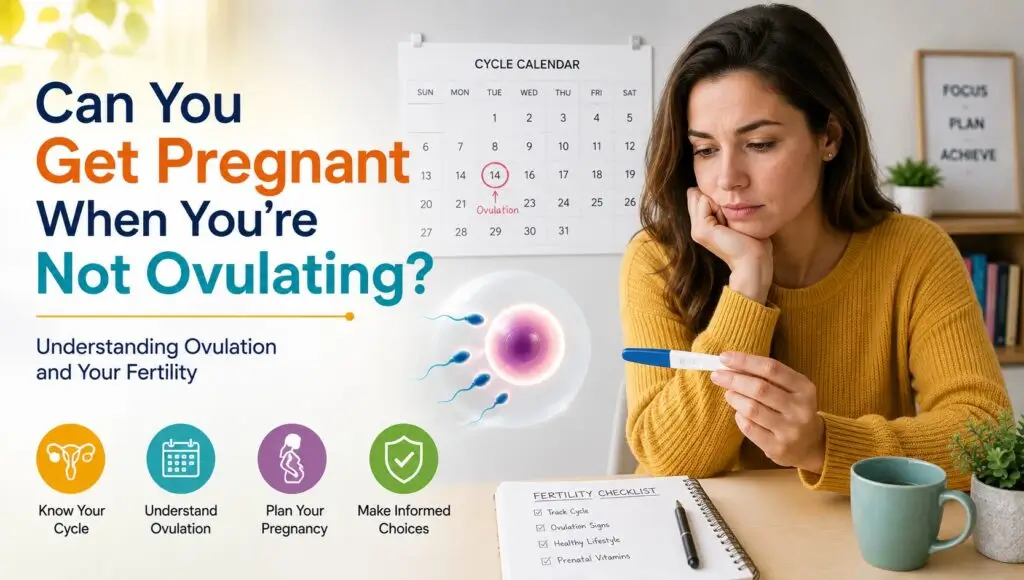
In most cases, can you get pregnant even without ovulating? The answer is no. Pregnancy requires the release of an egg during ovulation because sperm must meet an available egg for fertilization to happen. Without egg release, conception cannot occur.
However, knowing exactly when ovulation happens is not always simple. Many people may think they are not ovulating but may actually be experiencing unexpected ovulation, especially with irregular periods or changing menstrual cycles.
Why Ovulation Is Necessary for Pregnancy
Ovulation is the process when an ovary releases an egg that can potentially be fertilized by sperm. This usually happens once during each menstrual cycle.
For pregnancy to occur, sperm needs to meet the released egg during the fertile window. The egg typically survives for about 12–24 hours after ovulation, while sperm can remain in the reproductive system for several days.
Because of this timing, pregnancy is most likely when intercourse happens during the days leading up to ovulation and the day of egg release.
Can You Get Pregnant If You Think You’re Not Ovulating?
Many people wonder, can you get pregnant without ovulation, especially if they do not notice typical ovulation symptoms. The challenge is that ovulation is not always easy to identify.
Some reasons you may think you are not ovulating include:
- Your cycle length changes from month to month
- You are tracking fertile days incorrectly
- You do not notice common ovulation symptoms
- Your periods are irregular
People with irregular periods may still ovulate occasionally. This means pregnancy can happen even when ovulation timing feels unpredictable.
Factors such as stress, weight changes, illness, hormonal fluctuations, and certain medical conditions can also affect ovulation patterns.
Signs You May Not Be Ovulating
Some signs may suggest that ovulation is not happening regularly, including:
- Irregular periods or missing periods
- Lack of typical ovulation symptoms
- Very short or very long menstrual cycles
- Difficulty getting pregnant
Conditions such as polycystic ovary syndrome (PCOS), thyroid disorders, and other hormonal imbalances can affect egg release and fertility.
If you are concerned about your ovulation, tracking your menstrual cycle, observing body changes, or using ovulation tests may provide helpful information. A healthcare provider can also recommend appropriate fertility evaluations.
When Should You Talk to a Fertility Specialist?
If you are trying to conceive and pregnancy has not occurred, speaking with a fertility specialist may be helpful.
Generally, medical guidance is recommended if:
- You have been trying for 12 months without pregnancy
- You are age 35 or older and have been trying for 6 months
- You have very irregular periods or no periods
- You have concerns about ovulation or reproductive health
A fertility specialist can evaluate your individual situation and recommend testing or treatment options based on your needs.
Also Read:
The Bottom Line
So, is it possible to get pregnant without ovulating? Generally, pregnancy cannot happen without ovulation because there must be an egg available for fertilization. However, ovulation can be difficult to predict, particularly with irregular cycles.
Understanding your ovulation cycle is one of the most important steps toward understanding your fertility and making informed reproductive health decisions.
Medical Review:
This blog has been reviewed for medical accuracy by the Surrogacy4All fertility team. Our team provides expert guidance and support in reproductive health and fertility care.
Medical Disclaimer:
This blog is for educational purposes only and should not replace advice from a qualified healthcare professional. If you have concerns about fertility, ovulation, or pregnancy, consult a licensed medical provider.
Quick Answers About Getting Pregnant
Q. Can you only get pregnant during ovulation?
A. No. You are most likely to get pregnant around ovulation, but pregnancy can also happen from sex a few days before ovulation because sperm can stay alive inside the body for several days.
Q. Can you get pregnant if you’re not ovulating and on birth control?
A. It is very unlikely if your birth control is working properly. Many birth control methods prevent ovulation, but no method is 100% effective. Missing pills or incorrect use can increase the chance of pregnancy.
Q. Can you get pregnant when you’re not on your period?
A. Yes. You can get pregnant even when you are not on your period. If ovulation happens soon after sex, sperm may still be present and can fertilize the egg.
Q. Can you get pregnant after ovulating?
A. It is possible, but the chances are low. After ovulation, the egg only lives for about 12–24 hours. Pregnancy can happen if sperm meets the egg during this short time.
Q. Can I get pregnant without ovulation discharge?
A. Yes. Not everyone notices ovulation discharge. You may still be ovulating even if you do not see changes in cervical mucus.
Q. Can you get pregnant when you’re not ovulating after giving birth?
A. Yes. Ovulation can return before your first period after childbirth. This means pregnancy can happen even if your period has not started again. If you want to prevent pregnancy, talk to your healthcare provider about birth control options.

Dr. Kulsoom Baloch
Dr. Kulsoom Baloch is a dedicated donor coordinator at Egg Donors, leveraging her extensive background in medicine and public health. She holds an MBBS from Ziauddin University, Pakistan, and an MPH from Hofstra University, New York. With three years of clinical experience at prominent hospitals in Karachi, Pakistan, Dr. Baloch has honed her skills in patient care and medical research.
- Dr. Kulsoom Baloch

- Dr. Kulsoom Baloch
- Dr. Kulsoom Baloch
- Dr. Kulsoom Baloch