Quick Summary
How do ovulation tests work? Ovulation tests detect a rise in luteinizing hormone (LH) in urine, known as the LH surge, which usually happens 24–36 hours before ovulation. By identifying this hormone change, ovulation predictor kits help women find their fertile window and improve timing when trying to conceive.
- Ovulation tests detect the rise of luteinizing hormone (LH) before egg release.
- The LH surge usually happens 24–36 hours before ovulation.
- The fertile window includes the days before and shortly after ovulation.
- Ovulation tests can improve timing but cannot guarantee pregnancy.
- Women with irregular cycles or fertility concerns may benefit from professional guidance.
People Also Ask
- Do ovulation tests really work?
- Can I get pregnant after a positive ovulation test?
- How many days after an LH surge do you ovulate?
- Can an ovulation test be wrong?
- Should I test twice a day?
- Can PCOS affect ovulation tests?
- Can I drink water before testing?
- Which ovulation test is most accurate?
Many women trying to conceive wonder, how do ovulation tests work and whether these tests can really help them understand their fertility. Knowing when ovulation happens is one of the most important parts of pregnancy planning because conception depends on timing.
Each month, the female body goes through a menstrual cycle where hormones prepare an egg for release. When ovulation occurs, a mature egg leaves the ovary and can be fertilized for a short period. Understanding this process helps couples identify the best time for conception.
An ovulation test, also called an ovulation predictor kit (OPK), is designed to detect hormonal changes that happen before ovulation. These tests are commonly used by women who are trying to conceive naturally or tracking their fertility before starting fertility treatments.
This guide explains how ovulation tests work, how to use them correctly, how accurate they are, and what the results mean.
What Is an Ovulation Test?
An ovulation test is a home fertility test that detects changes in hormone levels related to ovulation.
Most ovulation tests look for luteinizing hormone (LH) in urine. LH is produced by the pituitary gland and plays a key role in triggering egg release from the ovary.
Before ovulation occurs, the body experiences a sudden increase in LH levels called the LH surge.
An ovulation predictor kit helps identify this surge so women can estimate when ovulation is likely to happen.
Common types of ovulation tests include:
- Ovulation test strips: Simple paper strips that detect LH in urine.
- Digital ovulation tests: Electronic tests that display results using symbols, such as a smiley face.
- Advanced fertility monitors: Devices that track multiple hormones for more detailed fertility information.
Unlike pregnancy tests, which detect hCG (human chorionic gonadotropin), ovulation tests measure LH changes.
How Do Ovulation Tests Work?
How Do Ovulation Tests Work by Detecting the LH Surge?
Ovulation tests work by identifying the increase in LH that happens before the egg is released.
The process happens in several steps:
1. Hormone levels change
During the first half of the menstrual cycle, estrogen levels gradually increase as an egg develops inside the ovary.
When the egg becomes mature, the body prepares for ovulation by releasing a large amount of LH.
2. The LH surge occurs
The LH surge is a rapid rise in luteinizing hormone levels.
This surge signals the ovary that it is time to release an egg.
Most women ovulate about:
24–36 hours after the LH surge begins.
3. The test detects LH in urine
When you use an ovulation test, the strip reacts with LH present in your urine.
If LH levels are high enough, the test shows a positive ovulation test result.
4. Ovulation happens
After the LH surge, the ovary releases an egg. This is called egg release or ovulation.
The egg usually survives for around 12–24 hours after release.
However, sperm can survive inside the female reproductive system for up to five days, which creates the fertile window.
What Does an LH Surge Mean?
An LH surge means your body is preparing for ovulation.
A positive ovulation test usually indicates that ovulation may happen soon. This is the time when pregnancy chances are highest because sperm can already be present when the egg is released.
The fertile window generally includes:
- Five days before ovulation
- The day of ovulation
- About one day after ovulation
Timing intercourse during this period can improve the chances of conception.
However, a positive test does not confirm that ovulation definitely occurred. Some women experience an LH surge without releasing an egg.
When Should You Start Using an Ovulation Test?
The best time to take an ovulation test depends on your menstrual cycle length.
A common method is to begin testing several days before your expected ovulation date.
| Cycle Length | Approximate Ovulation Day | Start Testing Around |
|---|---|---|
| 21 days | Day 7 | Day 5–6 |
| 28 days | Day 14 | Day 10–11 |
| 30 days | Day 16 | Day 12–13 |
| 35 days | Day 21 | Day 17–18 |
Women with irregular cycles may need longer fertility tracking because ovulation timing can change from month to month.
An ovulation calculator can provide an estimate, but an ovulation test gives more direct information about hormone changes.
How to Use Ovulation Test Strips Correctly
Many people ask how to use ovulation test strips properly. Following the instructions carefully improves accuracy.
Step-by-step guide:
Step 1: Choose the right testing day
Start testing before your expected fertile window.
Step 2: Test at the right time
The best time to take an ovulation test is usually between late morning and evening because LH often appears in urine after it rises in the blood.
Step 3: Avoid excessive fluids
Drinking too much water before testing can dilute urine and make LH harder to detect.
Step 4: Collect urine sample
Follow the instructions provided with your ovulation kit.
Step 5: Read the result
Wait for the recommended time and compare the lines or digital result.
Common mistakes to avoid:
- Testing too early in the cycle
- Testing only once when LH rises quickly
- Using diluted urine
- Reading results after the recommended time
- Not testing consistently
How to Read Ovulation Test Results
Understanding ovulation test results is important.
Positive Ovulation Test
A positive ovulation test usually means:
- LH levels have increased
- Ovulation may happen within 24–36 hours
- Fertility chances are higher
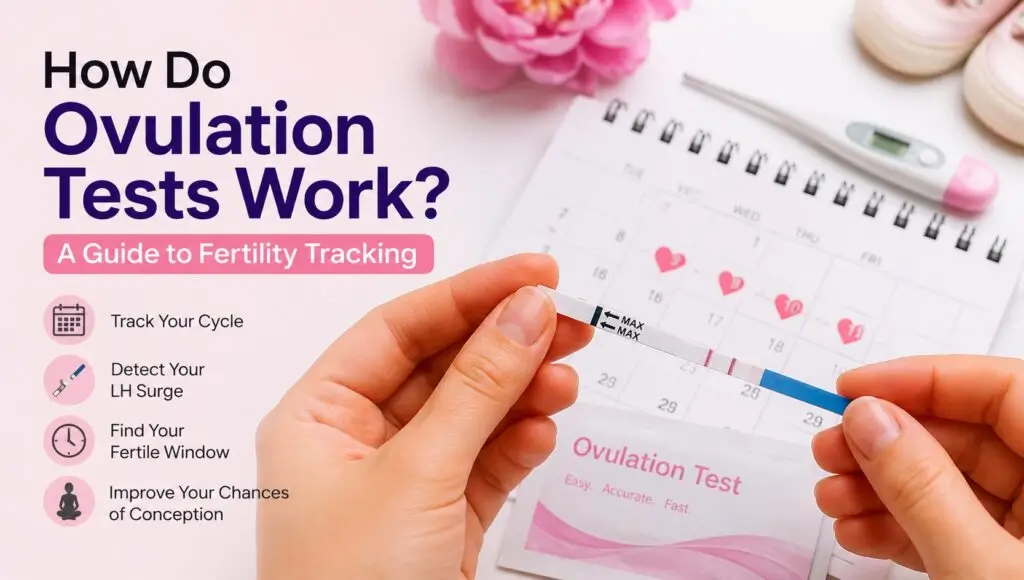
For strip tests, the test line should usually be as dark as or darker than the control line.
Negative Ovulation Test
A negative ovulation test means:
- LH surge has not been detected yet
- Ovulation may happen later
- Continue testing if you are within your fertile period
Faint Line on Ovulation Test
A faint line does not usually mean positive.
Small amounts of LH are normally present throughout the cycle. The test is positive only when LH reaches the required level.
Digital Ovulation Test Results
Digital ovulation tests may display:
- Empty circle = low fertility
- Smiley face = LH surge detected
The exact symbols depend on the brand.
How Accurate Are Ovulation Tests?
Many women ask, how accurate are ovulation tests?
When used correctly, ovulation tests are generally reliable for detecting the LH surge.
However, accuracy depends on:
- Correct timing
- Proper usage
- Individual hormone patterns
- Menstrual cycle regularity
Ovulation tests have limitations because they detect hormone changes, not actual egg release.
Factors that may affect results include:
- Polycystic ovary syndrome (PCOS)
- Hormonal disorders
- Certain fertility medications
- Irregular ovulation
Common Reasons for False Ovulation Test Results
PCOS
Women with PCOS may have higher or fluctuating LH levels, which can make ovulation test results difficult to interpret.
Testing Too Early
Testing before LH rises may produce a negative result.
Testing Too Late
Some women have short LH surges. Testing only once daily may miss the peak.
Fertility Medications
Some medications contain hormones that may affect test results.
Diluted Urine
Large amounts of fluid before testing may reduce hormone concentration.
Can Ovulation Tests Detect Pregnancy?
A common question is: can ovulation tests detect pregnancy?
The answer is no.
Ovulation tests detect:
- LH (luteinizing hormone)
Pregnancy tests detect:
- hCG (human chorionic gonadotropin)
These hormones are different.
Sometimes ovulation tests may show a positive result during pregnancy because hCG can occasionally interact with LH tests. However, ovulation tests should never replace pregnancy tests.
Also Read:
Ovulation Tests vs Ovulation Calculators
| Feature | Ovulation Test | Ovulation Calculator |
|---|---|---|
| Measures hormones | Yes | No |
| Uses cycle history | Sometimes | Yes |
| Detects LH surge | Yes | No |
| Accuracy | Higher | Estimate only |
| Best for | Active conception planning | General tracking |
Ovulation Tests vs Basal Body Temperature
| Feature | Ovulation Test | Basal Body Temperature |
|---|---|---|
| Predicts ovulation | Yes | Usually confirms after ovulation |
| Measures | LH hormone | Body temperature changes |
| Requires daily tracking | No | Yes |
| Useful for | Finding fertile window | Understanding cycle patterns |
Who Should Use Ovulation Tests?
Ovulation tests may be helpful for:
- Couples trying to conceive
- Women tracking fertility naturally
- Women with predictable cycles
- People preparing for fertility treatment
They can provide useful information about menstrual cycle patterns and ovulation timing.
Tips for Getting the Most Accurate Results
Follow these practical tips:
- Test at the same time each day.
- Track your menstrual cycle.
- Combine tests with fertility awareness methods.
- Avoid drinking excessive fluids before testing.
- Consider testing twice daily if you have a short LH surge.
- Record your ovulation test results.
When Should You See a Fertility Specialist?
Ovulation tests can help with fertility tracking, but they cannot diagnose all fertility problems.
Consider speaking with a fertility specialist if:
- You are under 35 and have tried for 12 months without pregnancy.
- You are over 35 and have tried for 6 months.
- Your periods are very irregular.
- You rarely get positive ovulation tests.
- You have a history of reproductive health concerns.
A fertility specialist can evaluate ovulation, hormone levels, egg health, sperm factors, and other causes affecting conception.
Frequently Asked Questions
Q. Can You Get Pregnant When You’re Not Ovulating?
A. Yes, pregnancy can happen if you have sex a few days before ovulation, but not after the fertile window has passed. Sperm can survive inside the female reproductive tract for up to 5 days, waiting for the egg to be released. Pregnancy is most likely when intercourse happens during the fertile window before and around ovulation.
Q. How Soon After Ovulation Can You Take a Pregnancy Test?
A. You can take a pregnancy test about 10–14 days after ovulation for the most accurate result. Some early detection tests may work slightly earlier, but testing too soon can result in a false negative because pregnancy hormone (hCG) levels may not be high enough to detect.
Q. What Does Ovulation Pain Feel Like?
A. Ovulation pain usually feels like mild cramping, pressure, or a sharp ache on one side of the lower abdomen. Some women describe it as a pulling or twinge-like sensation that happens when an egg is released from the ovary.
Q. How Many Days Post Ovulation Can You Take a Pregnancy Test?
A. Most pregnancy tests are reliable around 14 days after ovulation, which is usually the time your period is expected. Testing earlier, such as 7–10 days after ovulation, may not provide an accurate result because implantation and hCG production may not have occurred yet.
Q. Is It Normal to Spot During Ovulation?
A. Yes, light spotting during ovulation can be normal for some women. Ovulation spotting may happen because of temporary hormone changes, especially when estrogen levels shift around the time an egg is released. Heavy bleeding or painful spotting should be discussed with a healthcare provider.
Q. How Long Do Ovulation Cramps Last?
A. Ovulation cramps usually last a few minutes to a few hours, but some women may experience discomfort for up to one or two days. The duration varies depending on the individual and the cause of the pain.
Q. Is Ovulation Before or After Your Period?
A. Ovulation usually happens about 12–16 days before your next period, not immediately after your period. In a typical 28-day menstrual cycle, ovulation often occurs around day 14, but the timing can vary between women.
Q. When Should You See a Fertility Specialist?
A. If you have been trying to conceive without success, have irregular ovulation, or are unsure about your fertility health, it may be helpful to consult a fertility specialist. Organizations like Surrogacy4All help intended parents understand fertility options, including surrogacy and assisted reproductive solutions, with guidance throughout the process.
Conclusion
Understanding how do ovulation tests work can help women take control of fertility tracking and better understand their menstrual cycle. These tests identify the LH surge that usually happens before ovulation, helping couples find their most fertile days when trying to conceive.
An ovulation test is a useful tool for pregnancy planning, but it is only one part of understanding female fertility. Cycle tracking, awareness of ovulation symptoms, and medical guidance can provide a clearer picture of reproductive health.
If you have irregular cycles, difficulty identifying ovulation, or concerns about conception, consulting a qualified fertility specialist can help you find the right next steps.

Dr. Kulsoom Baloch
Dr. Kulsoom Baloch is a dedicated donor coordinator at Egg Donors, leveraging her extensive background in medicine and public health. She holds an MBBS from Ziauddin University, Pakistan, and an MPH from Hofstra University, New York. With three years of clinical experience at prominent hospitals in Karachi, Pakistan, Dr. Baloch has honed her skills in patient care and medical research.
- Dr. Kulsoom Baloch

- Dr. Kulsoom Baloch
- Dr. Kulsoom Baloch
- Dr. Kulsoom Baloch