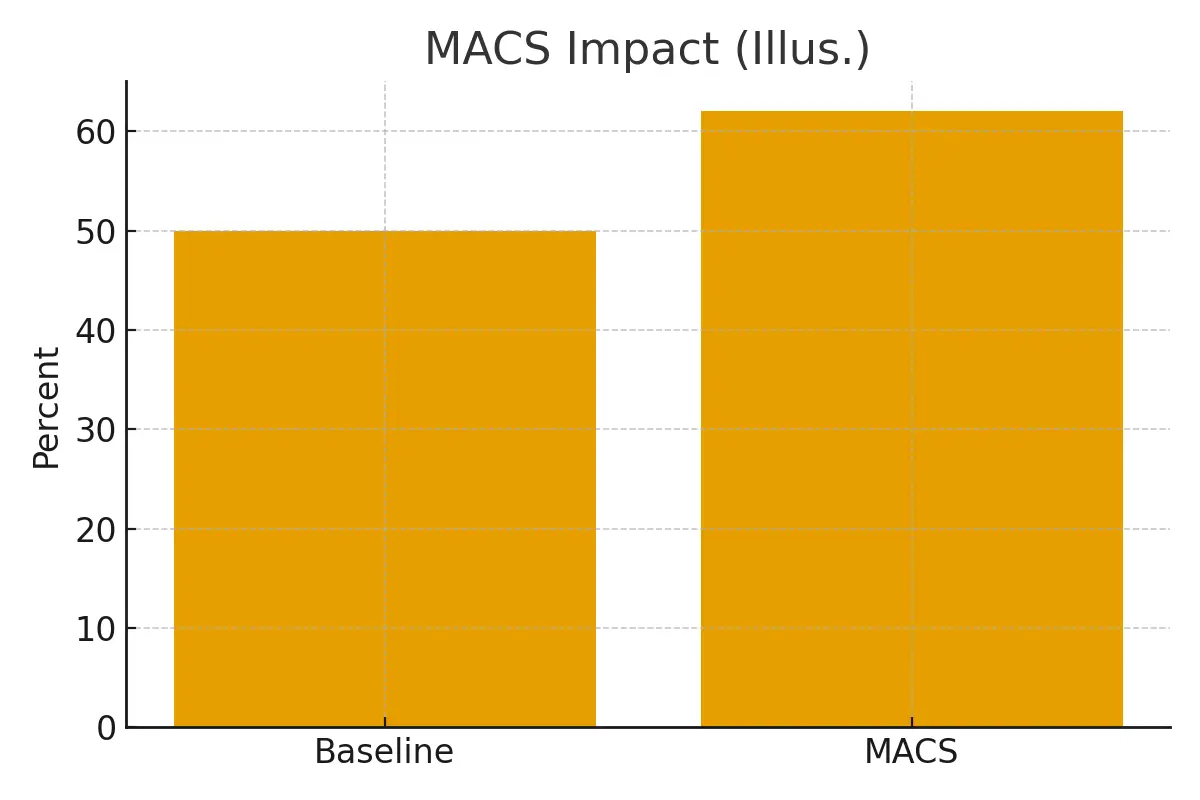
Key Takeaways
- MACS separates healthy sperm from those with DNA damage
- Particularly helpful for male-factor infertility and recurrent IVF failure
- Supports better embryo development and implantation
- Safe for embryos and gestational surrogates
- Often used alongside ICSI in advanced IVF cycles
Advancements in IVF laboratory technology continue to improve outcomes for intended parents and gestational surrogates. One such innovation is Magnetic-Activated Cell Sorting (MACS)—a sperm-selection technique designed to remove sperm with damaged DNA before fertilization.
For intended parents, MACS offers improved embryo potential. For surrogates, it supports safer pregnancies by increasing the likelihood of healthy embryo development. This dual guide explains what MACS is, how it works, and when it is most beneficial in IVF and surrogacy cycles.
What Is Magnetic-Activated Cell Sorting (MACS)?
MACS is a laboratory technique that uses magnetic particles and antibodies to separate sperm based on cell health.
How MACS Works
- Damaged or apoptotic (dying) sperm express specific surface markers
- These sperm bind to magnetic beads
- A magnetic field removes compromised sperm
- Only healthy, intact sperm remain for fertilization
Why Sperm DNA Quality Matters
Impact on IVF Outcomes
Sperm with DNA fragmentation can:
- Reduce fertilization rates
- Lead to poor embryo quality
- Increase miscarriage risk
- Affect implantation success
MACS helps minimize these risks by selecting sperm with intact DNA.
MACS vs Conventional Sperm Selection
Traditional IVF/ICSI
- Sperm chosen based on motility and morphology
- Limited insight into DNA health
MACS-Enhanced Selection
- Filters out DNA-damaged sperm
- Improves genetic integrity
- Complements ICSI rather than replacing it
Who Benefits Most from MACS?
MACS Is Often Recommended When:
- Male-factor infertility is diagnosed
- High sperm DNA fragmentation is present
- Previous IVF cycles failed
- Recurrent pregnancy loss occurred
- Poor embryo development was observed
When MACS May Not Be Needed
- First-time IVF with normal sperm parameters
- Use of screened donor sperm
Role of MACS in Gestational Surrogacy
In surrogacy cycles, embryo quality directly affects surrogate safety and pregnancy success. MACS:
- Enhances embryo implantation potential
- Reduces risks associated with genetic abnormalities
- Supports healthier gestational outcomes
This creates confidence for both surrogates and intended parents.
Case Study
Background:
An intended parent couple experienced three failed IVF cycles due to high sperm DNA fragmentation.
Intervention:
The clinic incorporated MACS with ICSI for sperm preparation.
Outcome:
- Improved blastocyst development
- Successful embryo transfer into a gestational surrogate
- Healthy full-term delivery
Testimonials
Intended Parent – UK
“MACS gave us hope after years of failed cycles. It was the missing piece in our surrogacy journey.”
Gestational Surrogate – USA
“Knowing the embryos were carefully screened helped me feel confident throughout the pregnancy.”
Fertility Laboratory Specialist
“MACS allows us to remove compromised sperm and work with the healthiest cells possible.”
Expert Quote
“Magnetic-Activated Cell Sorting is especially valuable for patients with high sperm DNA fragmentation and repeated IVF failure.”
— Dr. Rohan Malhotra, Senior Embryologist
Related Links
- IVF and Surrogacy Process
- Male-Factor Infertility Solutions
- Advanced IVF Laboratory Techniques
- Embryo Grading and Development
Glossary
- MACS: Magnetic-Activated Cell Sorting
- Apoptosis: Programmed cell death
- DNA Fragmentation: Breaks or damage in sperm DNA
- ICSI: Intracytoplasmic Sperm Injection
- Blastocyst: An embryo developed for transfer or freezing
Frequently Asked Questions (FAQ)
Q. Is MACS safe for embryos?
Ans : Yes. MACS is a non-invasive lab technique that does not harm sperm or embryos.
Q. Does MACS guarantee IVF success?
Ans : No technique guarantees success, but MACS can improve outcomes in selected cases.
Q. Is MACS used with ICSI?
Ans : Yes. MACS is typically combined with ICSI.
Q. Can MACS reduce miscarriage risk?
Ans : It may lower miscarriage risk linked to sperm DNA damage.
Q. Is MACS expensive?
Ans : MACS involves an additional lab cost that varies by clinic.
Q. Is MACS helpful for unexplained infertility?
Ans : It can be beneficial when hidden sperm DNA issues are suspected.
Q. Is MACS needed for donor sperm?
Ans : Usually not, as donor sperm undergoes extensive screening.
Q. Does MACS affect embryo gender?
Ans : No. MACS does not influence sex selection.
Q. Can MACS improve frozen embryo outcomes?
Ans : Yes, by improving embryo quality at creation.
Q. Are there risks for gestational surrogates?
Ans : No additional risks are posed to surrogates.
Q. How long does MACS take in the lab?
Ans : The process adds minimal time to standard sperm preparation.
Q. Who decides if MACS is needed?
Ans : A fertility specialist evaluates sperm testing and IVF history.

Dr. Kulsoom Baloch
Dr. Kulsoom Baloch is a dedicated donor coordinator at Egg Donors, leveraging her extensive background in medicine and public health. She holds an MBBS from Ziauddin University, Pakistan, and an MPH from Hofstra University, New York. With three years of clinical experience at prominent hospitals in Karachi, Pakistan, Dr. Baloch has honed her skills in patient care and medical research.
- Dr. Kulsoom Baloch

- Dr. Kulsoom Baloch
- Dr. Kulsoom Baloch
- Dr. Kulsoom Baloch