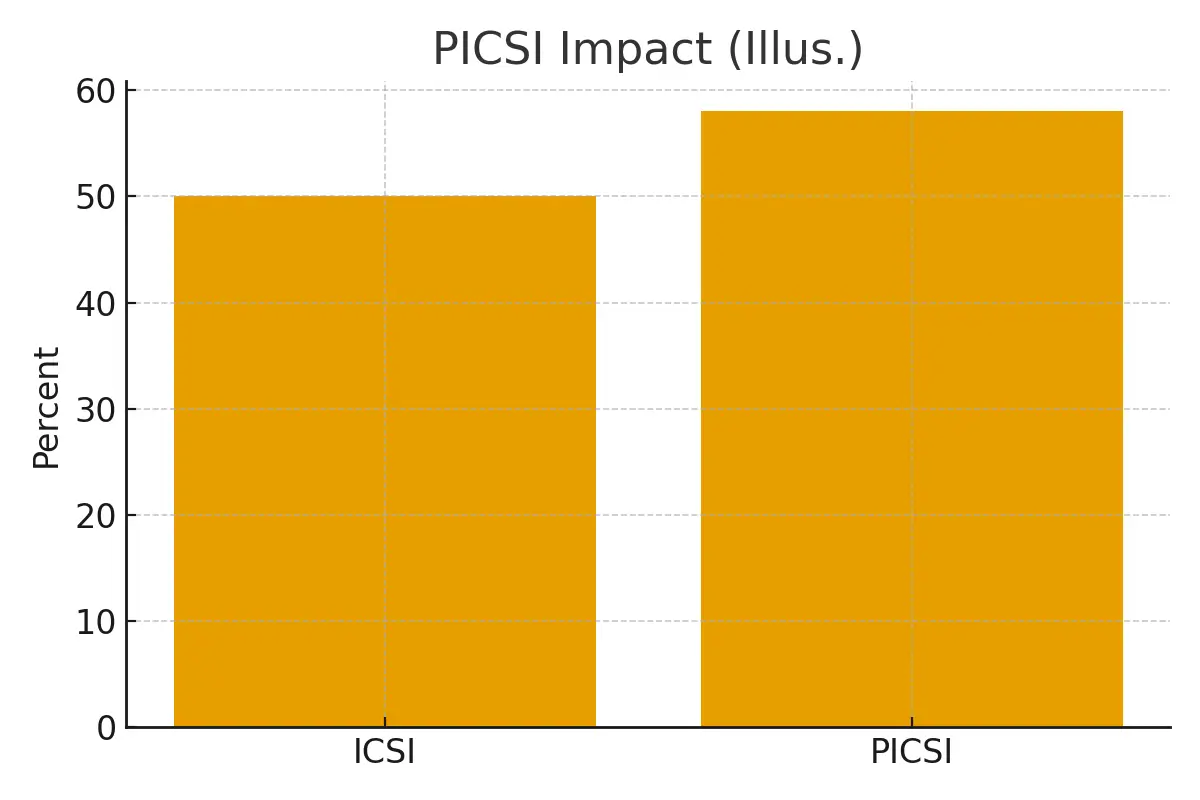
Key Takeaways
- PICSI uses hyaluronic acid to select more mature, genetically healthier sperm
- It may reduce miscarriage risk linked to sperm DNA damage
- PICSI is especially helpful for male-factor infertility
- The process is safe for embryos and gestational carriers
- Not every IVF case requires PICSI, but it can improve outcomes in specific situations
In vitro fertilization (IVF) continues to evolve, offering advanced technologies designed to improve embryo quality and pregnancy success. One such innovation is Hyaluronic Acid Binding, commonly known as PICSI (Physiological Intracytoplasmic Sperm Injection).
For intended parents, PICSI can mean higher confidence in sperm selection. For gestational surrogates, it supports healthier embryo development—an essential factor in a safe and successful pregnancy.
This dual guide explains what PICSI is, how it works, who benefits most, and why it matters in surrogacy-based IVF journeys.
What Is Hyaluronic Acid Binding (PICSI)?
PICSI is an advanced sperm-selection method used during IVF. Instead of choosing sperm solely based on appearance and movement, embryologists select sperm that can naturally bind to hyaluronic acid (HA)—a substance found in the female reproductive tract and the outer layer of the egg.
Why Hyaluronic Acid Matters
Hyaluronic acid binding is a biological marker of sperm maturity. Sperm that bind to HA are more likely to:
- Be fully developed
- Have intact DNA
- Carry fewer chromosomal abnormalities
PICSI vs Traditional ICSI
Traditional ICSI
- Sperm chosen visually
- Focus on motility and shape
- Does not assess DNA integrity
PICSI
- Sperm selected based on natural biological behavior
- Mimics natural fertilization conditions
- Adds an extra layer of quality control
Who Should Consider PICSI?
PICSI May Be Recommended If:
- There is male-factor infertility
- High sperm DNA fragmentation is present
- Previous IVF cycles failed
- There were unexplained miscarriages
- Embryo quality was consistently poor
When PICSI May Not Be Necessary
- Young patients with strong sperm parameters
- First-time IVF with no known male-factor issues
A fertility specialist determines whether PICSI adds value to a specific treatment plan.
PICSI in Surrogacy IVF Cycles
For gestational surrogacy, embryo quality is critical. PICSI helps ensure embryos transferred to a surrogate:
- Have stronger implantation potential
- Reduce the risk of early pregnancy loss
- Support healthier fetal development
- This benefits both intended parents and surrogates, reinforcing safety and success.
Case Study
Background:
An intended parent couple experienced two failed IVF cycles using standard ICSI. Male-partner testing revealed elevated sperm DNA fragmentation.
Intervention:
Their clinic introduced PICSI for sperm selection during the next IVF cycle.
Outcome:
- Higher-quality blastocysts formed
- One embryo transfer into a gestational surrogate
- Resulted in a full-term, healthy pregnancy
Testimonials
Intended Parent – USA
“After learning about PICSI, we finally understood why previous cycles failed. It made all the difference in our surrogacy journey.”
Gestational Surrogate – Canada
“Knowing the embryos were carefully selected gave me confidence and peace of mind throughout the pregnancy.”
Embryology Lab Coordinator
“PICSI helps us select sperm with better genetic potential—it’s an important tool, not a replacement for good clinical judgment.”
Expert Quote
“Hyaluronic acid binding reflects natural sperm maturity and can reduce the risk of fertilizing eggs with genetically compromised sperm.”
— Dr. Ananya Mehra, Reproductive Endocrinologist
Related Links
- IVF Process in Surrogacy
- Male-Factor Infertility Treatments
- Embryo Development & Grading
- Gestational Surrogate Medical Screening
Glossary
- Hyaluronic Acid (HA): A naturally occurring substance in the reproductive tract
- PICSI: Physiological Intracytoplasmic Sperm Injection
- ICSI: Direct injection of sperm into an egg
- Sperm DNA Fragmentation: Damage within sperm genetic material
- Blastocyst: An embryo 5–6 days after fertilization
Frequently Asked Questions (FAQ)
Q. Is PICSI safe for embryos?
Ans : Yes. PICSI does not damage sperm or eggs and uses a naturally occurring biological process.
Q. Does PICSI guarantee IVF success?
Ans : No IVF method guarantees success, but PICSI may improve outcomes in specific cases.
Q. Is PICSI expensive?
Ans : PICSI usually involves an additional lab fee, but costs vary by clinic.
Q. Can PICSI reduce miscarriage risk?
Ans : It may lower miscarriage risk related to sperm DNA damage.
Q. Is PICSI necessary for all IVF cycles?
Ans : No. It’s recommended selectively based on fertility diagnosis.
Q. Does PICSI affect gender selection?
Ans : No. PICSI does not influence embryo sex.
Q. Is PICSI useful in donor sperm cases?
Ans : Usually not required, as donor sperm is already highly screened.
Q. Does PICSI replace genetic testing (PGT)?
Ans : No. PICSI and PGT serve different purposes and may be used together.
Q. Is PICSI suitable for gestational surrogacy?
Ans : Yes, especially when embryo quality optimization is a priority.
Q. How long does the PICSI process take?
Ans : It adds minimal time to standard ICSI procedures.
Q. Are there any risks for surrogates?
Ans : No additional risks are posed to gestational carriers.
Q. How do I know if PICSI is right for me?
Ans : A fertility specialist can assess sperm parameters and IVF history to decide.

Dr. Kulsoom Baloch
Dr. Kulsoom Baloch is a dedicated donor coordinator at Egg Donors, leveraging her extensive background in medicine and public health. She holds an MBBS from Ziauddin University, Pakistan, and an MPH from Hofstra University, New York. With three years of clinical experience at prominent hospitals in Karachi, Pakistan, Dr. Baloch has honed her skills in patient care and medical research.
- Dr. Kulsoom Baloch

- Dr. Kulsoom Baloch
- Dr. Kulsoom Baloch
- Dr. Kulsoom Baloch