AI Quick Summary
- A surrogate is a woman who carries and gives birth to a baby for intended parents who cannot or choose not to carry a pregnancy themselves.
- In most modern surrogacy journeys, a gestational surrogate carries an IVF-created embryo and usually does not have a genetic connection with the baby.
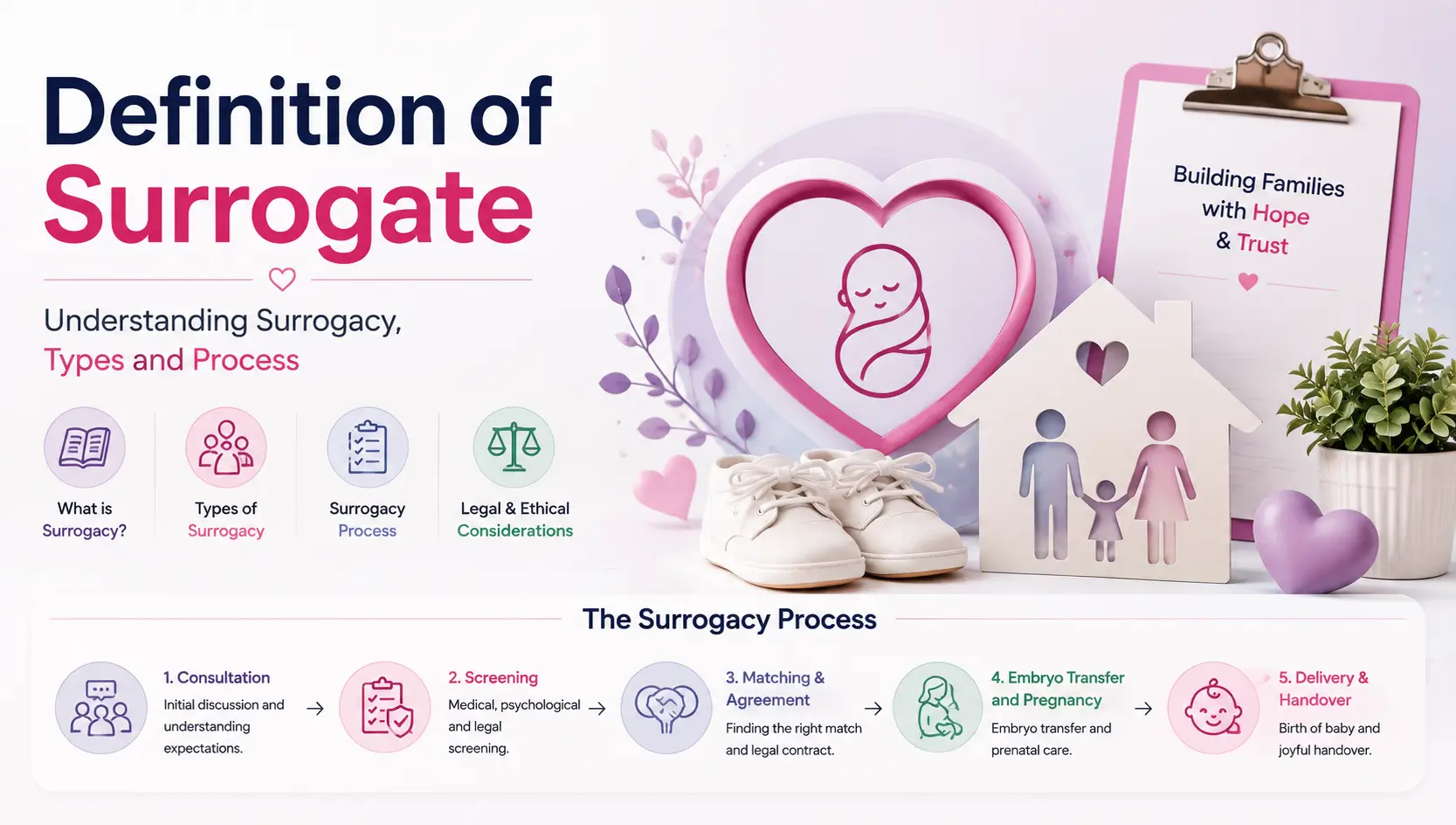
- The surrogacy process involves several steps, including consultation, surrogate matching, medical screening, IVF embryo transfer, pregnancy support, and birth.
- There are two main types of surrogacy: gestational surrogacy, where the surrogate does not provide the egg, and traditional surrogacy, where the surrogate has a genetic connection with the baby.
- Surrogacy helps different types of intended parents, including people facing infertility, individuals unable to carry a pregnancy, same-sex couples, and those exploring single-parent surrogacy.
- A successful surrogacy journey is built on medical care, emotional support, trust, and communication between intended parents, surrogates, and fertility professionals.
Overview: What Is the Definition of Surrogate?
The surrogate meaning is often explained simply as a woman who carries a baby for another person or couple who are unable to carry a pregnancy themselves. These individuals or couples are known as intended parents.
In modern fertility care, a surrogate is usually a gestational surrogate or gestational carrier who carries a pregnancy created through in vitro fertilization (IVF). The embryo is created using the egg and sperm of the intended parents or donors, which means the surrogate typically does not have a genetic connection with the baby.
However, the meaning of being a surrogate goes beyond carrying a pregnancy. A surrogate plays an important role in helping individuals and couples experience the journey of parenthood when pregnancy may not be possible for them.
Surrogacy combines medical science, emotional support, careful planning, and a strong partnership between the surrogate and intended parents.
What Is a Surrogate Mother?
Many people search for surrogate mother meaning, but fertility professionals today often use terms such as:
- Surrogate
- Gestational surrogate
- Gestational carrier
Basically, the term “surrogate mother” was commonly used in the past, especially when traditional surrogacy was more common. Today, most surrogacy journeys involve gestational surrogacy, where the surrogate carries the baby but does not provide the egg.
Using modern terminology helps clearly explain the difference between:
- The woman carrying the pregnancy
- The intended parents who will raise the child
How Does Surrogacy Work?
The surrogacy process involves several important steps that combine fertility treatment, medical care, legal preparation, and emotional support.
Step 1: Initial Consultation
The journey begins with understanding the goals and needs of intended parents.
During consultation, families learn about:
- Available fertility options
- Surrogacy requirements
- Medical considerations
- Expected timeline
- Important decisions throughout the process
Step 2: Finding a Surrogate Match
Finding the right match is one of the most meaningful parts of the journey.
A successful match is based on:
- Shared expectations
- Communication preferences
- Personal values
- Comfort level between both parties
The goal is to create a relationship built on trust and respect.
Step 3: Medical Screening and IVF Process
Before pregnancy, the surrogate completes medical evaluations to ensure she is physically prepared for the journey.
The IVF process involves:
- Creating embryos in a fertility laboratory
- Preparing the surrogate’s uterus for embryo transfer
- Transferring the embryo into the surrogate’s uterus
- Monitoring pregnancy progress
Step 4: Pregnancy and Support
During pregnancy, the surrogate receives ongoing medical care and support.
The journey may include:
- Regular medical appointments
- Communication with intended parents
- Emotional support
- Pregnancy monitoring
Every journey is unique, & support is designed around the needs of everyone involved.
Step 5: Birth and Parenthood
After delivery, the baby goes home with the intended parents.
The surrogate completes her incredible role by helping bring a new life into the world and supporting another family’s dream of becoming parents.
Types of Surrogacy Explained
Understanding the different types of surrogacy helps clarify the full meaning.
1. Gestational Surrogacy
Gestational surrogacy is the most common type of surrogacy today.
In this process:
- The surrogate carries an embryo created through IVF
- The surrogate does not provide the egg
- The surrogate usually has no genetic relationship with the baby
The embryo may be created using:
- Intended mother’s egg
- Intended father’s sperm
- Donor egg
- Donor sperm
This separation between pregnancy & genetics makes gestational surrogacy the preferred approach for many families.
2. Traditional Surrogacy
Traditional surrogacy is when the surrogate provides her own egg and carries the pregnancy.
This means:
- The surrogate has a genetic connection with the baby
- Fertilization involves the surrogate’s egg
Because of the genetic relationship involved, traditional surrogacy can involve additional emotional and legal considerations.
Today, most professional surrogacy programs focus on gestational surrogacy.
Surrogate vs Egg Donor: Understanding the Difference
Many people confuse a surrogate with an egg donor, but their roles are different.
| Surrogate | Egg Donor |
| Carries the pregnancy | Provides eggs |
| Experiences pregnancy and childbirth | Does not carry pregnancy |
| Helps complete the family-building journey | Helps create embryos |
| May have no genetic relationship with baby | Provides genetic material |
A surrogate helps carry a pregnancy, while an egg donor contributes genetic material used during fertility treatment.
Is a Surrogate Biologically Related to the Baby?
This is one of the most common questions about surrogate meaning.
The answer depends on the type of surrogacy.
Gestational Surrogacy
In gestational surrogacy:
- The surrogate does not provide the egg
- She does not share DNA with the baby
- She carries the pregnancy for intended parents
Traditional Surrogacy
In traditional surrogacy:
- The surrogate provides her own egg
- She has a genetic connection with the baby
Most modern surrogacy journeys use gestational surrogacy because it clearly separates the role of pregnancy carrier from genetic parenthood.
Who Needs a Surrogate?
Surrogacy can help different types of intended parents who face challenges with pregnancy.
People Experiencing Infertility
Some individuals and couples turn to surrogacy after facing difficulties with conception or pregnancy.
Women Unable to Carry a Pregnancy
Certain medical conditions may make pregnancy unsafe or impossible.
Surrogacy can provide another path toward parenthood.
Same-Sex Couples
Surrogacy allows many same-sex couples to have a biological connection with their child.
Single Parents
Individuals who want to become parents can explore single parent surrogacy as a family-building option when they need an alternative path to achieve their dream of having a child
Who Can Become a Surrogate?
Becoming a surrogate requires careful consideration and screening.
A potential surrogate generally needs to demonstrate:
- Good overall health
- Previous successful pregnancy experience
- Emotional readiness
- Commitment to the process
- Ability to complete medical evaluations
The purpose of screening is to protect the health and well-being of:
- The surrogate
- The baby
- The intended parents
Different Types of Surrogates
Surrogates can also be categorized based on their relationship and arrangement.
Agency Surrogate
An agency surrogate works with a professional surrogacy organization that provides:
- Matching support
- Guidance
- Coordination
- Resources throughout the journey
Independent Surrogate
An independent surrogate manages the journey without an agency.
This may require arranging:
- Medical coordination
- Legal support
- Communication
- Matching process
Compensated Surrogate
A compensated surrogate receives payment for the time, commitment, and physical requirements involved in the journey.
Altruistic Surrogate
An altruistic surrogate chooses to help another person or family without receiving compensation beyond approved expenses.
Meaning of Surrogate Mother: Understanding Emotional Journey
Surrogacy is not only a medical process. It is a deeply personal journey.
| For Intended Parents | For Surrogates |
| Hope after years of uncertainty – Surrogacy can provide a new path toward parenthood for individuals and couples who have faced challenges with pregnancy. | Helping another family experience parenthood – Surrogates play an important role in helping intended parents achieve their dream of building a family. |
| The opportunity to become parents – Surrogacy allows individuals & couples to experience the journey of raising a child and creating a loving family. | Making a meaningful impact – A surrogate’s decision can create a lasting positive impact on another family’s life. |
| The ability to build a biological family – For many intended parents, surrogacy provides an opportunity to have a child with a genetic connection. | Being part of a unique life journey – Surrogacy offers an emotional and rewarding experience built on compassion, trust, and support. |
Successful surrogacy depends on compassion, communication, and respect between everyone involved.
Common Questions About Surrogate
Q. What is the simple meaning of surrogate?
A. A surrogate is a woman who carries a pregnancy and gives birth to a baby for intended parents.
Q. What does surrogate mean in pregnancy?
A. A surrogate pregnancy means a woman carries a baby for another person or couple, usually through an IVF-created embryo.
Q. Does a surrogate share DNA with the baby?
A. In gestational surrogacy, the surrogate usually does not share DNA with the baby because she does not provide the egg.
Q. How does a surrogate become pregnant?
A. Most surrogacy pregnancies happen through IVF, where an embryo is transferred into the surrogate’s uterus.
Q. Is a surrogate the baby’s mother?
A. A surrogate carries the pregnancy, but in gestational surrogacy, the intended parents are the child’s parents.
Begin Your Surrogacy Journey With Surrogacy4All
Our experienced team helps intended parents and surrogates navigate every stage of the journey with clarity, care, and confidence.
Your path to building a family starts with understanding your options.
Connect with Surrogacy4All today to learn more about your surrogacy journey.

Dr. Veera Saghar
As an Egg Donor Coordinator, she plays a critical role in our company. Her background as a medical graduate from ISRA UNIVERSITY in Pakistan provides us with a solid foundation in the medical sciences. She has seven years of clinical experience practicing in the USA. This has given her firsthand experience when collaborating with patients and their families.
She is responsible for managing the process of egg donation from start to finish. We identify and screen potential egg donors.
- Dr. Veera Saghar

- Dr. Veera Saghar
- Dr. Veera Saghar
- Dr. Veera Saghar