AI Smart Summary
- Yes, pregnancy during your period is possible, but the chances are usually lower.
- Your pregnancy chances depend on ovulation timing, cycle length, and sperm survival.
- Short cycles, early ovulation, or longer periods can increase the possibility of conception.
- Understanding your fertility window helps you better plan or understand your pregnancy journey.
- If conception is difficult, fertility specialists can help explore available options.
Overview
Many people believe that getting pregnant during a period is impossible. However, the reality is that you can get pregnant on your period, although the chances are usually lower compared with the days around ovulation.
Pregnancy does not depend only on whether you are bleeding. It depends on several factors, including your menstrual cycle length, the timing of ovulation, & how long sperm can survive inside the reproductive system.
Every person’s cycle is different. While some people have predictable cycles, others may experience changes in ovulation timing due to hormonal fluctuations, stress, health conditions, or lifestyle factors.
Understanding your fertility window can help you make informed decisions about conception, pregnancy planning, and your reproductive health.
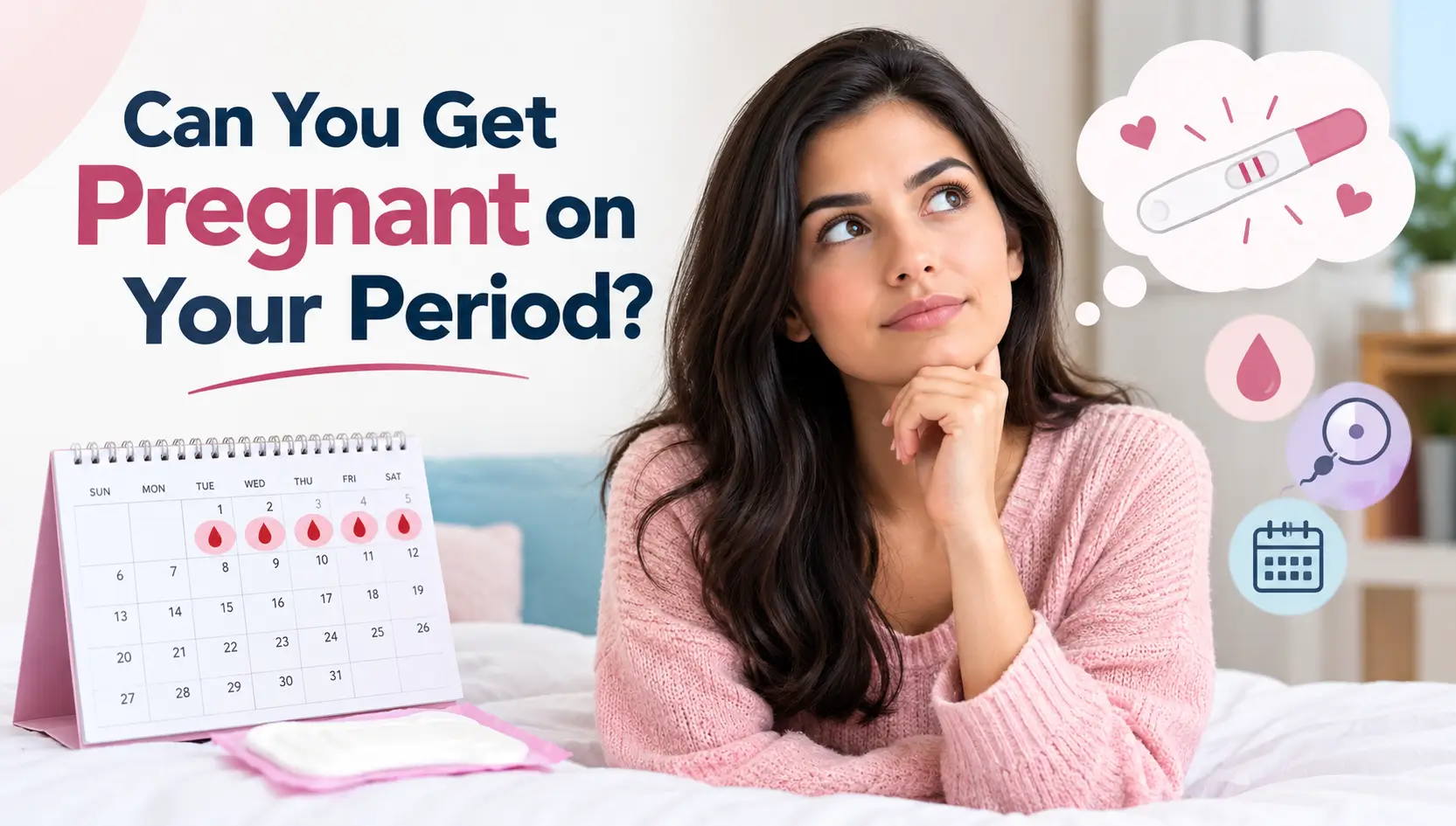
Can You Get Pregnant on Your Period?
Yes, pregnancy during your period is possible, although it is less common.
During menstruation, your body is shedding the lining of the uterus after an egg from the previous cycle was not fertilized. In many cases, ovulation happens later in the cycle, which makes pregnancy less likely during bleeding.
However, pregnancy can still happen if:
- You have a shorter menstrual cycle
- You ovulate earlier than expected
- Your period lasts longer than usual
- You have intercourse near the end of your period
- Sperm remains alive until ovulation occurs
Sperm can survive inside the reproductive tract for several days. If ovulation happens shortly after your period ends, sperm from intercourse during your period may still be present when an egg is released.
This is why pregnancy during a period is considered unlikely but not impossible.
How Can Pregnancy Happen During Your Period?
To understand how pregnancy can occur during menstruation, it helps to understand how conception happens.
Pregnancy occurs when sperm fertilizes an egg released during ovulation. The timing of ovulation varies from person to person and may not happen on the exact same day every month.
For example, someone with a shorter cycle may ovulate soon after their period ends. If they have intercourse during the later days of menstruation, sperm may survive long enough to fertilize an egg.
Several factors can influence this possibility:
Short Menstrual Cycles
People with shorter cycles may ovulate earlier than expected. Since sperm can survive for several days, intercourse during a period may overlap with the fertile window.
Early Ovulation
Some people naturally ovulate earlier in their cycle. This can make pregnancy possible shortly after menstruation.
Longer Periods
If bleeding continues for several days and ovulation happens soon afterward, there may be a greater chance that sperm remains present when an egg is released.
What Is the Fertility Window?
The fertility window is the period of time when pregnancy is most likely to occur.
It generally includes:
- The five days before ovulation
- The day of ovulation
- A short period after ovulation
This happens because sperm can survive inside the reproductive system for several days, while an egg remains available for fertilization for a limited time after it is released.
Understanding your fertility window can be helpful if you are trying to conceive because timing plays an important role in achieving pregnancy.
Can You Get Pregnant on the First Day of Your Period?
The chance of pregnancy on the first day of your period is usually very low.
At this stage, your body is typically beginning a new menstrual cycle, and ovulation has usually not occurred yet. However, cycle patterns can vary.
People who have:
- Very short cycles
- Irregular periods
- Unexpected changes in ovulation timing
may have different fertility patterns than expected.
Because every person’s reproductive cycle is unique, pregnancy cannot be ruled out completely based only on the timing of bleeding.
Can You Get Pregnant on the Last Day of Your Period?
The possibility of pregnancy is generally higher on the last day of your period compared with the first few days.
This is because the end of menstruation may be closer to the fertile window, especially for people who:
- Have shorter cycles
- Ovulate soon after their period
- Experience longer menstrual bleeding
For example, if someone finishes their period and ovulates a few days later, sperm from intercourse near the end of menstruation may still survive until the egg is released.
Can Bleeding Be Mistaken for a Period?
Not all vaginal bleeding is necessarily a menstrual period.
Some people experience bleeding or spotting due to different reasons, including hormonal changes or changes around ovulation.
If someone assumes they are having a period but the bleeding is related to another part of their cycle, their actual chance of pregnancy may be different than expected.
If you experience unusual bleeding, missed periods, or pregnancy symptoms, it is best to speak with a healthcare professional for proper evaluation.
Pregnancy Chances During Different Cycle Stages (Create a table below)
| Cycle Stage | Pregnancy Possibility |
| First days of period | Very low |
| Last days of period | Low but possible |
| Days before ovulation | Higher |
| Ovulation period | Highest |
How Soon After Your Period Can You Get Pregnant?
Some people can become pregnant shortly after their period ends, especially if they have shorter cycles.
Your chances of conception increase as you move closer to ovulation because this is when the body enters its most fertile stage.
Factors that affect fertility after your period include:
- Age
- Hormone levels
- Menstrual cycle patterns
- Ovulation timing
- Overall reproductive health
Tracking your cycle and understanding your body’s fertility signs can help you identify your most fertile days.
What Are the Signs You May Be in Your Fertile Window?
Some common signs that may indicate ovulation is approaching include:
- Changes in cervical mucus
- Mild pelvic discomfort
- Increased sexual desire
- Slight changes in basal body temperature
- Positive ovulation test results
However, not everyone experiences noticeable signs, and fertility patterns can vary from month to month.
Can You Get Pregnant If You Have Irregular Periods?
Yes, pregnancy can still happen with irregular periods.
In fact, irregular cycles can make it more difficult to predict ovulation because the fertile window may change from one month to another.
Factors that may affect cycle regularity include:
- Hormonal changes
- Polycystic ovary syndrome (PCOS)
- Stress
- Weight changes
- Certain medical conditions
If you are trying to conceive and have irregular cycles, a fertility specialist can help evaluate your reproductive health and provide guidance.
When Should You Consider Fertility Support?
Understanding your fertility window is an important part of the conception journey, but pregnancy depends on many factors.
If you have been trying to conceive without success, a fertility evaluation can help identify possible challenges and available options.
A fertility specialist may assess:
- Ovulation patterns
- Egg health
- Hormone levels
- Uterine health
- Sperm health
- Overall reproductive factors
For individuals and couples who need additional support, options such as IVF, egg donation, and gestational surrogacy may help create a pathway toward building a family.
At Surrogacy4All, we support intended parents by providing guidance throughout their fertility journey and helping them understand available family-building options based on their unique needs.
People Also Asked
Q. Is it safe to assume you cannot get pregnant during your period?
A. No. While the chances are lower, pregnancy is still possible because ovulation timing can vary.
Q. How many days after your period can you get pregnant?
A. Some people can become pregnant shortly after their period ends, especially if they have shorter cycles and ovulate earlier.
Q. Can sperm survive during your period?
A. Yes. Sperm can remain alive inside the reproductive tract for several days after intercourse.
Q. When is the best time to get pregnant?
A. The highest chance of conception usually occurs during the fertile window around ovulation.
Q. How can I track my fertile days?
A. You can track fertility by monitoring your menstrual cycle, changes in cervical mucus, ovulation tests, and other fertility signs.
Q. Can irregular periods affect my chances of getting pregnant?
A. Yes. Irregular periods can make ovulation harder to predict, which may affect the timing of conception.
Q. Can an ovulation calculator tell me the best days to get pregnant?
A. Yes, an ovulation calculator can help estimate your fertile days and identify when pregnancy is more likely, but it provides an estimate since ovulation timing can vary.
Q. Should I see a fertility specialist if I am struggling to conceive?
A. If pregnancy has not happened after consistent attempts, consulting a fertility specialist can help identify possible causes and discuss available options.

Dr. Veera Saghar
As an Egg Donor Coordinator, she plays a critical role in our company. Her background as a medical graduate from ISRA UNIVERSITY in Pakistan provides us with a solid foundation in the medical sciences. She has seven years of clinical experience practicing in the USA. This has given her firsthand experience when collaborating with patients and their families.
She is responsible for managing the process of egg donation from start to finish. We identify and screen potential egg donors.
- Dr. Veera Saghar

- Dr. Veera Saghar
- Dr. Veera Saghar
- Dr. Veera Saghar