Choosing where to begin a surrogacy journey is one of the most important decisions intended parents and surrogates will make. While medical care and agency support matter, state laws can significantly affect the experience. Some states provide clear legal protections and established parentage procedures, while others have more limited guidance.
Because surrogacy laws vary across the country, understanding the legal environment before starting can help avoid delays, confusion, and unnecessary expenses. This guide explores several states commonly discussed in the surrogacy community and highlights key factors intended parents should consider when evaluating their options.
What Makes a State Surrogacy-Friendly?
A surrogacy-friendly state generally offers:
- Clear legal recognition of surrogacy agreements
- Established parentage procedures
- Access to fertility clinics and reproductive specialists
- Experienced surrogacy attorneys
- Supportive court systems
- Predictable legal outcomes
While every situation is unique, these factors often make the process smoother for both intended parents and surrogates.
Most Surrogacy-Friendly States for Intended Parents
Surrogacy in New York
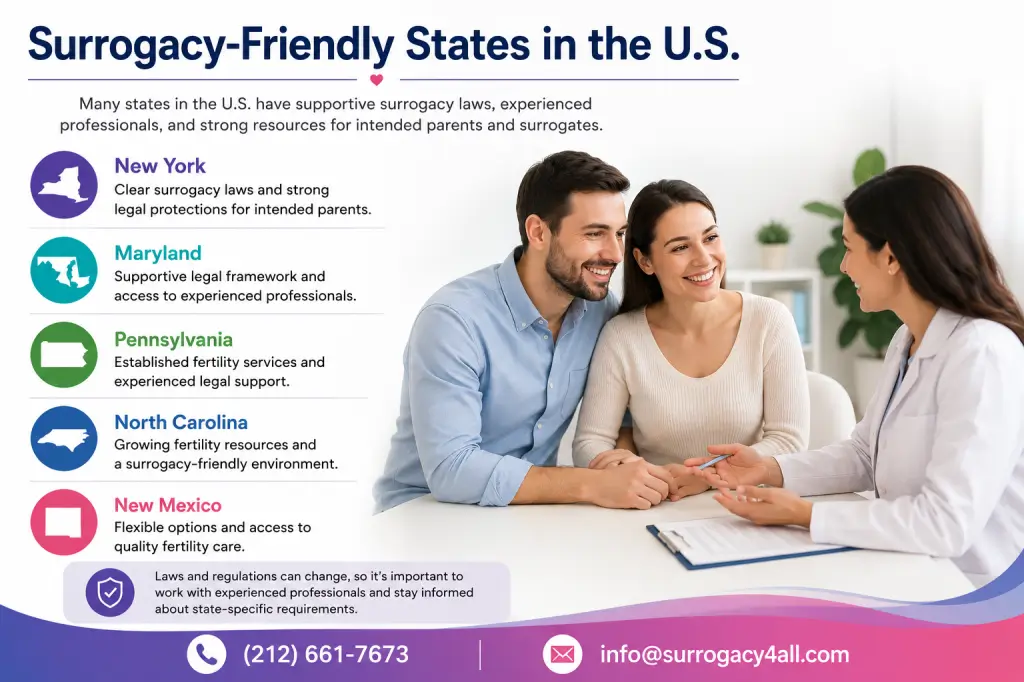
Surrogacy in New York has become an increasingly popular option for intended parents due to its modern legal framework and regulated protections. The state offers clear guidelines for gestational surrogacy arrangements, helping create a more structured and secure process.
Surrogacy in Idaho
Surrogacy in Idaho can be an option for intended parents seeking a less populated state with growing access to fertility services. Because legal guidance may vary by situation, professional legal consultation is especially important before moving forward.
Surrogacy in Kansas
Surrogacy in Kansas is often discussed because the state has historically allowed surrogacy arrangements without extensive statutory restrictions. Intended parents should still work with experienced attorneys to ensure proper legal protections.
Surrogacy in Pennsylvania
Surrogacy in Pennsylvania remains a common choice due to its established fertility community and experienced legal professionals. Many intended parents appreciate the state’s familiarity with assisted reproductive technology cases.
Surrogacy in Maryland
Surrogacy in Maryland is often viewed favorably because of its proximity to major medical centers and experienced reproductive law professionals.
Surrogacy in New Mexico
Surrogacy in New Mexico is frequently explored by intended parents looking for flexible family-building options and access to reproductive healthcare services.
Surrogacy in South Carolina
Surrogacy in South Carolina may provide opportunities for intended parents, although legal procedures can differ depending on individual circumstances. Professional legal guidance remains essential.
Additional States Worth Exploring
Surrogacy in Indiana
Surrogacy in Indiana requires careful review of applicable laws and court practices. Intended parents should seek current legal advice before making decisions based on outdated information.
Surrogacy in North Carolina
Surrogacy in North Carolina benefits from access to respected fertility clinics and reproductive specialists. Many intended parents consider it due to its established healthcare infrastructure.
Surrogacy in Alabama
Surrogacy in Alabama may be suitable for some families, but legal procedures should be reviewed carefully. Working with professionals familiar with local regulations is highly recommended.
Surrogacy in Louisiana
Surrogacy in Louisiana has unique legal considerations compared to many other states. Intended parents should understand state-specific requirements before beginning a journey.
Factors Beyond State Laws
State laws are important, but they are not the only consideration.
Medical Access
Look for states with reputable fertility clinics, experienced IVF specialists, and comprehensive reproductive healthcare services.
Legal Support
Experienced attorneys can help ensure contracts, parentage orders, and other legal requirements are properly handled.
Surrogacy Agency Support
An experienced surrogacy agency can help coordinate matching, screening, legal referrals, and communication throughout the process.
Travel Requirements
Some intended parents choose states that minimize travel demands and simplify clinic visits.
Common Mistakes Intended Parents Should Avoid
Many challenges can be avoided with proper preparation.
Choosing Based Only on Cost
Lower costs may seem attractive, but quality legal and medical support often matters more than short-term savings.
Ignoring State-Specific Laws
Surrogacy laws can differ significantly between states. Always research current regulations before making decisions.
Not Asking Enough Questions
Intended parents should ask detailed questions about timelines, screening standards, legal procedures, and overall support.
Rushing the Matching Process
Finding the right surrogate match is an important step that deserves careful consideration.
Practical Tips for Evaluating States
When comparing surrogacy options, consider:
- Legal protections available
- Availability of fertility clinics
- Attorney experience
- Agency support services
- Parentage procedures
- Overall accessibility
Creating a checklist can help families compare options objectively.
How Agencies Help Navigate Different States
Understanding multiple state regulations can be overwhelming. This is one reason many intended parents work with organizations that have experience across different regions. Learning about Surrogacy by States can help families better understand how laws, parentage procedures, and legal protections differ from one location to another.
Groups such as Surrogacy4All often help families understand state-specific considerations and connect them with appropriate professionals throughout the journey. Whether exploring opportunities in the Northeast, South, Midwest, or West, having knowledgeable guidance can simplify decision-making and help intended parents move forward with confidence.
Frequently Asked Questions
Q. What is the surrogate meaning in surrogacy?
A. The surrogate meaning refers to a woman who carries a pregnancy for intended parents. In most modern arrangements, she has no genetic connection to the child she carries.
Q. Why do surrogacy laws vary by state?
A. Surrogacy laws are created at the state level. This means legal protections, parentage procedures, and contract recognition can differ depending on where the journey takes place.
Q. How can a surrogacy agency help intended parents?
A. A surrogacy agency helps coordinate matching, screening, communication, legal referrals, and support services, making the process more organized and manageable for intended parents.
Q. Is a miscarriage calculator useful during pregnancy?
A. A miscarriage calculator can provide general statistical information, but it cannot predict individual outcomes. Medical professionals remain the best source of pregnancy-related guidance.
Q. What should intended parents research before starting surrogacy?
A. Families should research state laws, fertility clinics, legal professionals, agency services, costs, and the overall surrogacy process before making important decisions.
Q. Do all surrogacy journeys follow the same process?
A. No, while most surrogacy journeys include matching, medical screening, legal agreements, pregnancy, and delivery, timelines and requirements can vary by situation and location.
Conclusion
Choosing the right state for a surrogacy journey requires careful research and planning. Legal protections, medical access, experienced professionals, and support systems all play important roles in creating a successful experience. States such as surrogacy in New York, surrogacy in Maryland, surrogacy in Pennsylvania, Surrogacy in Indiana, and surrogacy in New Mexico are often considered by intended parents because of their supportive legal environments and access to fertility resources.
Because every family’s situation is different, there is no single “best” state for everyone. Instead, the best choice depends on individual goals, legal considerations, and personal preferences. Taking time to understand state-specific requirements can help intended parents make informed decisions and approach the process with confidence.
Organizations such as Surrogacy4All can help families better understand their options and navigate the complexities of surrogacy across the United States.
Phone: (212) 661-7673
Email: info@surrogacy4all.com

Rashmi Gulati
Rashmi Gulati, MD, provides innovative, individualized health care that nurtures mind, body, and spirit. Since 2004 she has been the medical director at Patients Medical, where she delivers comprehensive personalized health care, treating each patient as a respected, unique individual. Through their integrative health care center in the heart of Manhattan, Dr. Gulati and her colleagues have become premier care providers serving patients locally and throughout the world.
- Rashmi Gulati

- Rashmi Gulati
- Rashmi Gulati
- Rashmi Gulati