Key Takeaways
- Random-Start Stimulation allows ovarian stimulation at any point in the menstrual cycle.
- It’s crucial for patients who must begin IVF or egg freezing immediately.
- Particularly effective for cancer patients, time-sensitive medical procedures, low ovarian reserve, and urgent surrogacy timelines.
- Success rates are comparable to conventional stimulation when used appropriately.
- It reduces delays, protects fertility, and can make the difference between “possible” and “too late.”
In traditional IVF, you must wait for Day 2 or Day 3 of your menstrual cycle to begin stimulation. But for many patients—especially those facing cancer treatment, sudden medical decisions, rapidly declining ovarian reserve, or tight surrogacy schedules—waiting isn’t an option.
That’s where Random-Start Stimulation changes everything.
This advanced protocol allows ovarian stimulation to start immediately, no matter where you are in your cycle—luteal phase, mid-cycle, or follicular phase.
It’s a breakthrough designed to help patients beat the biological clock when every hour matters.
What Is Random-Start Stimulation?
Random-Start Stimulation (RSS) is an ovarian stimulation approach used in IVF or egg-freezing cycles that begins at any point in the menstrual cycle. Instead of waiting for menses, treatment starts immediately.
Why It Works
The ovaries recruit follicles in multiple waves, not just early in the cycle.
RSS leverages these natural follicular waves to allow stimulation outside the standard window.
Who Benefits Most
- Cancer patients needing fertility preservation before chemotherapy
- Patients with low AMH or rapidly declining ovarian reserve
- Individuals preparing for surrogacy cycles
- Patients needing IVF quickly due to age or medical urgency
- People with irregular cycles who cannot predict Day 2–3
- Anyone who cannot afford a long wait
Benefits of Random-Start Stimulation
1. No Waiting for the Next Cycle
Convenience and time-savings are the biggest wins—months of waiting turn into hours.
2. Preserves Fertility Before Urgent Medical Treatment
Especially for patients undergoing chemotherapy, radiation, or urgent pelvic surgery.
3. Maintains Comparable Egg Yield and Quality
Studies show similar outcomes to conventional stimulation when timed correctly.
4. Ideal for Surrogacy Timelines
Reduces delays when intended parents must sync egg retrieval with surrogate availability.
5. Works with Irregular Cycles
A game-changer for PCOS, hypothalamic amenorrhea, and hormone-related cycle issues.
Case Study: “We Had 48 Hours Before Treatment Started”
Patient: 31-year-old female
Situation: Recently diagnosed with Hodgkin’s lymphoma; chemotherapy scheduled in 48 hours.
Challenge: Standard stimulation would require waiting for Day 3—impossible with her medical schedule.
Approach:
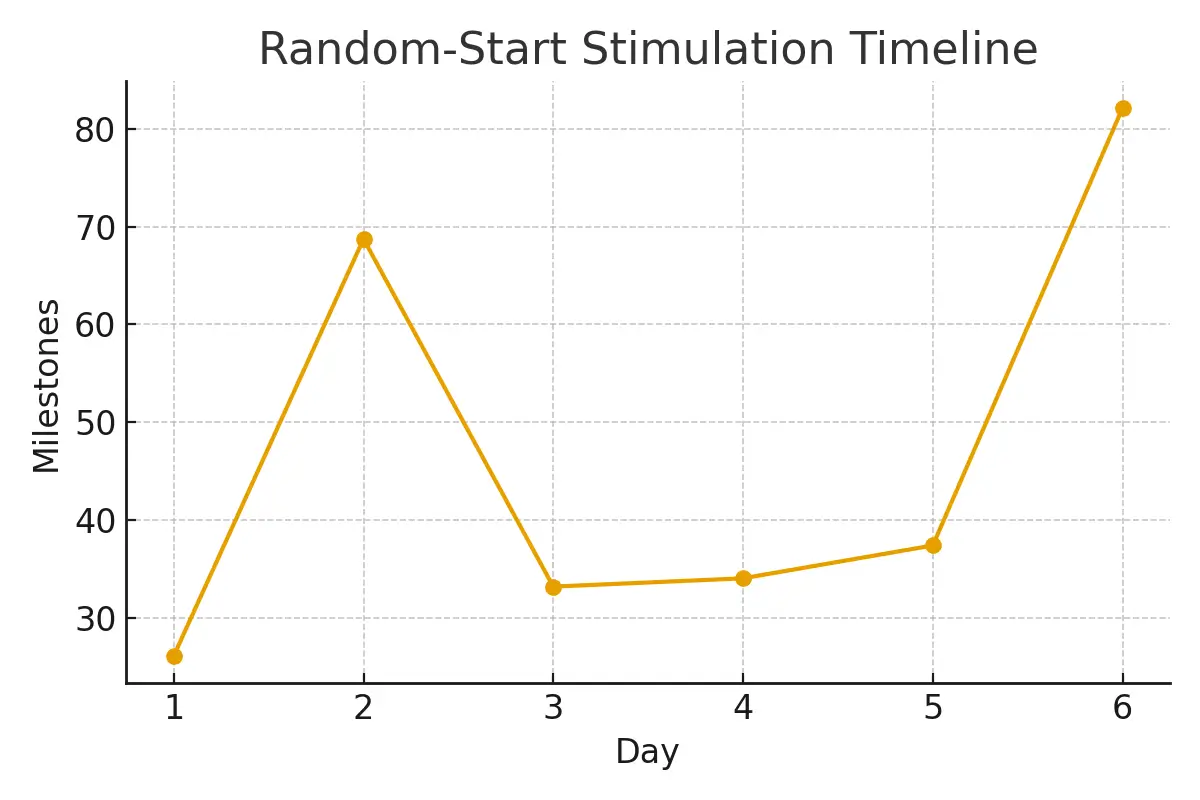
- Random-Start Stimulation began same day
- 11 days to retrieval
- 14 mature eggs frozen
Outcome:
Her oncology treatment proceeded on time, and she retained her ability to build a genetically related family.
She later returned and successfully used her frozen eggs to create embryos.
This is a classic example of how Random-Start Stimulation can change the entire future of a patient facing an unexpected medical crisis.
Testimonials
“This protocol saved my fertility after my cancer diagnosis.”
— A., 29 years old
“I had only a few days before chemo. Random-Start made it possible to freeze eggs immediately. I’m deeply grateful this option existed.”
“We didn’t lose months waiting for my cycle to start.”
— D. & M., Intended Parents
“Synchronizing a surrogate was stressful. Random-Start Stimulation helped us move forward much faster.”
“My AMH was dropping fast—starting right away made the difference.”
— R., 38 years old
“Waiting even one cycle could have cost me my remaining ovarian reserve.”
Expert Quote
“Random-Start Stimulation is one of the most important advancements in modern IVF. It empowers us to preserve fertility even when time is extremely limited.”
— Reproductive Endocrinologist, board-certified
Related Links
- Fertility Preservation Guide
- Egg Freezing
- IVF Stimulation Protocols
- Surrogacy Timeline & Medical Requirements
Glossary
- Random-Start Stimulation (RSS): IVF stimulation starting on any cycle day.
- Follicular Wave: Natural cycle patterns where multiple follicle groups rise throughout the month.
- AMH (Anti-Müllerian Hormone): A marker of ovarian reserve.
- Trigger Shot: Hormone injection that matures eggs before retrieval.
- Oocyte Cryopreservation: Medical term for egg freezing.
- Luteal Phase: The second half of the menstrual cycle.
- Suppression Medications: Drugs used to control hormone surges during IVF.
FAQs
Q. Is Random-Start Stimulation as effective as traditional IVF stimulation?
Ans : Yes. Research shows comparable egg numbers, maturation rates, and embryo quality. When used correctly, success rates match conventional protocols.
Q. How soon can I start?
Ans : Most patients can begin within 12–24 hours of consultation and lab work. That’s the primary advantage.
Q. Is this option safe for cancer patients?
Ans : Yes. It is widely used for oncology-related fertility preservation. A reproductive endocrinologist will coordinate safely with your oncology timeline.
Q. Will starting in the luteal phase affect my results?
Ans : No. Ovaries have multiple follicular waves, which allows stimulation at any point.
Q. What medications are used?
Ans : Protocol typically includes gonadotropins, suppression medications like antagonists, and a trigger shot prior to retrieval.
Q. Can Random-Start help with poor ovarian reserve?
Ans : Yes. Patients with low AMH often cannot afford to wait. RSS allows faster retrieval before further decline.
Q. Is it more expensive than regular stimulation?
Ans : Cost is usually the same, though urgent scheduling may incur minor clinic fees depending on availability.
Q. How many cycles might I need?
Ans : Depends on age, AMH, and medical urgency. Some patients complete 1 cycle; others may bank multiple cycles quickly.
Q. Can it be combined with surrogacy planning?
Ans : Absolutely. It’s commonly used when intended parents need embryos ready for surrogate matching.
Q. What if my cycle is irregular?
Ans : RSS is ideal because it bypasses cycle timing altogether.
Q. How does this affect egg quality?
Ans : Current research indicates no reduction in egg quality with Random-Start.
Q. Can I use this protocol for embryo freezing as well as egg freezing?
Ans : Yes. It works for both egg and embryo creation.
If your timeline is tight, medical treatment is approaching, or you can’t wait for another cycle, Random-Start Stimulation may be your fastest path forward.
Ready to take the next step? Call Surrogacy4All at (212) 661-7673 or email info@surrogacy4all.com to book your consultation.

Dr. Kulsoom Baloch
Dr. Kulsoom Baloch is a dedicated donor coordinator at Egg Donors, leveraging her extensive background in medicine and public health. She holds an MBBS from Ziauddin University, Pakistan, and an MPH from Hofstra University, New York. With three years of clinical experience at prominent hospitals in Karachi, Pakistan, Dr. Baloch has honed her skills in patient care and medical research.
- Dr. Kulsoom Baloch

- Dr. Kulsoom Baloch
- Dr. Kulsoom Baloch
- Dr. Kulsoom Baloch