Key Takeaways
- PGT-A becomes more useful after age 40 due to higher aneuploidy rates.
- It can reduce miscarriage and shorten time-to-pregnancy in selected patients.
- It does not increase the number of embryos—it only tests what you already have.
- Timing matters: the test is most strategic when you have multiple embryos or limited time.
- It has drawbacks: false positives, discarding embryos unnecessarily, cost, and lab variability.
- For some over-40 patients, donor eggs or multiple retrievals may improve outcomes more than PGT-A alone.
For intended parents over 40, IVF requires a different planning strategy—particularly around embryo quality, chromosomal risk, and how to optimize each retrieval. Preimplantation Genetic Testing for Aneuploidies (PGT-A) is often recommended, but its value varies widely. This guide breaks down when PGT-A genuinely helps, when it doesn’t change outcomes, and how to time testing in IVF or surrogacy pathways.
Why Age Changes the Value of PGT-A
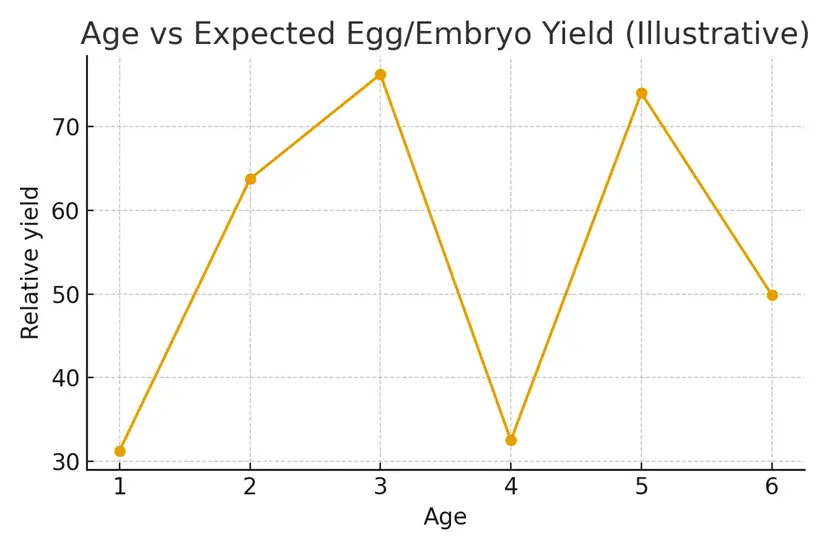
As egg age increases, so does the chance that an embryo will have chromosomal abnormalities (aneuploidy).
- At 30: ~30% aneuploid.
- At 40: ~60–70% aneuploid.
- At 42–44: up to 80–90% aneuploid.
Because the pool of euploid embryos shrinks, identifying the viable ones becomes more impactful.
Pros of PGT-A Over 40
1. Reduces Miscarriage Risk
Aneuploid embryos are the main cause of early pregnancy loss. Screening can reduce the emotional, physical, and financial toll of miscarriage.
2. Saves Time When Multiple Embryos Exist
For patients who create 4+ blastocysts, PGT-A can shorten the journey by identifying the most viable embryo upfront.
3. Helpful in Surrogacy Journeys
When working with a gestational carrier, clinics prefer euploid embryos to improve safety and predictability for the surrogate.
4. Reduces Multiple Failed Transfers
Many over-40 patients experience repeated negative transfers before PGT-A identifies the issue (aneuploidy).
Cons and Limitations of PGT-A Over 40
1. Does Not Increase Success Rates for Everyone
PGT-A cannot turn an abnormal embryo normal. If you only have one embryo, PGT-A may offer no benefit.
2. False Positives & Mosaic Embryos
Some embryos labeled “abnormal” or “mosaic” can still lead to healthy babies. Lab quality matters.
3. Cost Adds Up
Testing often costs $3,500–$6,500, depending on country and lab.
4. Risk of Losing Embryos During Biopsy
Rare, but possible—especially in clinics lacking advanced embryology practices.
When to Consider PGT-A Over 40
You should strongly consider testing when:
- You expect 3+ blastocysts per retrieval.
- You want to minimize transfer attempts.
- You have a history of miscarriage.
- You are working with a gestational surrogate.
- You plan multiple retrievals and want data to refine strategy.
Case Study — “Finding the Only Euploid Embryo”
Patient: 42-year-old, first IVF cycle
Retrieval: 10 eggs → 4 blastocysts
PGT-A Results:
- 1 euploid
- 1 low-level mosaic
- 2 aneuploid
Because PGT-A identified the euploid embryo, she avoided three failed transfers and achieved pregnancy in the first transfer.
Testimonials
1. Sarah, 41 (Intended Parent)
“PGT-A saved us months of heartache. It showed us exactly which embryo to transfer.”
2. Miguel & Ana, 43 (Intended Parents Working With a Surrogate)
“Our surrogate agency required euploid embryos. PGT-A gave us the confidence to move forward.”
3. Priya, 45 (After Multiple IVF Cycles)
“After two failed cycles, PGT-A finally explained why—none of the embryos were chromosomally normal.”
Expert Quote
“After age 40, the biggest challenge is embryo quality. PGT-A doesn’t fix that, but it helps identify the embryo with the highest chance of success, especially when time is limited.”
— Dr. Mira Chandrasekhar, Reproductive Endocrinologist
Related Links
- Age & Egg Quality — What Changes and When
- Banking Strategy — How Many Retrievals to Plan
- Own Eggs vs Donor Eggs — Decision Framework
- Clinic Selection — Experience with 40+
Glossary
- Aneuploidy: Chromosomal abnormality in an embryo.
- Blastocyst: Day-5/6 embryo ready for biopsy or transfer.
- Euploid: Chromosomally normal embryo.
- Mosaic: Embryo with mixed normal & abnormal cells.
- PGT-A: Genetic test to analyze chromosome number.
- Retrieval: Egg collection procedure.
FAQ
Q. Is PGT-A necessary for everyone over 40?
Ans. Not always. It is most impactful when you produce multiple embryos, have previous miscarriages, or want to avoid repeated failed transfers. If you typically generate only one embryo per cycle, PGT-A may not improve outcomes.
Q. Does PGT-A improve live birth rates?
Ans. PGT-A does not create more good embryos, but it improves efficiency by identifying the best embryo first. For some, this means fewer cycles and faster pregnancy; for others, no change.
Q. Can PGT-A harm embryos?
Ans. The biopsy risk is low (<1%), but real. Choosing a high-quality lab is essential.
Q. Does PGT-A reduce miscarriage?
Ans. Yes. Since aneuploid embryos cause most miscarriages, screening can lower miscarriage risk—especially over 40.
Q. How accurate is PGT-A?
Ans. Accuracy is high (~97–99%), but not perfect. Mosaicism and sampling errors can lead to false results.
Q. Should I transfer mosaic embryos?
Ans. Some mosaics lead to healthy pregnancies, but they require additional screening and specialist approval. Policies vary by clinic.
Q. How much does PGT-A cost internationally?
Ans. Between $2,000–$6,500, depending on geographic location, testing lab, and number of embryos.
Q. Can PGT-A replace embryo grading?
Ans. No. Grading evaluates embryo appearance; PGT-A evaluates chromosomes. Both inform decisions.
Q. Should I test embryos if I plan a surrogate pregnancy?
Ans. Usually yes. Agencies and clinics favor euploid embryos to reduce risk for the gestational carrier.
Q. Does PGT-A help if I have DOR (Diminished Ovarian Reserve)?
Ans. If you generate very few embryos, the benefit is limited. Banking multiple embryos first may make PGT-A more useful.
Q. Is PGT-A recommended when using donor eggs?
Ans. Often not necessary—donor eggs come from younger age groups with low aneuploidy rates.
Q. When is the ideal time to plan PGT-A?
Ans. Plan early. If you anticipate multiple retrievals, PGT-A gives cycle-to-cycle data that helps refine strategy.

Dr. Kulsoom Baloch
Dr. Kulsoom Baloch is a dedicated donor coordinator at Egg Donors, leveraging her extensive background in medicine and public health. She holds an MBBS from Ziauddin University, Pakistan, and an MPH from Hofstra University, New York. With three years of clinical experience at prominent hospitals in Karachi, Pakistan, Dr. Baloch has honed her skills in patient care and medical research.
- Dr. Kulsoom Baloch

- Dr. Kulsoom Baloch
- Dr. Kulsoom Baloch
- Dr. Kulsoom Baloch