AI Smart Summary
A partial hysterectomy removes the uterus but keeps the ovaries intact, meaning ovulation and egg production usually continue. Although natural pregnancy is no longer possible without a uterus, women can still pursue biological motherhood through IVF, egg retrieval, and gestational surrogacy. With the right medical guidance and fertility support, parenthood remains achievable even after surgery.
FAST FACTS
- A partial hysterectomy removes only the uterus, not the ovaries
- Ovulation continues as long as ovaries remain intact
- Menstrual periods stop because there is no uterine lining to shed
- Eggs released after surgery dissolve and are absorbed naturally
- Pregnancy cannot occur without a uterus
- IVF and surrogacy make biological parenthood possible
POPULAR PROGRAMS
Women exploring fertility options after partial hysterectomy often consider:
- Egg Retrieval and IVF Using Your Own Eggs
- Gestational Surrogacy for Biological Parenthood
- Embryo Freezing for Future Family Planning
- Egg Donation Programs (if ovarian function declines)
- Surrogacy Support Services with Legal and Emotional Care
TOP QUESTIONS ANSWERED
- Can you still ovulate after a partial hysterectomy?
- Where do eggs go after a partial hysterectomy?
- Can you still have a biological child after surgery?
- Does a partial hysterectomy cause early menopause?
Recommended Next Steps
If you want to explore fertility possibilities after partial hysterectomy, consider these steps:
- Schedule a consultation with a fertility specialist
- Test ovarian function and hormone levels
- Ask about egg retrieval or embryo freezing
- Learn about gestational surrogacy options
- Work with an experienced agency for medical, legal, and emotional guidance
Key Takeaways
- Ovulation continues after partial hysterectomy if ovaries remain
- Egg production does not stop unless ovaries are removed
- Pregnancy cannot happen naturally without a uterus
- IVF and gestational surrogacy allow biological motherhood
- Eggs released after surgery are absorbed naturally
- Trusted agencies like Surrogacy4All can guide the journey safely
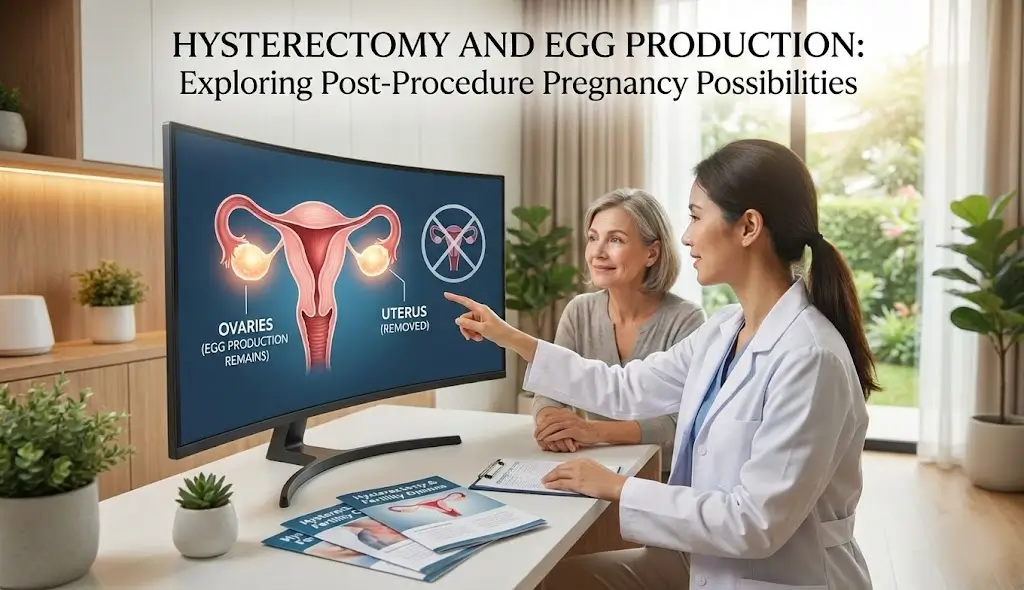
A partial hysterectomy is a life-changing but often necessary surgery for women dealing with persistent uterine conditions such as fibroids, endometriosis, or heavy bleeding. Unlike a total hysterectomy, this procedure removes only the uterus while leaving the ovaries intact.
This difference brings up an important question many women ask: Can you still ovulate after a partial hysterectomy? The answer is yes — your ovaries continue to function, meaning egg production and hormonal cycles usually remain normal. Let’s explore how partial hysterectomy and ovulation work together, what changes to expect, and what your fertility options are after surgery.
Understanding A Partial Hysterectomy
A partial hysterectomy (also called a subtotal hysterectomy) involves removing the uterus but leaving the cervix and ovaries untouched. This type of surgery is often performed when the uterus causes pain or health issues, but doctors aim to preserve hormonal balance and ovarian function.
Because the ovaries remain in place, your body continues to release eggs and produce hormones such as estrogen and progesterone. This means you may still experience mild PMS symptoms or ovulatory signs, even though your periods stop permanently.
Do You Ovulate After A Partial Hysterectomy?
Yes, you do. Egg production after partial hysterectomy continues just as before because the ovaries are not affected by the surgery. Every month, your ovaries release an egg (a process known as ovulation).
However, since your uterus is gone, the egg no longer has a destination. It cannot implant and develop into a pregnancy. Instead, the egg dissolves naturally within the pelvic cavity — a completely harmless process.
This means that fertility after partial hysterectomy depends entirely on whether your ovaries and eggs are still healthy. While you can’t carry a pregnancy, your eggs can still be used in fertility treatments like in vitro fertilization (IVF).
How Partial Hysterectomy Affects Ovulation
Many women wonder how partial hysterectomy and ovulation interact. The answer lies in the fact that ovulation is controlled by the brain and ovaries, not the uterus.
Here’s What Happens After The Surgery:
- Your ovaries still release eggs each month.
- You don’t menstruate, since there’s no uterus to shed its lining.
- Your body continues to produce reproductive hormones.
Some women might notice subtle changes, such as lighter PMS symptoms or shifts in cycle timing, but the hormonal rhythm remains largely the same.
Do Ovaries Still Work After Partial Hysterectomy?
Absolutely, Yes — they remain active unless removed. The ovaries continue to:
- Release eggs monthly.
- Produce estrogen and progesterone.
- Support bone, heart, and skin health.
As long as both ovaries are intact, menopause won’t occur immediately. You’ll naturally transition to menopause at the same age you would have otherwise.
Can You Still Produce Eggs After A Partial Hysterectomy?
Yes, you can still produce eggs after a partial hysterectomy because the ovaries are independent of the uterus. They function normally, even if your periods stop.
However, since pregnancy isn’t possible without a uterus, women who wish to have biological children can explore options such as surrogacy. In this case, your eggs can be retrieved, fertilized, and transferred into a gestational surrogate.
This is one of the most effective ways to experience motherhood after surgery.
Fertility After Partial Hysterectomy: Your Options
While you can’t carry a pregnancy yourself, there are still pathways to parenthood if your ovaries produce healthy eggs.
Egg Retrieval and IVF: Through IVF, doctors can stimulate your ovaries to produce multiple eggs. These eggs are then collected and fertilized with sperm in a lab.
Gestational Surrogacy: The fertilized embryos can be placed in another woman’s uterus (a surrogate) to carry the pregnancy. This option allows you to have a biological child even without a uterus.
Egg Donation: If your ovaries no longer produce viable eggs, donor eggs can be used with a surrogate.
Working with a trusted fertility and surrogacy agency like Surrogacy4All ensures you receive the medical, legal, and emotional guidance needed to navigate this journey with confidence.
How Surrogacy4all Supports Women After Hysterectomy
Surrogacy4All is a globally recognized organization helping women and families achieve their dream of parenthood through ethical and transparent surrogacy programs.
They Offer:
- Access to experienced fertility specialists and surrogates.
- Assistance with egg retrieval and IVF coordination.
- Legal support and counseling throughout the process.
Whether you’re exploring partial hysterectomy egg function or considering donor options, Surrogacy4All provides a comprehensive approach that combines medical expertise with compassion and care.
Emotional Healing And Hormonal Balance
A partial hysterectomy can bring emotional relief from years of pain or discomfort. Still, it may also stir questions about femininity, fertility, and self-identity. Understanding that your ovaries still function can ease much of that anxiety.
You are still producing hormones and eggs — your body continues to work naturally. Many women find this reassuring, as it helps maintain energy levels, libido, and emotional well-being.
Holistic approaches such as stress management, nutrition, and hormone-balancing therapies can also support your recovery and long-term health.
How Does Partial Hysterectomy Affect Ovulation?
The answer: very little. The main change is the absence of menstrual bleeding, but ovulation cycles remain largely the same.
You might still feel mild signs of ovulation, such as bloating or mood swings, since your hormones continue to fluctuate monthly. But without a uterus, you won’t have periods or the ability to carry a pregnancy.
Moving Forward With Confidence
While a hysterectomy changes your reproductive anatomy, it doesn’t end your journey toward motherhood. Science has made it possible for women to conceive through assisted reproduction, even after complex surgeries.
Whether you choose egg retrieval, surrogacy, or donation, your path remains open. Agencies like Surrogacy4All specialize in turning these possibilities into reality, giving women a renewed sense of hope after surgery.
Conclusion
In summary, after a partial hysterectomy, your ovaries continue to release eggs and produce hormones, meaning ovulation remains intact. Pregnancy, however, is not possible without a uterus.
Your body remains capable, your options remain open and your dreams of parenthood are still within reach.
Even after a partial hysterectomy, your fertility story isn’t over. If your ovaries are still functioning, you can explore egg retrieval, IVF, and surrogacy to achieve your dream of parenthood. Contact Surrogacy4All today at (212) 661-7673 to connect with fertility experts who can guide you through personalized treatments, emotional support, and step-by-step coordination — helping you move forward with confidence and hope.
Frequently Asked Questions:-
Q: Do you ovulate after partial hysterectomy?
Ans: Yes, ovulation continues as long as your ovaries are intact, even though you won’t have menstrual periods.
Q: Can you still produce eggs after a partial hysterectomy?
Ans: Yes, your ovaries will continue to release eggs monthly until menopause.
Q: How does partial hysterectomy affect ovulation?
Ans: It doesn’t stop ovulation — it only removes the uterus, so eggs are released but absorbed naturally by the body.
Q: Do ovaries still work after partial hysterectomy?
Ans: Yes, the ovaries continue to produce hormones and eggs unless they are removed during surgery.
Q: What are fertility options after partial hysterectomy?
Ans: You can use IVF and surrogacy through agencies to have a biological child.

Dr. Veera Saghar
As an Egg Donor Coordinator, she plays a critical role in our company. Her background as a medical graduate from ISRA UNIVERSITY in Pakistan provides us with a solid foundation in the medical sciences. She has seven years of clinical experience practicing in the USA. This has given her firsthand experience when collaborating with patients and their families.
She is responsible for managing the process of egg donation from start to finish. We identify and screen potential egg donors.
- Dr. Veera Saghar

- Dr. Veera Saghar
- Dr. Veera Saghar
- Dr. Veera Saghar