
Infertility treatment can feel overwhelming when every step involves timing, testing, costs, and emotional decisions. Understanding where treatments fit within the fertility journey helps patients make informed choices with greater confidence. Whether you are beginning fertility evaluations or preparing for embryo transfer, knowing the process, expectations, and factors that affect outcomes can improve both planning and peace of mind.
At Patients Medical NYC, patients often seek clarity about fertility timelines, ovarian stimulation, embryo culture, frozen embryo transfer (FET), medication logistics, and financing plans. This guide explains the essential stages of fertility care, what affects success rates, and the practical questions to ask your clinic before moving forward.
Understanding Where Fertility Treatment Fits in Your Journey
Fertility treatment typically progresses through stages based on diagnosis, age, ovarian reserve, prior pregnancy history, and treatment response. Most patients move through these phases:
- Initial fertility evaluation
- Hormone and ovarian reserve testing
- Semen analysis and reproductive imaging
- Ovulation support or timed intercourse
- Intrauterine insemination (IUI)
- In vitro fertilization (IVF)
- Embryo freezing and genetic testing
- Frozen embryo transfer (FET)
Each stage provides more information about reproductive health and helps determine the next best step. Some couples may move directly to IVF due to age, low ovarian reserve, recurrent pregnancy loss, or male factor infertility, while others begin with less invasive treatment options.
Frozen embryo transfer has become increasingly common because it optimizes embryo competency through better synchronization between embryo development and endometrial timing. Clinics often recommend embryo freezing when hormone levels, uterine conditions, or medication response suggest delaying transfer may improve implantation potential.
Eligibility Signals and When to Escalate or Pause Treatment
Fertility treatment decisions are rarely based on one test alone. Clinics evaluate several eligibility signals before recommending IVF, embryo transfer, or additional monitoring.
Signs You May Need More Advanced Fertility Treatment
- Age-related decline in ovarian reserve
- Low AMH or abnormal FSH levels
- Multiple failed IUI cycles
- Endometriosis or blocked fallopian tubes
- Recurrent miscarriage history
- Severe male factor infertility
- Poor response to ovulation medications
When Clinics May Recommend Pausing or Adjusting Treatment
- Hormone levels outside safe stimulation range
- Risk of ovarian hyperstimulation syndrome (OHSS)
- Uterine lining not developing appropriately
- Infection or untreated medical conditions
- Poor embryo development during culture
- Emotional or financial exhaustion
Pausing treatment is not always negative. In many cases, delaying transfer or adjusting stimulation protocols improves safety and long-term success rates.
Step-by-Step IVF Timeline With Timing Checkpoints
Understanding the IVF timeline helps patients prepare financially, emotionally, and logistically.
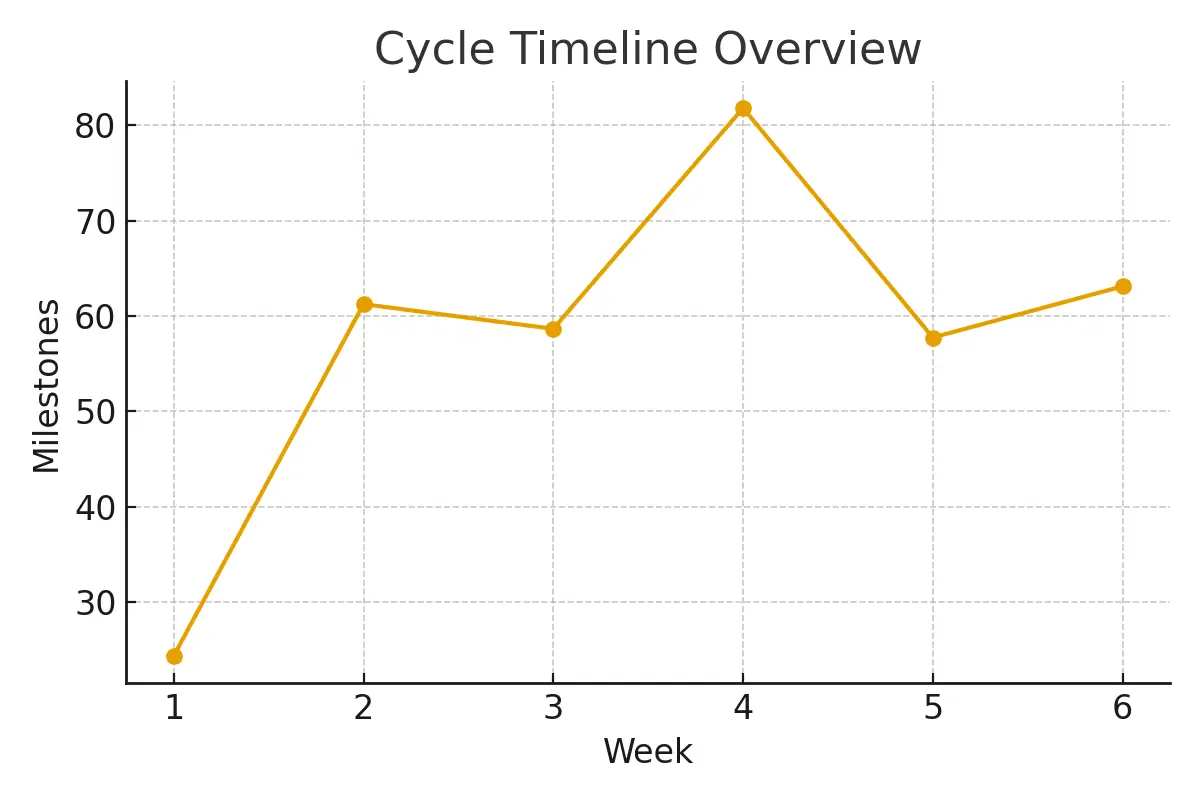
Step 1: Initial Consultation and Testing (Week 1–2)
Your fertility clinic reviews:
- Medical history
- Hormone bloodwork
- Ultrasound imaging
- Semen analysis
- Previous fertility records
Many clinics also discuss financing plans, pharmacy coordination, and expected medication schedules during this phase.
Step 2: Ovarian Stimulation (Week 2–4)
Patients begin injectable fertility medications designed to stimulate multiple follicles. Monitoring appointments occur every few days to measure:
- Follicle growth
- Estradiol levels
- Medication response
Ovarian stimulation balances budget certainty through careful dose selection and monitoring cadence.
Step 3: Egg Retrieval (Around Day 10–14 of Stimulation)
Once follicles reach maturity, a trigger injection is administered before egg retrieval. The procedure is typically completed under anesthesia and takes less than an hour.
Step 4: Embryo Culture and Fertilization (Days 1–7)
Eggs are fertilized in the laboratory. Embryologists monitor embryo development closely during culture.
Embryo culture often improves patient experience by aligning lab cutoffs with biological development instead of rigid scheduling.
Step 5: Genetic Testing and Embryo Freezing (Optional)
Some patients choose preimplantation genetic testing (PGT) before transfer. Healthy embryos may then be frozen for later use.
Step 6: Frozen Embryo Transfer (FET) (4–8 Weeks Later)
Frozen embryo transfer optimizes implantation timing by matching embryo readiness with endometrial development.
Step 7: Pregnancy Testing and Follow-Up
Blood testing typically occurs 9–14 days after transfer. Clinics then monitor hormone progression and early pregnancy development.
Pros, Cons, and Practical IVF Costs
Every fertility treatment plan has advantages and trade-offs. Understanding realistic costs and expectations helps avoid confusion later.
Benefits of IVF and Frozen Embryo Transfer
- Higher pregnancy rates for many diagnoses
- Ability to freeze embryos for future pregnancies
- Genetic testing options available
- Better control over treatment timing
- Opportunity to optimize uterine conditions before transfer
Potential Challenges
- Emotional stress and uncertainty
- Multiple monitoring visits
- Medication side effects
- Financial pressure
- Variable success rates between cycles
Practical IVF Cost Breakdown
Below are common line-item examples patients may encounter:
| Treatment Component | Estimated Cost Range |
|---|---|
| Initial Consultation & Testing | $500–$2,000 |
| Ovarian Stimulation Medications | $3,000–$8,000 |
| Monitoring Visits | $1,000–$2,500 |
| Egg Retrieval Procedure | $4,000–$7,000 |
| Anesthesia Fees | $500–$1,500 |
| Embryo Culture | $1,500–$3,000 |
| Genetic Testing (PGT) | $2,000–$5,000 |
| Embryo Freezing & Storage | $500–$1,500 annually |
| Frozen Embryo Transfer | $3,000–$5,000 |
Medications, genetics, anesthesia, and total cycle count are usually the biggest cost drivers.
Escrow safeguards and financing plans can help reduce financial variability during treatment planning.
Outcome Drivers You Can Control vs What You Monitor
Fertility outcomes depend on both controllable and uncontrollable factors.
Factors You Can Control
- Attending monitoring appointments consistently
- Medication timing and adherence
- Sleep, nutrition, and stress management
- Clear communication with your clinic
- Organizing pharmacy deliveries early
- Following transfer preparation instructions carefully
Pharmacy logistics often clarify implantation odds by reducing delays and establishing clear escalation pathways.
Factors Clinics Primarily Monitor
- Egg quality and ovarian reserve
- Embryo development
- Genetic normalcy
- Endometrial thickness
- Hormone levels
- Implantation response
While not every variable can be controlled, simplifying treatment plans and minimizing unnecessary changes often improves predictability.
“Protect timing and keep plans simple—quality improves when noise goes down.” — Clinical Team
Questions to Ask Your Fertility Clinic
Before starting treatment, patients should feel comfortable asking direct questions about expectations, costs, and timelines.
Important Questions Include
- What is my diagnosis and treatment priority?
- How many cycles are typically recommended for someone in my situation?
- What medications will I likely need?
- What costs are not included in the estimate?
- Does the clinic recommend genetic testing?
- What are the embryo freezing policies?
- How are emergencies or after-hours questions handled?
- What factors would delay or cancel a transfer?
- Are financing or payment plans available?
- How often will monitoring appointments occur?
Transparent communication often reduces anxiety and improves decision-making during fertility treatment.
Patient Case Study
A couple entered fertility treatment feeling uncertain about timelines, costs, and next steps. After reviewing testing results and clarifying expectations with their clinical team, they created a phased treatment strategy focused on scheduling, embryo planning, and financial predictability.
By aligning logistics, medication timing, and communication early, the couple experienced smoother coordination throughout the process. Their improved understanding of milestones reduced stress and helped create a more predictable treatment experience.
Patient Testimonials
“Everything was explained in a way that finally made the process easy to understand. We felt informed and confident at every stage of the journey.” — A. & J., Manhattan
“We appreciated the clear communication around pricing and expenses. There were no hidden fees or unexpected costs along the way.” — L., Hoboken
“The nursing team was incredibly responsive and supportive. Whenever we had questions, we received quick and practical guidance that truly helped.” — K. & V., Queens
Frequently Asked Questions
Q. Is this medical advice?
A. No. This educational guide is designed to support informed conversations with your fertility clinic and healthcare providers.
Q. How many IVF cycles should I plan for?
A. Most specialists encourage patients to think in ranges rather than a single cycle. Cumulative success rates across multiple cycles are often more meaningful than one isolated attempt.
Q. What drives IVF costs the most?
A. Medication protocols, genetic testing, anesthesia services, and the total number of treatment cycles are usually the largest contributors to overall cost.
Q. Why do some clinics recommend frozen embryo transfer instead of fresh transfer?
A. Frozen embryo transfer may improve timing between embryo development and uterine receptivity, which can increase implantation potential for certain patients.
Q. Can financing plans improve treatment success rates?
A. Financing plans mainly improve affordability and reduce financial stress. They generally do not directly change biological implantation outcomes.
Next Steps With Patients Medical NYC
If you are considering fertility treatment or want a second opinion on your current plan, the team at Patients Medical NYC offers supportive guidance for patients navigating IVF, embryo transfer, and fertility planning.
Related Links
- IVF Basics
- Intended Parents
- Become a Surrogate
- Fixed‑Cost Packages
- Upload Labs
- Locations (NYC)
- SART
- CDC ART
- ASRM
Have questions about your surrogacy journey? Reach out to Surrogacy4All at (212) 661-7673 or email info@surrogacy4all.com

Dr. Kulsoom Baloch
Dr. Kulsoom Baloch is a dedicated donor coordinator at Egg Donors, leveraging her extensive background in medicine and public health. She holds an MBBS from Ziauddin University, Pakistan, and an MPH from Hofstra University, New York. With three years of clinical experience at prominent hospitals in Karachi, Pakistan, Dr. Baloch has honed her skills in patient care and medical research.
- Dr. Kulsoom Baloch

- Dr. Kulsoom Baloch
- Dr. Kulsoom Baloch
- Dr. Kulsoom Baloch