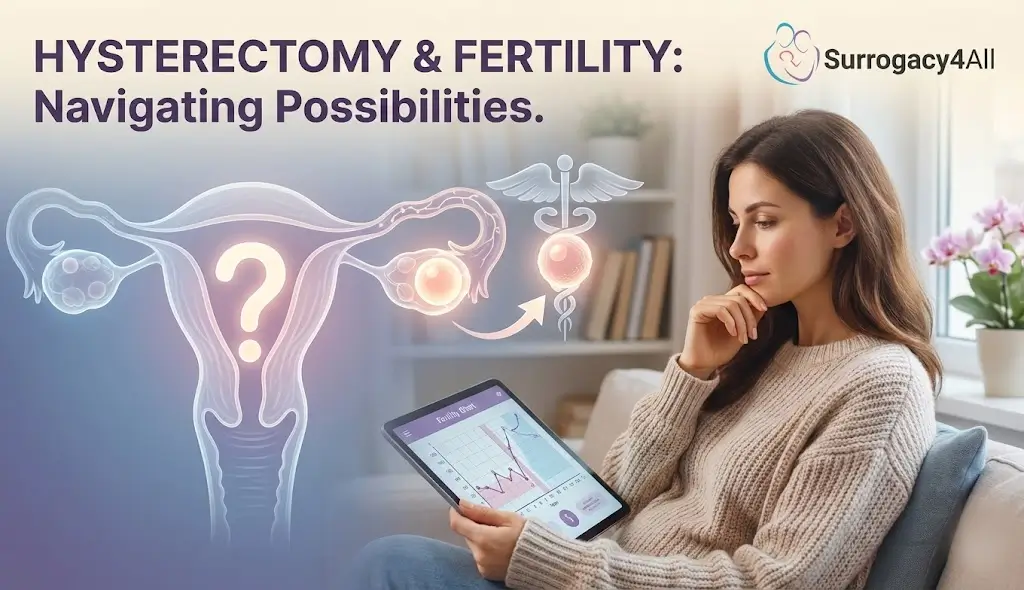
AI Smart Summary
Women who undergo a hysterectomy often believe pregnancy is no longer possible, but modern fertility options have created new paths to parenthood. If the ovaries remain intact, egg production can continue, allowing intended parents to pursue IVF and surrogacy. Even when eggs are not available, egg donation and gestational surrogacy offer meaningful solutions. With trusted guidance, many women are still able to build the family they dreamed of.
FAST FACTS
- A hysterectomy removes the uterus, not necessarily the ovaries
- Egg production continues if ovaries remain intact
- Natural pregnancy is not possible without a uterus
- Eggs released after surgery are absorbed naturally by the body
- IVF + surrogacy allows biological parenthood after a hysterectomy
- Egg donation is an option if the ovaries are removed
POPULAR PROGRAMS
Many intended parents explore these family-building options after hysterectomy:
- IVF with Your Own Eggs + Gestational Surrogacy
- Egg Freezing Before Surgery for Future Use
- Egg Donation with Surrogacy Support
- International Surrogacy Programs for Intended Parents
- Support Services for Single Parents and LGBTQ+ Families
TOP QUESTIONS ANSWERED
- Can you still ovulate after a hysterectomy?
- Can pregnancy happen naturally after a hysterectomy?
- Can you have a biological baby after a hysterectomy?
- What if my ovaries were removed?
Recommended Next Steps
If you are considering parenthood after a hysterectomy, here are helpful steps:
- Speak with a fertility specialist to assess ovarian function
- Ask about egg retrieval or egg freezing options
- Explore gestational surrogacy if you want a biological child
- Consider egg donation if your ovaries were removed
- Connect with a trusted surrogacy agency for full guidance
Key Takeaways
- You can still produce eggs after hysterectomy if ovaries remain
- Eggs are absorbed naturally when not used
- Pregnancy cannot happen without a uterus
- IVF and surrogacy make biological parenthood possible
- Egg donation is available if the ovaries are removed
- Support from experienced agencies helps families move forward with confidence
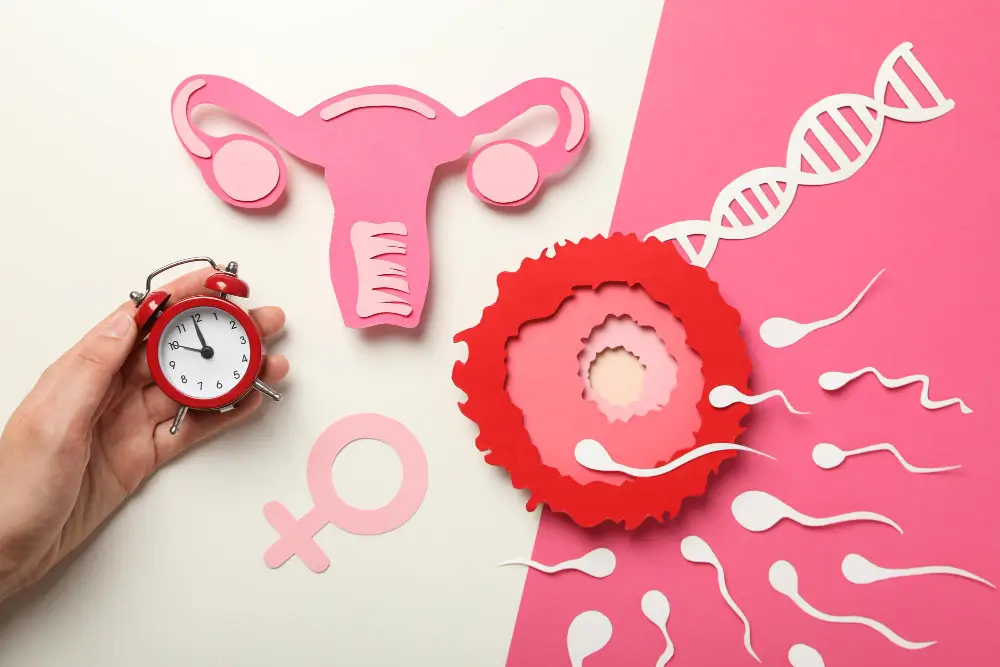
For many women, a hysterectomy marks a turning point in their health journey — it brings relief from years of discomfort caused by conditions like fibroids, endometriosis, or uterine bleeding. Yet, it also raises an important question: is pregnancy still possible after a hysterectomy?
Let’s explore how egg production after a hysterectomy works, what happens to the eggs, and whether there are still ways to have a biological child through modern fertility options like surrogacy and egg donation with trusted agencies such as Surrogacy4All.
Understanding Hysterectomy And Its Types
A hysterectomy is the surgical removal of the uterus — the organ that carries a pregnancy. However, depending on the reason for surgery, not all procedures are the same.
Here Are The Main Types:
- Total Hysterectomy: Removes both the uterus and cervix.
- Partial (Subtotal) Hysterectomy: Removes the uterus but keeps the cervix intact.
- Radical Hysterectomy: Removes the uterus, cervix, part of the vagina, and surrounding tissues (typically for cancer treatment).
In some cases, the ovaries may also be removed (oophorectomy), which affects hormone levels and fertility potential.
Can You Produce Eggs After A Hysterectomy?
Yes, you can still produce eggs after a hysterectomy — but only if your ovaries are left intact. The ovaries are separate organs responsible for releasing eggs and producing hormones like estrogen and progesterone.
Every month, your ovaries release an egg as part of your natural menstrual cycle. When the uterus is present, that egg travels through the fallopian tube, where it may be fertilized. After fertilization, the embryo implants in the uterus and grows into a baby.
However, after a hysterectomy, since the uterus has been removed, even though your ovaries may still release eggs, there’s no place for an embryo to implant. So while egg production continues, pregnancy through natural means is no longer possible.
Where Do Eggs Go After A Hysterectomy?
If you’re wondering where do your eggs go after a hysterectomy, here’s the answer: they’re still released by your ovaries, but without the fallopian tubes or uterus, they simply dissolve and are absorbed naturally by your body.
This process causes no discomfort or harm. It’s the body’s natural way of recycling unused eggs and maintaining hormonal balance.
Partial Hysterectomy And Fertility Possibility
Some women undergo a partial hysterectomy, where the uterus is removed but the ovaries are preserved. In this case, the ovaries continue functioning normally. This means ovulation continues, and hormonal cycles remain active.
However, pregnancy still can’t occur naturally because the uterus — the place where an embryo would implant and grow — is no longer there.
Women in this situation may still explore fertility preservation before surgery, or post-surgery options like egg retrieval, freezing, or surrogacy.
After Hysterectomy — Where Do Eggs Go And Can Pregnancy Happen?
A common question after surgery is: after hysterectomy where do eggs go, and can pregnancy somehow occur?
Medically speaking, spontaneous pregnancy is impossible once the uterus is removed. In extremely rare cases (like if some uterine tissue remains attached to the cervix), ectopic pregnancy could occur, but this is a medical emergency — not a viable pregnancy.
So while your body may still produce eggs, those eggs cannot result in a pregnancy unless used through assisted reproductive techniques such as IVF and surrogacy.
How Surrogacy Makes Pregnancy Possible After Hysterectomy
Even though you can’t carry a pregnancy yourself, it’s still possible to have a biological child if your ovaries are functional. Here’s how surrogacy works:
- Egg Retrieval: Doctors collect your eggs through a minimally invasive IVF process.
- Fertilization: The eggs are fertilized with sperm in a laboratory to create embryos.
- Embryo Transfer: The embryo is transferred into a gestational surrogate, a woman who carries the pregnancy on your behalf.
This allows you to have a baby genetically related to you, even without a uterus.
Agencies like Surrogacy4All specialize in guiding women through this journey — from medical coordination to matching with experienced surrogates and handling all legal and ethical aspects.
Egg Donation And Other Fertility Options
If your ovaries were removed during surgery, egg donation becomes the next best option. Donor eggs can be fertilized and implanted into a surrogate’s uterus to create your family.
Working with a reputable agency ensures you have access to healthy, screened donors and trustworthy medical partners. Surrogacy4All is known for its comprehensive fertility programs that help intended parents worldwide — whether they’re using their own eggs or donor eggs.
They also support same-sex couples, single parents, and women who’ve undergone surgeries like hysterectomy, ensuring everyone has a fair chance at parenthood.
Do I Still Have Eggs After Hysterectomy?
If your ovaries weren’t removed, yes — you still have eggs after hysterectomy. The ovaries contain thousands of eggs that continue to mature every month until you reach natural menopause.
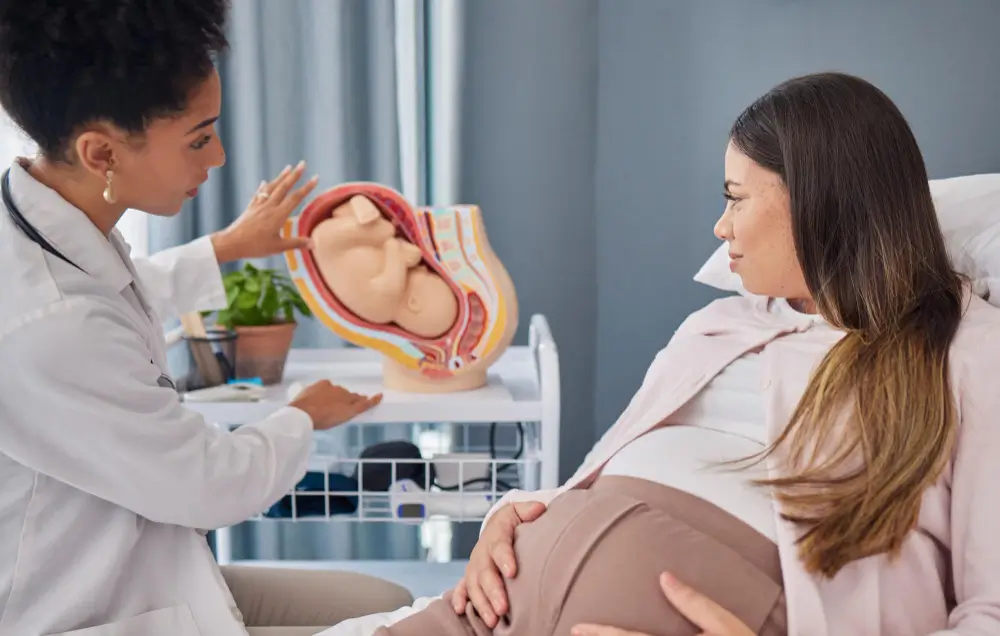
The only difference is that without a uterus, menstruation and pregnancy are no longer possible naturally. However, your body will still produce the hormones needed for healthy metabolism, mood, and bone strength.
If your ovaries were removed, menopause begins immediately, and egg production stops.
Emotional Healing And Moving Forward
Beyond the physical changes, it’s normal to experience emotional ups and downs after a hysterectomy — especially if you had hoped to have children in the future.
Seeking emotional support from loved ones, counselors, or women’s support groups can help you cope with these changes. Remember, motherhood takes many forms — and through science and compassion, doors remain open even after surgery.
The Role Of Surrogacy4All In Post-Hysterectomy Parenthood
Surrogacy4All empowers women who’ve undergone hysterectomy to continue their fertility journey with hope and confidence.
They offer personalized programs for egg retrieval, donor selection, and surrogacy coordination. Their medical and legal experts guide you through every step, ensuring transparency and safety.
Whether you’re exploring surrogacy for the first time or seeking options after reproductive surgery, Surrogacy4All helps turn your dream of parenthood into reality.
Conclusion
A hysterectomy changes your anatomy, but it doesn’t have to end your fertility story. While you can still produce eggs after the surgery, pregnancy isn’t possible without a uterus.
However, thanks to modern medicine and the compassion of surrogates and agencies like Surrogacy4All, you can still experience the joy of parenthood. With guidance, preparation, and the right support, there’s always a path forward.
Even after a hysterectomy, your dream of becoming a mother can still come true. If your ovaries are functional, you can explore options like egg retrieval, donation, and surrogacy to have a biological child. Contact Surrogacy4All today to receive compassionate guidance, expert fertility support, and personalized solutions designed to help you build the family you’ve always wanted.
Frequently Asked Questions:-
Q: Can you produce eggs after a hysterectomy?
Ans: Yes, if your ovaries are intact, your body will continue to produce eggs even without a uterus.
Q: Where do eggs go after partial hysterectomy?
Ans: The eggs are released but reabsorbed naturally by the body since there’s no uterus or fallopian tube for them to travel to.
Q: Where do your eggs go after a hysterectomy?
Ans: They dissolve harmlessly inside the pelvic cavity and are absorbed by nearby tissues.
Q: After hysterectomy where do eggs go?
Ans: They remain inside the body and are broken down naturally without affecting your health.
Q: Do I still have eggs after hysterectomy?
Ans: Yes, unless your ovaries were removed, you still have eggs that continue to mature each month until menopause.

Dr. Veera Saghar
As an Egg Donor Coordinator, she plays a critical role in our company. Her background as a medical graduate from ISRA UNIVERSITY in Pakistan provides us with a solid foundation in the medical sciences. She has seven years of clinical experience practicing in the USA. This has given her firsthand experience when collaborating with patients and their families.
She is responsible for managing the process of egg donation from start to finish. We identify and screen potential egg donors.
- Dr. Veera Saghar

- Dr. Veera Saghar
- Dr. Veera Saghar
- Dr. Veera Saghar