Key Takeaways
- Phoenix offers a wide range of fertility clinics providing IVF, IUI, egg freezing, donor programs, and surrogacy coordination.
- Success rates vary by clinic—always review SART/CDC data while considering your age and diagnosis.
- Choosing the “best” clinic depends on care quality, pricing transparency, lab technology, and patient-centered support.
- Top clinics in Phoenix specialize in advanced care such as PGT-A, donor cycles, male-factor infertility, and gestational surrogacy connections.
- Early consultation helps you understand timelines, costs, and treatment pathways.
Phoenix, Arizona is home to some of the most advanced fertility clinics in the Southwest—offering world-class IVF technology, comprehensive diagnostic testing, and supportive care for individuals and couples trying to conceive. Whether you’re exploring your first fertility consultation, comparing IVF success rates, or seeking specialized options like donor eggs or surrogacy, finding the right fertility clinic near you in Phoenix is one of the most important decisions in your parenthood journey.
This guide breaks down everything you need to know: clinic types, treatments, success factors, costs, patient experiences, and expert insights to help you move forward with confidence.
Best Fertility Clinics in Phoenix (AZ): What to Look For
Understanding Fertility Services Available in Phoenix
Phoenix fertility clinics typically offer:
IVF (In Vitro Fertilization)
Advanced treatment involving egg retrieval, fertilization, embryo culture, and transfer.
IUI (Intrauterine Insemination)
A lower-cost option often used for mild male-factor infertility or unexplained infertility.
Egg Freezing & Fertility Preservation
Popular among individuals planning future pregnancies or facing medical treatments.
PGT Genetic Testing
Used for screening embryos to improve selection and reduce miscarriage risks.
Surrogacy & Donor Programs
Phoenix clinics collaborate with agencies and donor banks to support third-party reproduction.
How to Choose the Right Fertility Clinic Near You in Phoenix
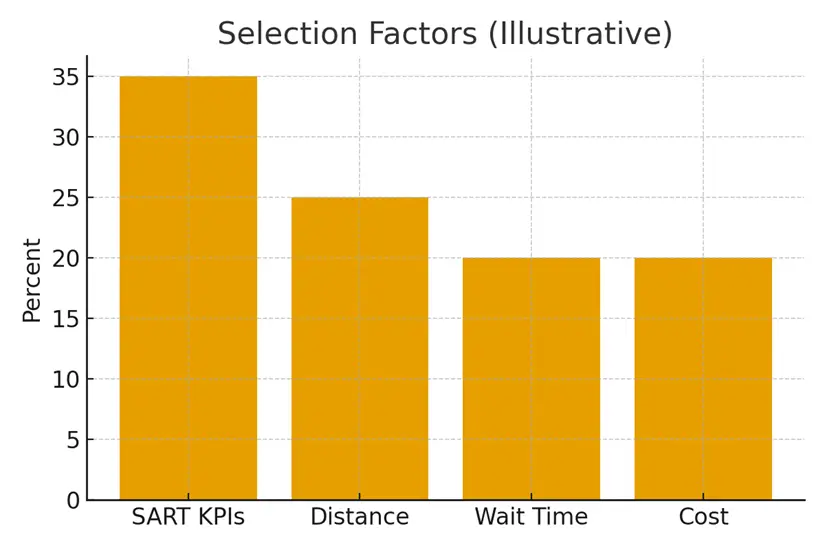
1. Success Rates & Lab Technology
Review SART/CDC data, but remember rates vary by age, diagnosis, and embryo stage.
Look for clinics offering:
- Time-lapse incubation systems
- Laser-assisted hatching
- Modern embryology labs
- High blastocyst formation rates
2. Doctor Expertise & Reputation
Choose a board-certified reproductive endocrinologist with experience in your specific condition—PCOS, DOR, recurrent loss, male-factor infertility, etc.
3. Supportive, Personalized Care
The best clinics combine advanced science with compassionate care—nurses, coordinators, and financial counselors play a huge role in your experience.
4. Costs & Financing Options
Fertility treatment in Phoenix can vary widely in cost. Look for transparent pricing and financing support, including package cycles and refund programs.
Case Study: A Phoenix Couple’s IVF Journey
Patient: Alina & Marcus, ages 34 & 38
Diagnosis: Unexplained infertility
Treatment: IVF with PGT-A
After two unsuccessful IUIs, the couple sought IVF at a Phoenix clinic known for high blastocyst rates. Their first cycle resulted in five PGT-A normal embryos. After transferring a single embryo, Alina conceived and delivered a healthy baby girl. She shared that personalized attention, thorough explanations, and lab quality were the key reasons they chose their clinic.
Testimonials
Testimonial 1
“Phoenix has many fertility centers, but the one we chose felt like family. The doctors explained every step clearly and helped us stay calm through IVF.”
Testimonial 2
“I switched clinics after poor communication. My new clinic in Phoenix had a modern lab and a much more supportive team. I finally got pregnant after my first embryo transfer.”
Testimonial 3
“The financial counselor helped us navigate insurance and grants. It made our treatment manageable and stress-free.”
Expert Quote
“Choosing a fertility clinic is not just about success rates—it’s about how supported you feel throughout the process. A personalized, patient-centered approach can significantly improve outcomes and emotional well-being.”
— Dr. R. Stein, Reproductive Endocrinologist
Related Links
- Fertility Clinics Near Me — Washington, DC & NoVA
- Fertility Clinics Near Me — Seattle (WA)
- Fertility Clinics Near Me — Atlanta (GA)
- Fertility Clinics Near Me — Philadelphia (PA)
Glossary
IVF: A complex fertility treatment involving egg retrieval and embryo transfer.
IUI: Placing washed sperm directly into the uterus.
PGT-A: Genetic testing to identify chromosomally normal embryos.
Embryologist: A specialist who handles eggs, sperm, and embryos.
Blastocyst: A day-5 embryo with higher implantation potential.
AMH: Hormone used to assess ovarian reserve.
REI: Reproductive Endocrinologist & Infertility specialist.
FAQ
Q. How do I choose the best fertility clinic near me in Phoenix?
Ans. Look at doctor credentials, lab technology, treatment options, and patient reviews. Success rates matter, but they should be evaluated alongside personalized care, staff communication, and transparency in pricing. Scheduling a consultation with two clinics can also help you compare comfort levels and treatment philosophies.
Q. What is the average IVF cost in Phoenix, AZ?
Ans. The average IVF cycle ranges from $12,000–$22,000, not including medications, PGT-A testing, or freezing/storage fees. Some clinics offer refund or multi-cycle packages, which can reduce total costs for patients needing more than one cycle.
Q. Are Phoenix fertility clinics LGBTQ+ friendly?
Ans. Most leading clinics in Phoenix offer inclusive services such as donor sperm, donor eggs, reciprocal IVF, and gestational surrogacy. They also provide legal support or referrals for required parentage documents.
Q. How soon can I get a fertility consultation in Phoenix?
Ans. Many clinics offer appointments within 1–4 weeks. Some provide virtual consultations, allowing you to review test results, plan treatment, and discuss next steps without an in-person visit.
Q. Which treatments do Phoenix clinics commonly offer?
Ans. IVF, IUI, ovulation induction, egg freezing, donor egg/sperm cycles, PGT testing, embryo freezing, surrogacy coordination, and male infertility treatments such as TESE or Micro-TESE.
Q. What are IVF success rates like in Phoenix?
Ans. Success depends heavily on age and diagnosis. Many Phoenix clinics report competitive success rates, especially for patients under 35. Reviewing SART/CDC data can give you an accurate comparison across clinics.
Q. Does insurance cover fertility treatment in Arizona?
Ans. Arizona does not mandate fertility coverage, but many employer insurance plans offer partial benefits. Clinics often provide financing options, discounts for veterans, and cash-pay packages.
Q. Is egg freezing popular in Phoenix?
Ans. Yes. Many individuals choose egg freezing to preserve fertility for future family planning, career timelines, or medical reasons. Clinics offer vitrification technology for higher survival rates.
Q. Can I use donor eggs or donor sperm in Phoenix?
Ans. Absolutely. Clinics collaborate with donor banks or maintain in-house donor programs. Donor eggs often increase success rates for individuals with diminished ovarian reserve or age-related infertility.
Q. Do Phoenix clinics support surrogacy?
Ans. Yes, many fertility centers work with surrogacy agencies and assist with medical procedures such as embryo transfer, screening, and monitoring for gestational carriers.
Q. What tests should I expect at my first visit?
Ans. AMH, AFC ultrasound, semen analysis, hormone panels, infectious disease screening, and possibly HSG or saline sonogram. These help determine the best treatment plan.
Q. How long does the IVF process take in Phoenix?
Ans. A typical IVF cycle—from stimulation to embryo transfer—takes around 4–6 weeks. Timelines may vary based on testing, genetic screening, or scheduling.

Dr. Kulsoom Baloch
Dr. Kulsoom Baloch is a dedicated donor coordinator at Egg Donors, leveraging her extensive background in medicine and public health. She holds an MBBS from Ziauddin University, Pakistan, and an MPH from Hofstra University, New York. With three years of clinical experience at prominent hospitals in Karachi, Pakistan, Dr. Baloch has honed her skills in patient care and medical research.
- Dr. Kulsoom Baloch

- Dr. Kulsoom Baloch
- Dr. Kulsoom Baloch
- Dr. Kulsoom Baloch