Key Takeaways
- Austin has several highly rated fertility clinics offering IVF, IUI, egg freezing, donor programs, and surrogacy support.
- Success rates differ across clinics—review SART/CDC data while considering age and diagnosis.
- The right clinic provides advanced lab technology, transparent pricing, strong communication, and personalized treatment plans.
- Austin fertility centers are known for patient-friendly care and modern reproductive medicine practices.
- An early fertility consultation helps clarify timelines, treatment paths, and expected outcomes.
Austin, TX continues to grow as a hub for modern fertility care, offering advanced reproductive technologies paired with warm, patient-centered support. Whether you’re considering IVF for the first time, comparing clinics near you, or looking into donor options or surrogacy, Austin’s fertility centers provide high-quality care backed by experienced reproductive endocrinologists and state-of-the-art embryology labs.
This guide offers a complete overview of what to expect from fertility clinics in Austin—covering treatments, costs, success factors, real patient stories, expert insights, and the key features that help you choose the best clinic for your journey.
Best Fertility Clinics in Austin (TX): What You Need to Know
Fertility Services Commonly Offered
Most clinics in Austin provide a full spectrum of reproductive services, including:
IVF (In Vitro Fertilization)
The most effective treatment for moderate to severe infertility, involving egg retrieval, fertilization, embryo culture, and transfer.
IUI (Intrauterine Insemination)
A cost-effective treatment often used for mild male-factor infertility, unexplained infertility, or same-sex couples using donor sperm.
Egg Freezing (Oocyte Cryopreservation)
Ideal for individuals preserving their fertility for personal, career, or medical reasons.
PGT-A / PGT-M Genetic Testing
Helps identify chromosomally normal or genetically unaffected embryos to improve success rates.
Third-Party Reproduction
Austin clinics commonly support:
- Donor eggs
- Donor sperm
- Donor embryos
- Gestational surrogacy
How to Choose the Best Fertility Clinic Near You in Austin
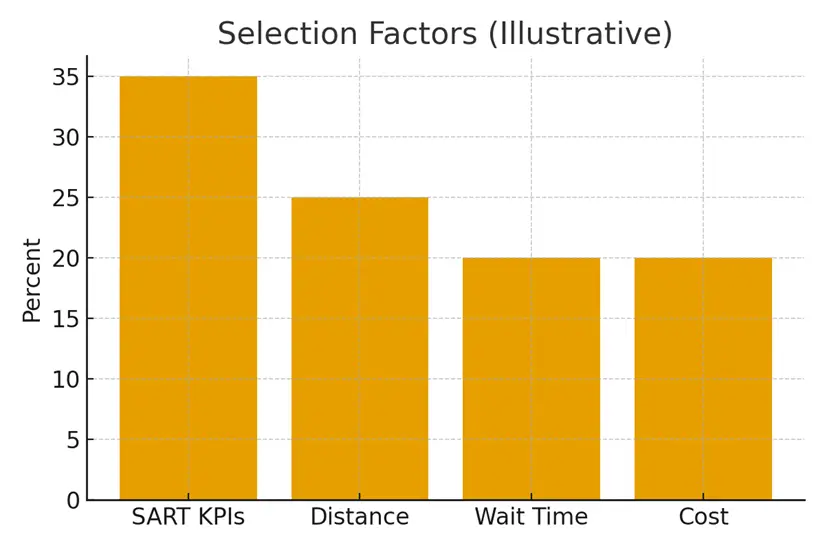
1. Review Success Rates
While success rates can’t tell the full story, they provide important insight into lab quality and clinic expertise. Always compare SART/CDC data based on your age and diagnosis.
2. Evaluate REI Expertise
Choose board-certified reproductive endocrinologists experienced in areas relevant to your case—such as diminished ovarian reserve, PCOS, recurrent loss, male-factor infertility, or advanced maternal age.
3. Check Technology & Embryology Lab Standards
Top clinics typically use:
- Time-lapse embryo imaging
- Advanced incubators
- Vitrification freezing
- Strict lab air filtration and quality control
- Laser-assisted hatching
4. Consider Support, Communication & Patient Experience
Fertility treatment is emotionally demanding. Clinics with coordinated care teams, counseling options, and responsive communication can make your journey significantly smoother.
5. Understand Costs & Financing Options
Austin fertility treatment prices vary:
- IVF: $12,000–$20,000
- IUI: $500–$1,800
- Egg freezing: $7,000–$12,000
- Medications: $2,000–$6,000
Many clinics offer flexible financing, cash discounts, multi-cycle plans, and refund programs.
Case Study: IVF Success Story in Austin
Patient: Emily & Ryan, ages 35 & 39
Diagnosis: Diminished ovarian reserve (AMH 0.7 ng/mL)
Treatment: IVF with a tailored protocol + PGT-A
Emily and Ryan had been trying to conceive for two years before visiting a reputable Austin fertility clinic. A customized stimulation protocol produced four blastocysts, two of which tested normal through PGT-A. Emily conceived on her first frozen embryo transfer and delivered a healthy baby boy. She shared that personalized attention and clear communication helped her stay grounded throughout treatment.
Testimonials
Testimonial 1
“My Austin clinic gave me hope from day one. The staff treated me with compassion, and the doctor created a plan specifically for my low ovarian reserve. I’m now expecting!”
Testimonial 2
“As an LGBTQ+ couple, we wanted a clinic that truly understood our needs. Austin had several options, but ours went above and beyond with donor selection and legal guidance.”
Testimonial 3
“The transparency in pricing and constant communication made the entire IVF experience manageable. I always felt informed and supported.”
Expert Quote
“Fertility care works best when treatment is individualized. The right protocol, combined with strong lab standards and emotional guidance, significantly increases the chance of success.”
— Dr. A. Patel, Reproductive Endocrinologist
Related Links
- Fertility Clinics Near Me — Atlanta (GA)
- Fertility Clinics Near Me — Philadelphia (PA)
- Fertility Clinics Near Me — Phoenix (AZ)
- Fertility Clinics Near Me — San Diego (CA)
Glossary
IVF: A process where eggs and sperm are combined in a lab to create embryos.
IUI: A procedure where washed sperm are placed directly into the uterus.
PGT-A: Embryo testing for chromosomal normalcy.
Blastocyst: A day-5 embryo with strong potential for implantation.
ICSI: Injecting a single sperm into an egg to assist fertilization.
AMH: Hormone used to estimate ovarian reserve.
REI: Reproductive Endocrinology and Infertility specialist.
FAQ
Q. What should I look for when choosing a fertility clinic in Austin?
Ans. Focus on doctor expertise, lab quality, patient reviews, success rates, and communication style. Clinics offering transparent pricing and personalized treatment plans typically provide the best experience.
Q. How much does IVF cost in Austin, Texas?
Ans. A single IVF cycle typically costs $12,000–$20,000, not including medications, genetic testing, or embryo storage. Many clinics offer financing, multi-cycle packages, or refund programs to help manage costs.
Q. Are Austin fertility clinics LGBTQ+ friendly?
Ans. Yes. Most Austin clinics offer inclusive services such as donor sperm, reciprocal IVF, donor eggs, and gestational surrogacy coordination. They also provide referrals for legal documentation where needed.
Q. Do clinics in Austin offer surrogacy support?
Ans. Many clinics work closely with surrogacy agencies and handle medical aspects like embryo creation, transfer, screening, and monitoring for gestational carriers.
Q. What treatments do Austin fertility clinics provide?
Ans. IVF, IUI, ovulation induction, egg freezing, donor eggs/sperm, embryo freezing, PGT testing, and male infertility procedures like ICSI or sperm retrieval.
Q. What are typical IVF success rates in Austin?
Ans. Success varies by age, diagnosis, and clinic, but many Austin centers perform at or above the national average. Review SART/CDC data for clinic-specific comparisons.
Q. Does insurance cover fertility treatment in Texas?
Ans. Texas does not mandate infertility coverage, but many large employers offer partial or full benefits. Coverage often includes consultations, diagnostics, and sometimes IUI or IVF. Always verify your plan specifics.
Q. Is egg freezing popular in Austin?
Ans. Yes. Egg freezing is increasingly common, especially for individuals preserving fertility for personal or medical reasons. Clinics in Austin use advanced vitrification methods to maximize egg survival.
Q. How long does an IVF cycle take from start to finish?
Ans. An IVF cycle generally takes 4–6 weeks, depending on testing, stimulation response, and whether genetic testing or FET (frozen embryo transfer) is involved.
Q. Can Austin clinics help with male-factor infertility?
Ans. Absolutely. Services include semen analysis, hormonal testing, ICSI, sperm retrieval surgeries, and coordination with fertility urologists.
Q. How soon can I get an appointment?
Ans. Most Austin clinics schedule new patient consultations within 2–3 weeks, with many offering telehealth appointments.
Q. Do Austin clinics offer donor eggs or donor embryos?
Ans. Yes. Clinics typically maintain donor databases or partner with national donor agencies. Donor eggs are often recommended for age-related infertility or diminished ovarian reserve.

Dr. Kulsoom Baloch
Dr. Kulsoom Baloch is a dedicated donor coordinator at Egg Donors, leveraging her extensive background in medicine and public health. She holds an MBBS from Ziauddin University, Pakistan, and an MPH from Hofstra University, New York. With three years of clinical experience at prominent hospitals in Karachi, Pakistan, Dr. Baloch has honed her skills in patient care and medical research.
- Dr. Kulsoom Baloch

- Dr. Kulsoom Baloch
- Dr. Kulsoom Baloch
- Dr. Kulsoom Baloch