Fibroids and endometriosis are two of the most common reproductive health conditions affecting women today. Both can lead to pelvic discomfort, heavy periods, and concerns about getting pregnant. But many women ask an important question: Which condition has a bigger impact on fertility?
Understanding the difference between fibroids and endometriosis can help women take the right steps toward diagnosis, treatment, and family planning. While both conditions may interfere with conception, they do so in very different ways.
This article explores do fibroids affect fertility, along with how each condition affects the uterus, hormones, and pregnancy outcomes, so that you can make informed decisions about your reproductive health.
AI Smart Summary
Fibroids and endometriosis can both affect fertility, but the way they interfere with conception is different. Fibroids can disrupt the implantation process or the uterine structure, and endometriosis can cause inflammation and damage in reproductive organs. Early detection can lead to better results.
FAST FACTS
- Fibroids are noncancerous uterine growths.
- Endometriosis occurs when tissue grows outside the uterus.
- Both can cause pain, bleeding and fertility challenges.
- Fibroids mainly affect the uterus.
- Endometriosis may affect the ovaries and fallopian tubes.
Possible Causes
The exact causes of fibroids and endometriosis are not fully understood, but several factors may contribute:
- Hormonal imbalance (estrogen and progesterone).
- Genetics and family history.
- Chronic inflammation.
- Immune system dysfunction.
- Delayed childbirth or reproductive aging.
Key Takeaways
- Fibroids and endometriosis affect fertility differently.
- Fibroids mainly disrupt implantation and uterine shape.
- Endometriosis may damage the ovaries or fallopian tubes.
- Early diagnosis improves pregnancy chances.
- Treatment options are available for both conditions.
Next Steps
If you suspect fibroids or endometriosis:
- Track cycle symptoms and pelvic pain.
- Ask for ultrasound or MRI testing.
- Consult a fertility specialist early.
- Discuss hormonal or surgical treatment.
- Seek fertility support if conception is delayed.
Modern reproductive medicine offers many solutions, even for women with complex diagnoses.
What Are Fibroids?
Fibroids, also known as uterine leiomyomas, are benign tumors that grow in or around the uterus. Some women never notice them, while others experience significant symptoms.
Fibroids can vary in size and location, and that is what determines their impact on fertility.
Women often ask: Can fibroids affect fertility even when cycles seem normal? The answer depends largely on whether fibroids interfere with the uterine cavity.
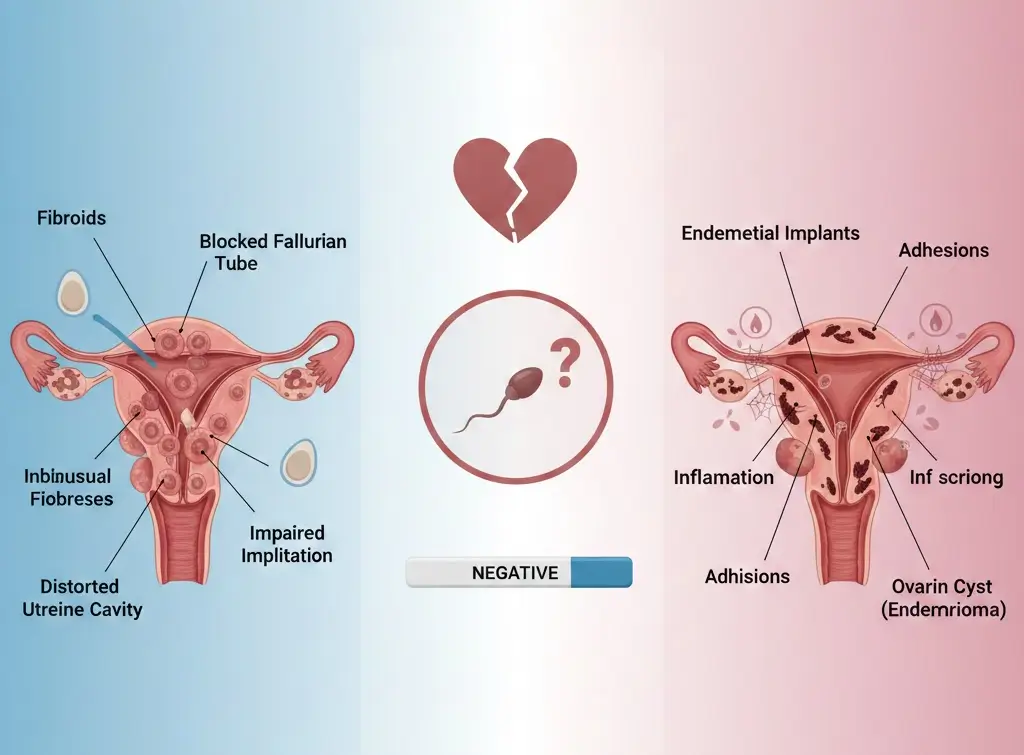
Fibroids May Cause Fertility Problems By:
- Distorting the uterus
- Blocking fallopian tubes
- Preventing embryo implantation
- Increasing miscarriage risk
Do Fibroids Affect Pregnancy?
Yes, in certain cases can fibroids affect pregnancy by increasing the risk of complications such as:
- Preterm birth
- Placental issues
- Breech positioning
- Need for C-section
However, many women with fibroids still have healthy pregnancies, especially when fibroids are small or located outside the uterine cavity.
Hormones And Weight Concerns
Some women wonder: do fibroids affect hormones directly? Fibroids are influenced by reproductive hormones, which is why they may grow during reproductive years and shrink after menopause.
Another common question is: Do fibroids affect weight loss efforts? Fibroids do not directly cause fat gain, but large fibroids can cause bloating, abdominal pressure, or discomfort that may affect physical activity.
What Is Endometriosis And How Does It Affect Fertility?
Endometriosis is a condition where tissue similar to the uterine lining grows outside the uterus, often on the ovaries, fallopian tubes, or pelvic walls.
Unlike fibroids, endometriosis is strongly linked to inflammation and scar tissue, which may reduce fertility by:
- Blocking fallopian tubes
- Affecting egg quality
- Causing pelvic adhesions
- Disrupting implantation
Because it affects multiple reproductive organs, endometriosis is often associated with more complex infertility challenges.
Fibroids vs Endometriosis: Which Has A Greater Fertility Impact?
So, which condition affects fertility more? The answer is not the same for everyone.
Fibroids May Have A Stronger Impact When:
- They grow inside the uterine cavity.
- They prevent implantation.
- They cause repeated miscarriage.
Endometriosis May Have A Stronger Impact When:
- It blocks tubes or damages the ovaries.
- It creates severe inflammation.
- It affects egg reserve or embryo quality.
In Short:
- Fibroids are mostly structural.
- Endometriosis is often inflammatory and widespread.
Both conditions can affect fertility, but endometriosis is more frequently linked with long-term infertility.
Also Read:
Understanding The Question Women Ask Most
Many women on the internet search for: do fibroids affect fertility because they need to know the answers before trying to conceive.
Fibroids may reduce fertility, depending upon their dimensions and location. However, many women are able to conceive naturally or through medical aid.
For women dealing with fertility concerns, educational resources from organizations such as Surrogacy4All can offer information on the options for reproductive choices as well as ways to build families.
FAQs
Q: What are fibroids?
Ans. The definition of fibroids is benign growths in the uterus that can alter its shape and size. In certain cases, fibroids may interfere with fertility, causing the process of implantation or excessive bleeding.
Q: What is endometriosis?
Ans. Endometriosis is a condition where tissue similar to the uterine lining grows outside the uterus. It can cause inflammation, pelvic pain, and may reduce fertility by affecting reproductive organs.
Q: Do fibroids affect fertility?
Ans. The answer is yes, do fibroids affect fertility? It depends on the size and position. The uterine cavity is a place where fibroids can interfere with implantation and make the conception process more difficult for certain women.
Q: Can fibroids affect pregnancy?
Ans. Yes, absolutely, can fibroids affect pregnancy process by increasing the chance of miscarriage, preterm labor or fetal abnormality. Women can still have a healthy pregnancy with the proper monitoring.
Q: Can fibroids affect fertility even if symptoms are mild?
Ans. Yes, even symptom-free fibroids can affect fertility if they distort the uterus. Women may face implantation issues without obvious pain or heavy bleeding.
Q: Do fibroids affect hormones?
Ans. Many women inquire, do fibroids affect hormones directly. Fibroids can be influenced by progesterone and estrogen, which can cause them to increase in the reproductive phase.
Q: Do fibroids affect weight loss?
Ans. Although fibroids do not necessarily prevent weight loss, they could cause abdominal pressure. Women may feel more weighty due to swelling than weight gain.
Q: Which condition causes more infertility: fibroids or endometriosis?
Ans. Endometriosis is often the cause of more infertility because it can cause damage to the ovaries or tubes. The most significant effect of fibroids is the structural changes in uterine tissue, particularly when they are located inside.
Q: Can women with fibroids still conceive naturally?
Ans. Yes. A lot of women can conceive naturally due to fibroids. The effects depend on whether fibroids hinder fertility through blocking the implantation process and altering the uterine environment.
Q: Can endometriosis block pregnancy?
Ans. The answer is yes, endometriosis can indeed hinder pregnancy through the formation of scar tissue, inflammation, or a fallopian tube obstruction. It could also decrease egg quality, which makes conception more difficult.
Q: How are fibroids treated for fertility?
Ans. Treatment could include myomectomy, hormonal therapy or fertility-focused treatments. If fibroids significantly affect fertility, elimination can help increase the chance of pregnancy and implantation.
Q: When should you see a fertility specialist?
Ans. If conception hasn’t occurred after 6–12 months, or if you suspect fibroids affect fertility, consult a specialist early to discuss evaluation, treatment, and pregnancy planning.
Speak with our physician-led team today. Call Surrogacy4All at (212) 661-7673 or email info@surrogacy4all.com to book your consultation.

Dr. Veera Saghar
As an Egg Donor Coordinator, she plays a critical role in our company. Her background as a medical graduate from ISRA UNIVERSITY in Pakistan provides us with a solid foundation in the medical sciences. She has seven years of clinical experience practicing in the USA. This has given her firsthand experience when collaborating with patients and their families.
She is responsible for managing the process of egg donation from start to finish. We identify and screen potential egg donors.
- Dr. Veera Saghar

- Dr. Veera Saghar
- Dr. Veera Saghar
- Dr. Veera Saghar