
Many women experience painful periods, heavy bleeding, or pelvic discomfort and wonder what’s really going on inside their bodies. Two common conditions that often get confused are adenomyosis vs endometriosis. Although they share similar symptoms, they affect different areas of the reproductive system and may require different approaches to treatment.
Understanding the differences can help women get the right diagnosis, manage symptoms, and make informed fertility decisions.
AI Smart Summary
Adenomyosis and endometriosis are two uterine-related conditions that cause pelvic pain, heavy periods, and fertility concerns. Adenomyosis occurs when uterine lining tissue grows into the muscle wall, while endometriosis involves tissue growing outside the uterus. Both can impact quality of life, but treatments and pregnancy outcomes vary depending on severity and individual health.
FAST FACTS
- Adenomyosis occurs inside the uterus
- Endometriosis occurs outside the uterus
- Both can cause painful periods and chronic pelvic pain
- Fertility may be affected in different ways
- Diagnosis often requires imaging or laparoscopy
- Treatment may include medication, hormone therapy, or surgery
- Pregnancy is possible with proper care and support
Possible Causes
Doctors are still studying why these conditions develop, but possible contributing factors include:
- Hormonal imbalance (especially estrogen)
- Genetic predisposition
- Prior uterine surgery (C-section, fibroid removal)
- Inflammation in pelvic tissues
- Immune system dysfunction
- Early onset of menstruation
Key Takeaways
- Adenomyosis occurs inside the uterus
- Endometriosis occurs outside the uterus
- Both can cause painful periods and fertility challenges
- Diagnosis and treatment depend on symptoms and goals
- Support and treatment options are available
Next Steps
If you suspect symptoms of either condition:
- Track your cycle and pain patterns
- Ask your doctor for imaging tests
- Discuss fertility plans early
- Seek specialist support if conception is difficult
What Is Adenomyosis?
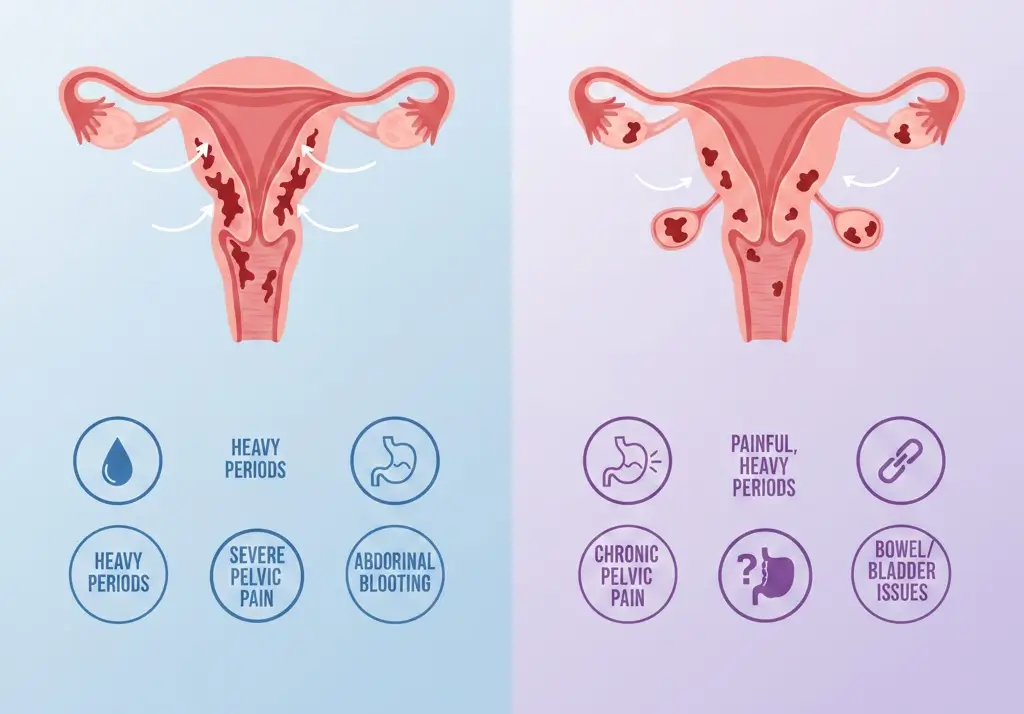
Adenomyosis occurs when the tissue that normally lines the uterus begins growing into the muscular wall of the uterus. This thickens the uterus and often leads to intense menstrual pain and heavy bleeding.
Common Adenomyosis Symptoms Include:
- Severe cramps during menstruation
- Heavy or prolonged periods
- Pain during intercourse
- Pelvic pressure or bloating
Some women also experience what is often called adenomyosis belly, where the uterus becomes enlarged and the lower abdomen appears swollen.
What Is Endometriosis?
Endometriosis happens when tissue similar to the uterine lining grows outside the uterus — such as on the ovaries, fallopian tubes, or pelvic lining.
It may cause:
- Chronic pelvic pain
- Painful bowel movements
- Pain during sex
- Difficulty conceiving
Unlike adenomyosis, endometriosis can affect multiple organs beyond the uterus.
Adenomyosis vs Endometriosis: Key Differences
Adenomyosis
- Tissue grows inside the uterine muscle wall.
- Causes heavy and painful periods.
- Pain is usually worse during menstruation.
- May affect fertility by making implantation harder.
Endometriosis
- Tissue grows outside the uterus (ovaries, tubes, pelvis).
- Bleeding patterns can vary from mild to severe.
- Pain can occur anytime during the menstrual cycle.
- Can impact fertility by blocking tubes or affecting ovaries.

Differences In Pain And Symptoms
Both conditions cause pain, but the type of pain can differ:
Adenomyosis Pain
- Deep uterine cramping
- Heavy pressure sensation
- Worsens during menstruation
Endometriosis Pain
- Sharp pelvic pain
- Pain radiating to the back or legs
- Pain may occur throughout the month
Some women have both conditions, making symptoms more severe.
Adenomyosis and Fertility
Many women worry about adenomyosis and fertility, especially if trying to conceive.
Adenomyosis may:
- Affect implantation
- Increase miscarriage risk
- Causes inflammation in the uterus
However, many women still become pregnant naturally or with fertility support.
Adenomyosis and Pregnancy
Adenomyosis and pregnancy can coexist, but pregnancy may require closer monitoring. Some women may face:
- Preterm labor risk
- Placental complications
- Increased discomfort
A fertility specialist can guide safe planning.
Can You Get Pregnant With Adenomyosis?
A common question is: can you get pregnant with adenomyosis?
Yes, pregnancy is possible. Outcomes depend on:
- Severity of the condition
- Age and ovarian health
- Presence of other fertility factors
Some women benefit from IVF or fertility treatments when conception is delayed.
Organizations like Surrogacy4All provide educational guidance and fertility resources for women exploring reproductive options.
Also Read:
Treatment Options
Adenomyosis Treatment
Adenomyosis treatment focuses on symptom relief and fertility goals. Options include:
- Anti-inflammatory medications
- Hormonal birth control
- IUD therapy
- Surgical procedures in severe cases
Adenomyosis Medication
Doctors may recommend adenomyosis medication such as:
- Pain relievers
- Hormone-regulating drugs
- GnRH agonists for symptom control
Treatment is individualized depending on pregnancy plans.
Conclusion
Understanding the difference between adenomyosis and endometriosis can bring clarity, comfort, and direction. Both conditions are real, common, and treatable with the right medical care.
Whether you are managing pain, exploring fertility, or seeking answers, knowing your options is empowering. With modern treatments and supportive fertility pathways, women can still build the future they hope for.
FAQs
Q. What is adenomyosis?
A: Adenomyosis is a condition where tissue similar to the uterine lining grows into the muscular wall of the uterus, often causing heavy periods, cramps, and pelvic discomfort.
Q. What is endometriosis?
A: Endometriosis happens when tissue like the uterine lining grows outside the uterus, affecting ovaries or pelvic organs and causing pain, inflammation, and sometimes fertility challenges.
Q. Are adenomyosis symptoms similar to endometriosis?
A: Yes, both conditions can cause pelvic pain, painful periods, heavy bleeding, bloating, and discomfort. However, their tissue growth locations differ, which affects diagnosis and treatment.
Q. What is adenomyosis belly?
A: Adenomyosis belly refers to swelling or bloating in the lower abdomen caused by an enlarged uterus. Many women notice fullness, pressure, or visible abdominal distension.
Q. Can adenomyosis cause infertility?
A: Adenomyosis may affect implantation and uterine function, making conception harder for some women. Still, many achieve pregnancy naturally or through fertility treatments with proper support.
Q. Can endometriosis block pregnancy?
A: Yes, endometriosis can impact fertility by causing scar tissue, inflammation, or blockage in the ovaries or fallopian tubes, which may interfere with ovulation or fertilization.
Q. How is adenomyosis diagnosed?
A: Doctors usually diagnose adenomyosis through pelvic exams, ultrasound, or MRI imaging. These tests help detect uterine thickening or abnormal tissue growth inside the muscle wall.
Q. How is endometriosis diagnosed?
A: Endometriosis is often confirmed through laparoscopy, a minor surgical procedure allowing doctors to directly view and sometimes remove abnormal tissue outside the uterus.
Q. What is the best adenomyosis treatment?
A: The best treatment depends on symptom severity and fertility goals. Options include pain management, hormonal therapy, uterine-sparing procedures, or hysterectomy in severe cases.
Q. Does adenomyosis medication help?
A: Yes, medications like hormonal treatments, birth control, or pain relievers can reduce heavy bleeding and cramps. Treatment plans vary based on age, symptoms, and pregnancy plans.
Q. Can you get pregnant with adenomyosis?
A: Yes, many women with adenomyosis can still conceive. Some may need fertility support such as IVF or hormonal treatment to improve implantation and pregnancy outcomes.
Q. When should you see a specialist?
A: You should see a specialist if pelvic pain is severe, periods are extremely heavy, symptoms disrupt daily life, or pregnancy becomes difficult despite trying for several months.
Speak with our physician-led team today. Call Surrogacy4All at (212) 661-7673 or email info@surrogacy4all.com to book your consultation.

Dr. Veera Saghar
As an Egg Donor Coordinator, she plays a critical role in our company. Her background as a medical graduate from ISRA UNIVERSITY in Pakistan provides us with a solid foundation in the medical sciences. She has seven years of clinical experience practicing in the USA. This has given her firsthand experience when collaborating with patients and their families.
She is responsible for managing the process of egg donation from start to finish. We identify and screen potential egg donors.
- Dr. Veera Saghar

- Dr. Veera Saghar
- Dr. Veera Saghar
- Dr. Veera Saghar