
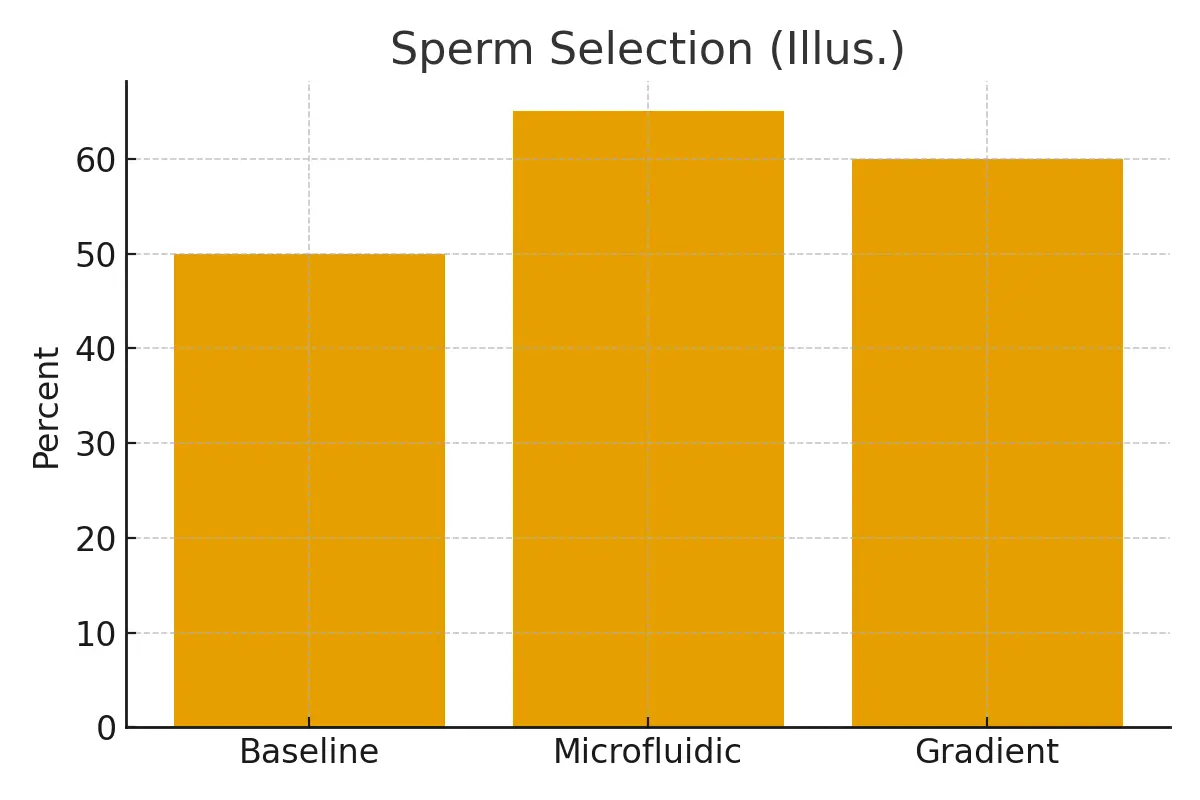
Key Takeaways
- Microfluidic sperm selection mimics natural sperm migration
- Density gradient is a long-standing, widely available IVF method
- Microfluidics may reduce sperm DNA fragmentation and oxidative stress
- Density gradient remains effective for many standard IVF cases
- The best method depends on male-factor diagnosis and IVF history
Selecting the healthiest sperm is a critical step in IVF—especially in gestational surrogacy, where embryo quality directly affects pregnancy safety and success. Two commonly used sperm-preparation techniques are microfluidic sperm selection and density gradient centrifugation.
For intended parents, understanding the difference helps guide treatment decisions. For gestational surrogates, it provides reassurance that embryos are created using the safest and most advanced methods available. This dual guide compares how each technique works, their advantages, limitations, and when one may be preferred over the other.
What Is Density Gradient Sperm Preparation?
Density gradient centrifugation is a traditional laboratory method used for decades in IVF.
How Density Gradient Works
- Semen is layered over solutions of varying density
- The sample is centrifuged
- Heavier, motile sperm settle at the bottom
- Debris and immotile sperm are separated
Strengths of Density Gradient
- Widely available and cost-effective
- Efficient for removing debris and dead sperm
- Suitable for many routine IVF and ICSI cycles
Limitations
- Centrifugation can increase oxidative stress
- DNA fragmentation may not be fully eliminated
What Is Microfluidic Sperm Selection?
Microfluidic sperm selection uses tiny lab-engineered channels to mimic natural sperm movement within the female reproductive tract.
How Microfluidic Selection Works
- Sperm swim through microchannels without centrifugation
- Only the strongest, most motile sperm reach the collection chamber
- Damaged sperm and debris are left behind
Advantages of Microfluidics
- Minimal mechanical stress
- Lower levels of sperm DNA fragmentation
- Reduced oxidative damage
- More physiologic, natural selection process
Microfluidic vs Density Gradient: Side-by-Side Comparison
Selection Mechanism
- Density Gradient: Centrifugal force
- Microfluidic: Natural sperm motility
DNA Integrity
- Density Gradient: Moderate improvement
- Microfluidic: Often superior in high DNA fragmentation cases
Oxidative Stress
- Density Gradient: Higher risk due to centrifugation
- Microfluidic: Significantly reduced
Availability
- Density Gradient: Widely available
- Microfluidic: Limited to advanced IVF labs
Which Method Is Better for Surrogacy IVF?
In gestational surrogacy, embryo quality impacts:
- Implantation success
- Pregnancy stability
- Reduced miscarriage risk
Microfluidic Selection May Be Preferred When:
- Male-factor infertility is present
- High sperm DNA fragmentation is diagnosed
- There is a history of failed IVF cycles
Density Gradient May Be Sufficient When:
- Sperm parameters are normal
- It is a first IVF attempt
- Donor sperm is used
Case Study
Background:
An intended parent couple pursuing surrogacy had experienced two failed IVF cycles using density gradient sperm preparation.
Intervention:
The clinic switched to microfluidic sperm selection combined with ICSI.
Outcome:
- Improved blastocyst quality
- Successful embryo transfer to a gestational surrogate
- Ongoing healthy pregnancy
Testimonials
Intended Parent – USA
“Switching to microfluidic sperm selection finally gave us high-quality embryos after years of struggle.”
Gestational Surrogate – Canada
“Knowing the embryos were created using advanced lab techniques made me feel confident and supported.”
Fertility Lab Director
“Both methods have value, but microfluidics is transformative for patients with DNA fragmentation issues.”
Expert Quote
“Microfluidic sperm selection reduces mechanical stress and oxidative damage, making it an excellent option for complex male-factor cases.”
— Dr. Arjun Mehta, Reproductive Embryologist
Related Links
- IVF Process in Gestational Surrogacy
- Male-Factor Infertility Treatments
- Advanced IVF Laboratory Technologies
- Embryo Development and Grading
Glossary
- Microfluidic Sperm Selection: A centrifuge-free method using microchannels
- Density Gradient: Sperm separation using layered solutions and centrifugation
- DNA Fragmentation: Damage within sperm genetic material
- Oxidative Stress: Cellular damage caused by reactive oxygen species
- ICSI: Intracytoplasmic Sperm Injection
Frequently Asked Questions (FAQ)
Q. Is microfluidic sperm selection safe for embryos?
Ans : Yes. It avoids centrifugation and reduces stress on sperm.
Q. Does microfluidic selection replace density gradient?
Ans : No. Both methods are valuable and used based on patient needs.
Q. Which method improves IVF success rates more?
Ans : Microfluidics may help in male-factor infertility, while density gradient works well for standard cases.
Q. Is microfluidic sperm selection expensive?
Ans : It may involve additional lab costs depending on the clinic.
Q. Is density gradient still widely used?
Ans : Yes. It remains the most common sperm preparation method worldwide.
Q. Can microfluidics reduce miscarriage risk?
Ans : It may reduce miscarriage risk linked to sperm DNA damage.
Q. Is microfluidic selection used with ICSI?
Ans : Yes. It is commonly combined with ICSI.
Q. Is donor sperm processed using microfluidics?
Ans : Usually not necessary, as donor sperm is already highly screened.
Q. Does sperm selection method affect the surrogate?
Ans : No direct risk to the surrogate, but better embryos support safer pregnancies.
Q. How long does microfluidic processing take?
Ans : It typically adds minimal time to sperm preparation.
Q. Can unexplained infertility benefit from microfluidics?
Ans : Yes, particularly when hidden DNA damage is suspected.
Q. Who decides which method to use?
Ans : The fertility specialist and embryology team make the recommendation.
Ready to take the next step? Call Surrogacy4All at (212) 661-7673 or email info@surrogacy4all.com to book your consultation.

Dr. Kulsoom Baloch
Dr. Kulsoom Baloch is a dedicated donor coordinator at Egg Donors, leveraging her extensive background in medicine and public health. She holds an MBBS from Ziauddin University, Pakistan, and an MPH from Hofstra University, New York. With three years of clinical experience at prominent hospitals in Karachi, Pakistan, Dr. Baloch has honed her skills in patient care and medical research.
- Dr. Kulsoom Baloch

- Dr. Kulsoom Baloch
- Dr. Kulsoom Baloch
- Dr. Kulsoom Baloch