
Key Takeaways
- A surrogacy Budget Builder organizes costs into base, expected, and contingency categories.
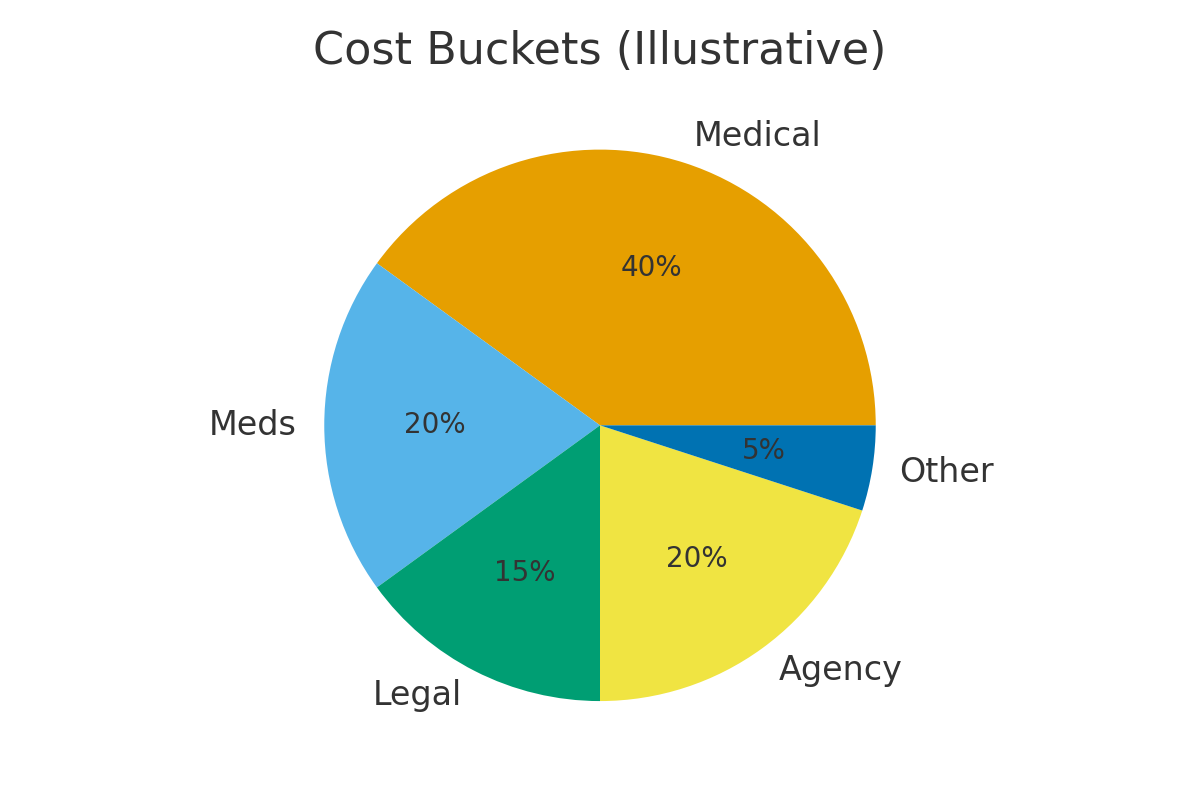
- Base costs include routine IVF, surrogacy agency, legal, and compensation fees.
- Expected costs account for medications, monitoring, travel, and miscellaneous clinic charges.
- Contingency funds cover unexpected medical events, additional cycles, or emergencies.
- Proper budgeting reduces stress and ensures smooth coordination between surrogates and intended parents.
Financial planning is a critical component of the surrogacy journey. From IVF cycles and legal fees to medications and travel, costs can quickly become complex. The Budget Builder Tool simplifies this process by breaking your finances into three clear categories: Base, Expected, and Contingency.
This guide explains how to use this tool, what each category includes, and how it helps surrogates and intended parents prepare for a predictable and stress-free journey.
Understanding Base Costs
Base costs are the mandatory, predictable expenses required for every surrogacy journey. These usually include:
- Surrogate base compensation
- Agency fees
- Legal fees (contracts, parental rights)
- IVF cycle fees (retrieval, fertilization, embryo transfer)
- Standard insurance coverage
Base costs form the foundation of your budget. They are generally fixed and known before starting the cycle.
Calculating Expected Costs
Expected costs cover variable or semi-predictable expenses that may arise during the surrogacy process. These include:
- Medications for ovarian stimulation or uterine preparation
- Monitoring (blood tests, ultrasounds)
- Travel and lodging for surrogates or intended parents
- Optional procedures (PGT-A, embryo freezing)
- Nutrition and wellness support
Expected costs are estimated based on historical averages but may vary slightly depending on clinic or geographic location.
Planning for Contingency
Contingency funds account for unexpected events or emergencies. Examples include:
- Additional IVF cycles due to failed implantation
- Medical complications during pregnancy
- Emergency travel or hospitalizations
- Legal amendments or additional insurance
Setting aside 10–20% of total budget as contingency ensures preparedness without financial strain.
How to Use the Budget Builder Tool
Step 1: Input Base Costs
Enter all mandatory fees including agency, legal, surrogate compensation, and IVF cycle costs.
Step 2: Add Expected Costs
Include medications, monitoring, travel, and optional procedures to calculate a realistic expected budget.
Step 3: Estimate Contingency Fund
Decide on a percentage of the total (10–20%) to cover unexpected costs. The tool will sum Base + Expected + Contingency to show your total projected budget.
Case Study
Scenario: Intended parents Sarah and Dev plan their first surrogacy cycle.
Input:
- Base Costs: $80,000 (agency, legal, IVF, surrogate compensation)
- Expected Costs: $15,000 (medications, monitoring, travel)
- Contingency: 15% (~$14,250)
Outcome: Total projected budget: $109,250
The Budget Builder allowed them to allocate funds, compare insurance coverage, and prepare for potential additional cycles without stress.
Testimonials
Priya, Intended Parent
“Using the Budget Builder gave us a clear picture of all costs before we even started the surrogacy process. It removed so much financial uncertainty.”
Michael, Gestational Surrogate
“I appreciated seeing expected expenses and contingency funds. It helped me plan my schedule and travel confidently.”
Lina, Surrogacy Coordinator
“This tool simplifies discussions about money, which can otherwise be stressful for both surrogates and intended parents.”
Expert Quote
“Financial clarity is essential in surrogacy. A Budget Builder that breaks down base, expected, and contingency costs ensures all parties are aligned and prepared for every scenario.”
— Dr. Kavya Menon, Fertility Financial Consultant
Related Links
Glossary
- Base Costs: Fixed, essential expenses in surrogacy.
- Expected Costs: Variable but predictable costs like medication and monitoring.
- Contingency Fund: Reserved for unexpected expenses or emergencies.
- IVF Cycle: Complete egg retrieval, fertilization, and embryo transfer process.
- PGT-A: Genetic testing of embryos.
- Gestational Carrier: Surrogate carrying the pregnancy for intended parents.
- Agency Fees: Costs for coordinating legal, medical, and support services.
FAQs
Q. What are base costs in surrogacy?
Ans : Base costs include fixed fees such as IVF cycle costs, surrogate compensation, agency fees, and legal contracts. These costs are generally known before starting the process.
Q. What are expected costs?
Ans : Expected costs are variable but predictable expenses, like medications, monitoring appointments, travel, and optional procedures like embryo freezing or PGT-A.
Q. How is the contingency fund calculated?
Ans : Typically, 10–20% of the total projected budget is set aside to cover unexpected costs, such as additional IVF cycles, emergencies, or complications during pregnancy.
Q. Why is financial planning important in surrogacy?
Ans : Surrogacy involves multiple stakeholders and medical procedures. Proper budgeting ensures transparency, reduces stress, and helps both intended parents and surrogates manage expectations.
Q. Can surrogates use the Budget Builder?
Ans : Yes. Surrogates can track expected travel, medical, and wellness expenses to plan their schedule and reduce personal financial risk.
Q. Does the tool consider insurance coverage?
Ans : You can manually include insurance coverage or deductibles to get an accurate overall budget projection.
Q. Can the Budget Builder help compare refund programs?
Ans : Yes. By including potential refund percentages as part of expected or contingency costs, you can evaluate financial trade-offs.
Q. How often should the budget be updated?
Ans : Budgets should be revisited whenever new costs, medications, or procedures are added. A dynamic approach ensures accuracy throughout the surrogacy journey.
Q. Does the tool factor in multiple cycles?
Ans : Yes. You can enter additional cycles to see how base, expected, and contingency costs scale, helping plan for multiple attempts if necessary.
Q. Can intended parents and surrogates share the budget?
Ans : Yes. Shared access ensures both parties understand financial responsibilities, reducing miscommunication and building trust.
Q. Are travel costs included?
Ans : Travel and lodging can be added under expected costs to ensure a complete financial picture.
Q. Is this tool useful for international surrogacy programs?
Ans : Absolutely. You can input local currency, clinic fees, and travel costs to generate an accurate, customized budget for any location.
Plan your surrogacy journey with confidence. Use our Budget Builder Tool to manage base, expected, and contingency costs efficiently.
Or help families grow:
Ready to take the next step? Call Surrogacy4All at (212) 661-7673 or email info@surrogacy4all.com to book your consultation.

Dr. Kulsoom Baloch
Dr. Kulsoom Baloch is a dedicated donor coordinator at Egg Donors, leveraging her extensive background in medicine and public health. She holds an MBBS from Ziauddin University, Pakistan, and an MPH from Hofstra University, New York. With three years of clinical experience at prominent hospitals in Karachi, Pakistan, Dr. Baloch has honed her skills in patient care and medical research.
- Dr. Kulsoom Baloch

- Dr. Kulsoom Baloch
- Dr. Kulsoom Baloch
- Dr. Kulsoom Baloch