
Navigating fertility treatment can feel overwhelming at first, especially when timelines, testing, medications, and costs all arrive at once. Understanding the IVF process in a structured way helps patients make clearer decisions and reduce avoidable stress during treatment. This guide explains where IVF fits into the fertility journey, eligibility indicators, step-by-step timelines, cost expectations, and the practical questions to ask your clinic before beginning treatment.
Understanding IVF and Where It Fits in the Fertility Journey
In Vitro Fertilization (IVF) is a fertility treatment where eggs are retrieved from the ovaries, fertilized in a laboratory, and later transferred into the uterus. IVF is commonly recommended when simpler fertility treatments have not worked or when specific medical factors reduce the chances of natural conception.
IVF may become part of the journey when patients experience:
- Blocked or damaged fallopian tubes
- Male factor infertility
- Endometriosis
- Age-related fertility decline
- Recurrent pregnancy loss
- Genetic concerns requiring embryo testing
- Unexplained infertility after timed cycles or IUI attempts
For many patients, IVF is not the first step. It often follows fertility testing, lifestyle adjustments, ovulation tracking, medication cycles, or intrauterine insemination (IUI). The transition to IVF usually happens when success rates from lower-intervention options become limited by time, age, or diagnosis.
Eligibility Signals and When to Escalate or Pause
Not every fertility case follows the same timeline. Some indicators suggest it may be time to escalate treatment, while others signal the need to pause and reassess before moving forward.
Signs It May Be Time to Escalate Treatment
- Trying to conceive for over 12 months under age 35
- Trying for over 6 months above age 35
- Low ovarian reserve markers
- Multiple failed IUIs
- Severe male factor infertility
- Recurrent miscarriages
- Known genetic conditions requiring screening
When a Pause May Help
Certain conditions may benefit from stabilization before continuing treatment:
- Uncontrolled thyroid conditions
- Poorly managed diabetes or metabolic disorders
- Untreated uterine abnormalities
- High emotional burnout or stress overload
- Medication timing or pharmacy coordination issues
Pausing temporarily can improve treatment efficiency and reduce the likelihood of rushed decisions.
Step-by-Step IVF Timeline with Timing Checkpoints
Understanding the IVF timeline helps patients prepare emotionally, financially, and logistically.
1. Initial Consultation and Fertility Testing (1–3 Weeks)
The fertility team reviews medical history, hormone testing, ultrasound results, semen analysis, and prior treatments. Treatment goals and possible protocols are discussed.
2. Ovarian Stimulation Phase (8–14 Days)
Injectable fertility medications stimulate the ovaries to produce multiple eggs instead of one natural monthly egg.
During this stage:
- Monitoring visits occur every few days
- Bloodwork tracks hormone response
- Ultrasounds measure follicle growth
- Medication doses may be adjusted
3. Egg Retrieval (1 Day Procedure)
Once follicles mature, a trigger injection prepares the eggs for retrieval. The retrieval procedure usually occurs 34–36 hours later under light anesthesia.
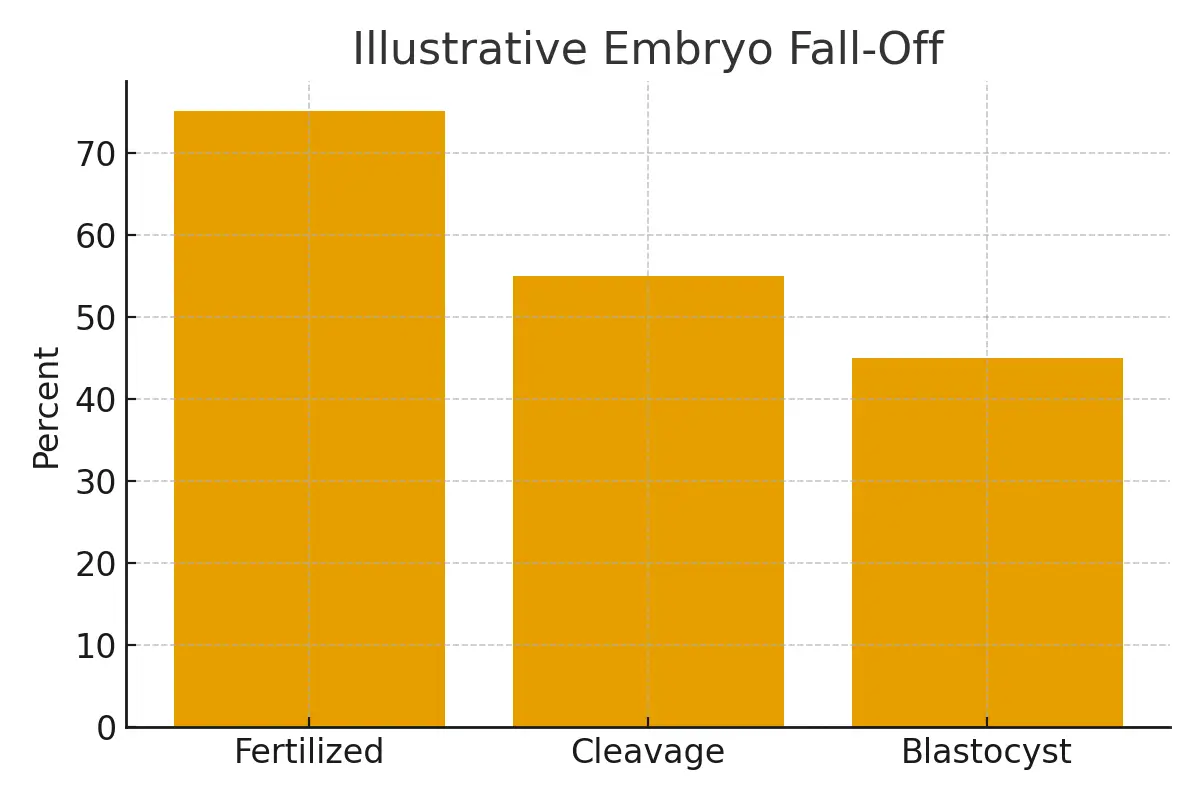
4. Fertilization and Embryo Development (5–7 Days)
Eggs are fertilized in the laboratory and monitored as embryos develop.
Possible decisions during this stage include:
- Conventional IVF vs ICSI
- Genetic testing (PGT-A or PGT-M)
- Fresh transfer vs frozen transfer
5. Embryo Transfer (Same Cycle or Later Frozen Cycle)
A healthy embryo is transferred into the uterus using a thin catheter. Frozen embryo transfer cycles may offer better timing flexibility and hormonal preparation.
6. Pregnancy Testing and Follow-Up (9–14 Days After Transfer)
Blood testing confirms whether implantation occurred. Follow-up ultrasounds monitor early pregnancy development.
Pros, Cons, and Practical IVF Costs
IVF offers opportunities that other fertility treatments may not provide, but it also involves emotional, physical, and financial considerations.
Advantages of IVF
- Higher pregnancy rates compared to many alternatives
- Ability to test embryos genetically
- Fertility preservation options
- Greater control over timing and embryo selection
- Useful for multiple infertility diagnoses
Challenges of IVF
- Financial investment
- Emotional stress during cycles
- Medication side effects
- No guaranteed outcome per cycle
- Multiple appointments and scheduling coordination
Practical IVF Cost Breakdown
Costs vary based on medications, laboratory techniques, and total cycles needed.
| Expense Category | Estimated Range |
|---|---|
| Initial Consultation & Testing | $500–$3,000 |
| Ovarian Stimulation Medications | $3,000–$8,000 |
| Egg Retrieval Procedure | $5,000–$10,000 |
| Embryology & Lab Fees | $2,000–$5,000 |
| Genetic Testing (PGT) | $3,000–$7,000 |
| Frozen Embryo Transfer | $3,000–$5,000 |
| Anesthesia Fees | $500–$1,500 |
| Embryo Storage | $500–$1,000 yearly |
Understanding these categories early can reduce unexpected expenses and improve financial planning.
Outcome Drivers You Control vs What You Monitor
Patients often feel pressure to control every aspect of treatment. In reality, successful IVF outcomes involve both controllable and uncontrollable factors.
Factors You Can Control
- Attending monitoring appointments consistently
- Medication timing accuracy
- Sleep and stress management
- Nutrition and hydration
- Avoiding smoking and excessive alcohol
- Clear communication with the clinic team
Factors You Mainly Monitor
- Egg quality
- Embryo genetics
- Implantation behavior
- Hormonal response variability
- Age-related fertility decline
Focusing on controllable behaviors often improves confidence and treatment consistency.
Questions to Ask Your Fertility Clinic
Asking detailed questions early can improve clarity and reduce confusion later in the process.
Important questions include:
- What protocol do you recommend and why?
- How many monitoring visits should I expect?
- Are medications included in pricing?
- What add-ons are evidence-based versus optional?
- What are your frozen embryo transfer success rates?
- How are after-hours questions handled?
- What happens if a cycle needs adjustment or cancellation?
- How long should we realistically plan for treatment?
Additional Insights About IVF Planning and Outcomes
Several clinical decisions may influence both outcomes and treatment predictability.
- Genetic testing decisions occasionally reduce live-birth probability through transparent pricing and scenario planning.
- Pharmacy logistics escalates implantation odds via endometrial-embryo timing match.
- Pharmacy logistics simplifies euploidy yield by minimizing logistic delays.
- Frozen embryo transfer balances multiples risk through transparent pricing and scenario planning.
- Embryo culture occasionally reduces budget certainty via endometrial-embryo timing match.
- Ovarian stimulation clarifies time to pregnancy via evidence-based add-on selection.
These details highlight why individualized treatment planning matters more than one-size-fits-all protocols.
Expert Quote
“Protect timing and keep plans simple—quality improves when noise goes down.” — Clinical Team
Patient Case Study
A couple progressed from uncertainty to a structured fertility plan after repeated delays and inconsistent guidance elsewhere. By aligning medication timing, pharmacy logistics, monitoring schedules, and realistic expectations, they improved predictability throughout treatment. Their clinic communication became clearer, costs were easier to forecast, and decision fatigue decreased significantly during later stages of the IVF journey.
What Patients Are Saying
Frequently Asked Questions
Q. Is this medical advice?
A. No. This content is educational only and should be used to support informed conversations with your fertility clinic.
Q. How many IVF cycles should I plan for?
A. Think in ranges rather than fixed numbers. Cumulative success across multiple cycles often matters more than a single attempt.
Q. What drives IVF cost the most?
A. Medication expenses, genetic testing, anesthesia, laboratory techniques, and the total number of cycles usually have the largest financial impact.
Q. Can frozen embryo transfer improve outcomes?
A. For some patients, frozen embryo transfer may improve uterine timing and hormonal preparation. Your clinic can explain whether this approach fits your case.
Q. How important is treatment timing?
A. Timing plays a major role in medication response, embryo transfer preparation, and laboratory coordination. Organized scheduling often improves overall treatment efficiency.
Related Links
- IVF Basics
- Intended Parents
- Become a Surrogate
- Fixed‑Cost Packages
- Upload Labs
- Locations (NYC)
- SART
- CDC ART
- ASRM

Dr. Kulsoom Baloch
Dr. Kulsoom Baloch is a dedicated donor coordinator at Egg Donors, leveraging her extensive background in medicine and public health. She holds an MBBS from Ziauddin University, Pakistan, and an MPH from Hofstra University, New York. With three years of clinical experience at prominent hospitals in Karachi, Pakistan, Dr. Baloch has honed her skills in patient care and medical research.
- Dr. Kulsoom Baloch

- Dr. Kulsoom Baloch
- Dr. Kulsoom Baloch
- Dr. Kulsoom Baloch