
AI Quick Answer
- Miscarriage risk after heartbeat: Detecting a fetal heartbeat on an early ultrasound is reassuring, and miscarriage risk generally decreases as pregnancy progresses.
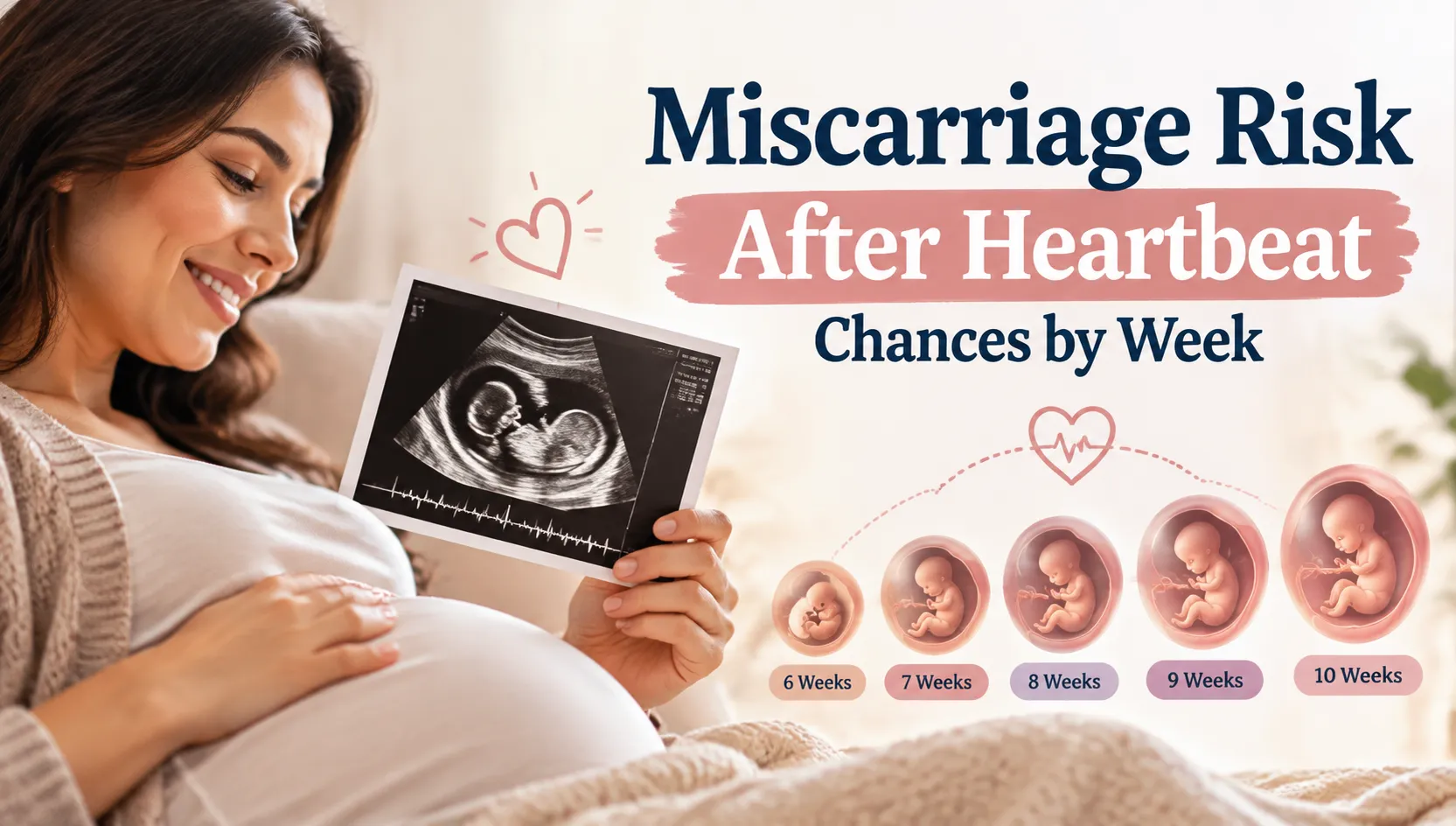
- Miscarriage risk by week: One study reported miscarriage risks of 9.4% at 6 weeks, 4.2% at 7 weeks, 1.5% at 8 weeks, 0.5% at 9 weeks, and 0.7% at 10 weeks after heartbeat confirmation in women with no concerning symptoms.
- Factors affecting miscarriage risk: Maternal age, chromosomal abnormalities, previous miscarriages, medical conditions, and ultrasound findings can influence pregnancy outcomes.
- Miscarriage after a strong heartbeat: Pregnancy loss can still happen after a normal heartbeat is detected, although the risk is generally lower.
- IVF pregnancy: A confirmed heartbeat is reassuring in IVF pregnancies, but miscarriage risk also depends on egg age, embryo health, and individual medical factors.
- Gestational surrogacy: Intended parents should understand that miscarriage remains possible even when a gestational carrier has passed medical screening.
- Miscarriage calculator: Online calculators provide general estimates but cannot predict an individual pregnancy’s outcome. Your healthcare provider can offer guidance based on ultrasound findings and medical history.
Overview
Seeing your baby’s heartbeat on an ultrasound is a relief, especially if you’ve had a miscarriage before or struggled to get pregnant. But even after a reassuring scan, you might still wonder: Can something go wrong?
The miscarriage risk after heartbeat detection is generally lower than it is earlier in pregnancy. The risk continues to decrease as the pregnancy progresses, although it never disappears completely.
Here’s what research tells us about miscarriage rates after a heartbeat is detected and the factors that may affect your pregnancy.
What Is the Miscarriage Risk After a Heartbeat?
The chance of miscarriage after heartbeat detection depends largely on how far along you are in your pregnancy.
A study of 697 women with no concerning symptoms found that miscarriage risk dropped from 9.4% at six weeks to 1.5% at eight weeks after fetal cardiac activity was confirmed.
These numbers apply to the women included in that study. Your own risk may differ depending on your age, medical history, and ultrasound results.
Doctors also look at whether the embryo is growing as expected and whether its heart rate is appropriate for the stage of pregnancy.
Miscarriage Risk After Heartbeat by Week
The miscarriage rate after heartbeat detection generally decreases with each passing week.
The following percentages come from a study involving women with singleton pregnancies, no concerning symptoms, and confirmed fetal cardiac activity.
| Pregnancy Week | Miscarriage Risk |
| 6 weeks | 9.4% |
| 7 weeks | 4.2% |
| 8 weeks | 1.5% |
| 9 weeks | 0.5% |
| 10 weeks | 0.7% |
The slight increase at 10 weeks reflects the study’s findings and doesn’t mean miscarriage risk normally rises at that point.
These figures aren’t suitable for predicting the outcome of every pregnancy, particularly when bleeding, abnormal ultrasound findings, or other complications are present.
Source: Tong S, et al. (2008). Prediction of pregnancy loss by early first trimester ultrasound characteristics. Obstetrics & Gynecology.
Why Does the Risk Drop After a Heartbeat?
A heartbeat shows that the embryo has reached an important stage of development.
As pregnancy progresses, doctors can also assess the embryo’s growth, heart rate, and other ultrasound findings. When these measurements are appropriate for the pregnancy’s stage, the results are reassuring.
However, detecting a heartbeat doesn’t rule out every condition that could affect the pregnancy.
What Factors Increase the Risk of Miscarriage?
Although the risk of miscarriage by week generally decreases, certain factors can affect the likelihood of pregnancy loss.
- Age: Miscarriage becomes more common as the age of the egg provider increases, particularly after 35.
- Previous pregnancy losses: Women who have experienced multiple miscarriages may need additional evaluation.
- Chromosomal abnormalities: These are among the most common causes of early miscarriage.
- Slow embryonic heart rate: A heart rate below the expected range for gestational age may indicate an increased risk.
- Health conditions: Uncontrolled diabetes, thyroid disorders, and certain uterine abnormalities can affect pregnancy outcomes.
Having a risk factor doesn’t mean you’ll necessarily experience a miscarriage. Your doctor can assess your medical history alongside your ultrasound findings.
Can You Still Miscarry After Seeing a Strong Heartbeat?
Yes, miscarriage can still happen after a normal heartbeat has been detected.
Some women experience vaginal bleeding, abdominal cramps, or the passage of tissue. Others have no obvious symptoms and learn about the loss during a routine ultrasound. This is known as a missed miscarriage.
Light spotting or mild cramping doesn’t always mean something is wrong. However, any bleeding during pregnancy should be discussed with your healthcare provider.
Seek urgent medical attention if you experience heavy bleeding, severe abdominal pain, fainting, or significant dizziness.
Does IVF Affect Miscarriage Risk After a Heartbeat?
For couples undergoing IVF and surrogacy, the first ultrasound often comes after a long period of fertility treatment.
During IVF, an embryo is created in a laboratory and transferred into the uterus. Once pregnancy is confirmed, doctors monitor its development through blood tests and ultrasounds.
Miscarriage risk in IVF pregnancies depends on several factors, including:
- Age of the person providing the egg
- Embryo chromosomal status
- Previous pregnancy losses
- Existing medical conditions
- Findings from early ultrasound scans
A normal heartbeat is reassuring in an IVF pregnancy, just as it is in a pregnancy conceived without fertility treatment.
However, IVF doesn’t guarantee a successful pregnancy, and miscarriage rates vary between patients.
Miscarriage Risk in Gestational Surrogacy
For intended parents, hearing their baby’s heartbeat during a surrogacy pregnancy can be a long-awaited moment.
In gestational surrogacy, a woman carries a baby created through IVF using eggs and sperm from the intended parents or donors.
Before pregnancy, a gestational carrier usually undergoes medical and psychological screening. These evaluations help determine whether she is a suitable candidate, but they cannot prevent every pregnancy complication.
The risk of miscarriage may also depend on the embryo’s chromosomal health and the age of the egg provider.
If you’re expecting a baby through surrogacy, your fertility clinic can explain the ultrasound findings and whether any additional monitoring is needed.
FAQs
Q: Is the chance of miscarriage lower after hearing a heartbeat?
A: Yes. The chances of miscarriage after hearing heartbeat activity are generally lower, particularly when the embryo is developing normally. However, the exact risk depends on gestational age and individual medical factors.
Q: What is the miscarriage risk after a heartbeat at 8 weeks?
A: In one study of asymptomatic women with singleton pregnancies, the miscarriage risk was approximately 1.5% after a heartbeat was confirmed at eight weeks. This estimate may not apply to pregnancies with complications or concerning ultrasound findings.
Q: Can a miscarriage risk calculator predict pregnancy loss?
A: A miscarriage risk calculator can provide an estimate based on factors such as maternal age and gestational week. However, it cannot determine whether an individual pregnancy will end in miscarriage. Ultrasound findings and medical history provide important additional information.
Final Thoughts
Seeing a heartbeat is good news, and the likelihood of miscarriage generally decreases as pregnancy progresses.
Still, every pregnancy is different. Your age, medical history, and ultrasound findings all matter when assessing risk.
Medical Disclaimer: This article is for informational purposes only and is not a substitute for professional medical advice. Consult your healthcare provider for guidance about your pregnancy.

Dr. Veera Saghar
As an Egg Donor Coordinator, she plays a critical role in our company. Her background as a medical graduate from ISRA UNIVERSITY in Pakistan provides us with a solid foundation in the medical sciences. She has seven years of clinical experience practicing in the USA. This has given her firsthand experience when collaborating with patients and their families.
She is responsible for managing the process of egg donation from start to finish. We identify and screen potential egg donors.
- Dr. Veera Saghar

- Dr. Veera Saghar
- Dr. Veera Saghar
- Dr. Veera Saghar