
AI Summary
- A surrogate mother usually becomes pregnant through gestational surrogacy, where an embryo created through IVF is transferred into her uterus.
- The surrogate does not become pregnant through natural conception or sexual intercourse.
- Fertility doctors prepare the uterus, transfer the embryo, and monitor the pregnancy carefully.
- A gestational carrier usually has no genetic connection to the baby.
- The process involves medical screening, legal agreements, IVF treatment, and ongoing prenatal care.
Introduction
A surrogate mother helps intended parents have a child by carrying a pregnancy for them. Many people wonder how a surrogate becomes pregnant and what happens during the process. In modern surrogacy, pregnancy usually happens through medical procedures like IVF and embryo transfer.
The surrogate carries the baby but may not share a genetic connection with the child. Understanding the process can help beginners understand the surrogate meaning and how gestational surrogacy works.
What Does Surrogate Mother Mean?
A surrogate mother is a woman who agrees to carry and give birth to a baby for another person or couple who cannot carry a pregnancy themselves.
The surrogate mother meaning is based on the idea of helping intended parents experience parenthood by providing a safe environment for the baby to grow during pregnancy.
Today, most surrogacy arrangements use gestational surrogacy, where the surrogate carries an embryo created with the egg and sperm of the intended parents or donors.
A woman who carries the pregnancy is also known as a gestational carrier because she carries the pregnancy without being genetically related to the baby in most cases.
How Does a Surrogate Mother Become Pregnant?
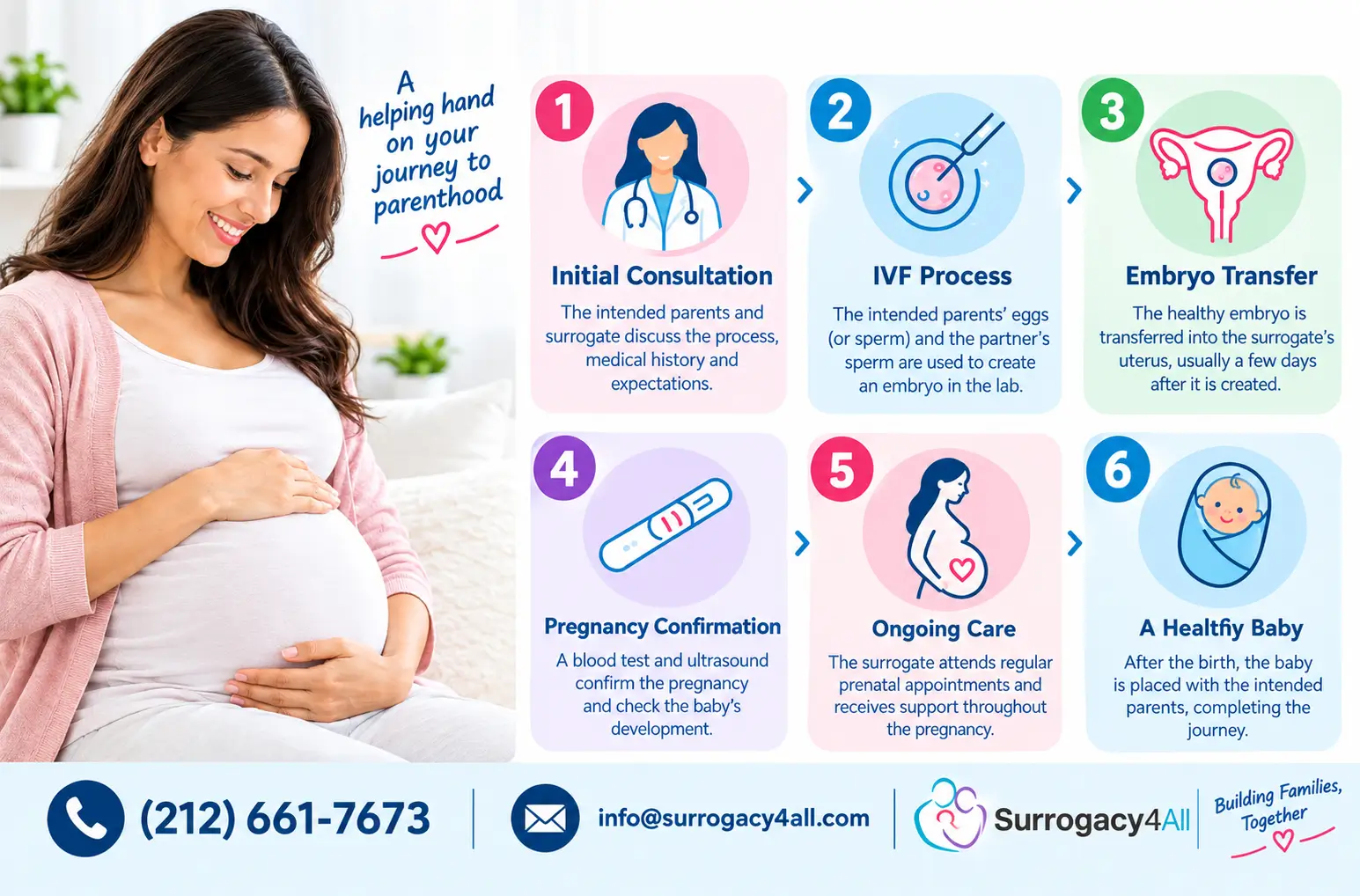
A surrogate mother becomes pregnant through a process called embryo transfer, which is part of in vitro fertilization (IVF).
Unlike a natural pregnancy, the process does not involve sexual intercourse. Instead, fertility specialists create an embryo in a laboratory and place it inside the surrogate’s uterus.
The main steps include:
How Is the Embryo Created During Surrogacy?
Before pregnancy begins, doctors create an embryo using IVF technology.
The process usually involves:
- Collecting eggs from the intended mother or an egg donor.
- Collecting sperm from the intended father or a sperm donor.
- Fertilizing the egg and sperm in a fertility laboratory.
- Allowing the embryo to develop before transfer.
The embryo is then selected for transfer into the surrogate’s uterus.
How Is a Surrogate’s Body Prepared for Pregnancy?
Before embryo transfer, doctors prepare the surrogate’s uterus to increase the chances of successful implantation.
The surrogate may receive hormone medications that help develop a healthy uterine lining. Doctors monitor her health through:
- Ultrasound scans
- Blood tests
- Medical examinations
This preparation helps create the right conditions for the embryo to attach and begin developing.
What Happens During the Embryo Transfer Process?
During embryo transfer, a fertility specialist places the embryo into the surrogate’s uterus using a thin medical tube called a catheter.
The procedure is usually quick and does not require major surgery.
After the transfer:
- The surrogate rests for a short period.
- Doctors wait to see if implantation occurs.
- A pregnancy test is performed after several days.
If the embryo successfully implants, the surrogate becomes pregnant.
Does a Surrogate Mother Share DNA With the Baby?
In most cases, a surrogate mother does not share DNA with the baby.
This is because gestational surrogacy uses an embryo created from the intended parents’ genetic material or donor material.
The surrogate provides the uterus needed for the baby to grow but does not contribute an egg.
This is different from traditional surrogacy, where the surrogate’s own egg may be used. Traditional surrogacy is less common because it creates additional medical and legal considerations.
What Happens After a Surrogate Becomes Pregnant?
Once pregnancy is confirmed, the surrogate receives regular medical care like any other pregnancy.
Doctors monitor:
- Baby’s growth and development
- Surrogate’s health
- Pregnancy progress
- Any possible complications
The surrogate follows prenatal appointments, maintains a healthy lifestyle, and works with medical professionals throughout the pregnancy.
Organizations such as Surrogacy4All help guide intended parents and surrogates through the medical, legal, and emotional steps involved in the process.
How Can Someone Become a Surrogate Mother?
Many women ask how to become a surrogate mother and what requirements are involved.
Although requirements vary by location and agency, common expectations include:
- Being within a healthy age range for pregnancy
- Having previous successful pregnancy experience
- Passing medical screenings
- Completing psychological evaluations
- Understanding the responsibilities involved
A surrogate should also have a strong support system and be prepared for the physical and emotional aspects of pregnancy.
Is Gestational Surrogacy Safe?
Gestational surrogacy is a carefully managed medical process. Fertility specialists, doctors, and support teams work together to protect the health of both the surrogate and the baby.
Like any pregnancy, surrogacy can involve normal pregnancy risks. Regular medical care helps identify and manage potential concerns.
Working with experienced professionals can make the process more organized and informed for everyone involved.
Learn More About the Surrogacy Process
Understanding the mechanics of surrogacy can be beneficial to both the intended parents and the surrogates themselves. Every surrogacy situation is different and often requires coordination of many different, and sometimes competing, needs.
For professional guidance about gestational surrogacy, contact Surrogacy4All:
- Phone: (212) 661-7673
- Email: info@surrogacy4all.com
Frequently Asked Questions –
Q. How does a surrogate mother get pregnant?
A. A surrogate mother usually becomes pregnant through IVF. Doctors transfer an embryo created in a laboratory into the surrogate’s uterus.
Q. What is the meaning of surrogate mother?
A. A surrogate mother is a woman who carries a baby for intended parents who cannot or choose not to carry a pregnancy themselves.
Q. Is a gestational carrier the biological mother?
A. In gestational surrogacy, the gestational carrier usually has no genetic relationship with the baby because she does not provide the egg.
Q. How long does the surrogate pregnancy process take?
A. The timeline varies, but the process can take several months because it includes screening, matching, IVF preparation, embryo transfer and pregnancy care.
Q. Can someone become a surrogate mother more than once?
A. Yes, some women choose to become surrogates again after completing a healthy pregnancy and receiving medical approval.

Dr. Veera Saghar
As an Egg Donor Coordinator, she plays a critical role in our company. Her background as a medical graduate from ISRA UNIVERSITY in Pakistan provides us with a solid foundation in the medical sciences. She has seven years of clinical experience practicing in the USA. This has given her firsthand experience when collaborating with patients and their families.
She is responsible for managing the process of egg donation from start to finish. We identify and screen potential egg donors.
- Dr. Veera Saghar

- Dr. Veera Saghar
- Dr. Veera Saghar
- Dr. Veera Saghar