
Fast Facts
- An NST (Non-Stress Test) monitors the baby’s heart rate in response to movement to assess fetal wellbeing during pregnancy.
- It is a painless, non-invasive test that uses external sensors placed around the mother’s abdomen.
- Doctors may recommend an NST for reduced fetal movement, high blood pressure, diabetes, growth concerns or overdue pregnancy.
- NSTs are commonly performed during the third trimester, often after 28 weeks.
- The test usually takes 20–40 minutes, depending on the baby’s activity.
- A reactive NST result is generally reassuring, while a non-reactive result may require further monitoring.
- NST testing is considered safe for both the pregnant individual and the baby.
- During surrogacy pregnancies, NSTs may help doctors monitor the baby’s wellbeing and decide whether additional care is needed.
Overview
Pregnancy checkups help doctors keep track of a baby’s growth and health. One test they may recommend is the NST Pregnancy Test, also called a Non-Stress Test. It records the baby’s heartbeat and checks how it changes with movement. Doctors often suggest this test when they want to monitor the baby’s health more closely.
Although its name may sound like a regular pregnancy test, an NST does not confirm pregnancy. Instead, it provides information about the baby’s wellbeing before birth.
What Is a Fetal Non-Stress Test?
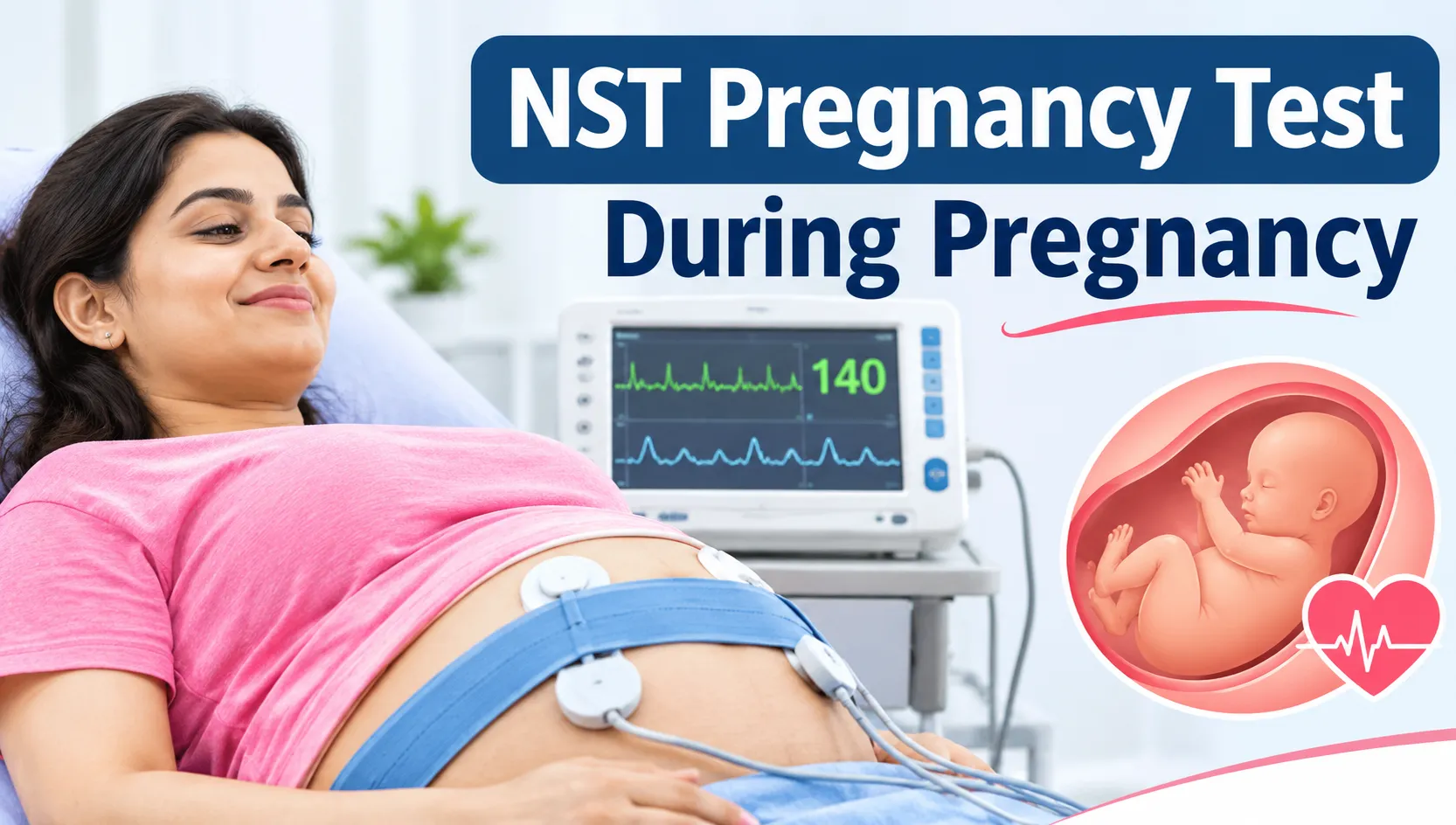
If you’re wondering what is a fetal non stress test, it is a non-invasive prenatal procedure that monitors the baby’s heart rate in response to movement.
During the test, healthcare providers observe whether the baby’s heart rate increases when the baby moves. These changes can provide useful information about fetal health.
The term “non-stress” means that the procedure does not deliberately place stress on the baby or trigger contractions. It simply records natural heart rate patterns through external monitoring equipment.
Why Is an NST Test Done During Pregnancy?
An nst test pregnancy assessment helps healthcare providers evaluate the baby’s heart rate patterns and identify situations where additional monitoring may be necessary.
An NST may be recommended for several reasons, including:
- Reduced or unusual fetal movement.
- High blood pressure or preeclampsia.
- Gestational diabetes or pre-existing diabetes.
- Concerns about the baby’s growth.
- Pregnancy continuing beyond the expected due date.
- Certain complications during previous pregnancies.
It is particularly useful for individuals with a high-risk pregnancy who may need closer observation during the later stages of pregnancy.
When Is a Non-Stress Test Recommended?
An NST is commonly performed during the third trimester, often after 28 weeks of pregnancy. However, the timing depends on individual medical circumstances.
Some pregnant individuals may require weekly or twice-weekly testing, while others may not need an NST at all. Your healthcare provider will recommend an appropriate schedule based on your health, pregnancy history and medical requirements.
How Is an NST Pregnancy Test Performed?
An NST is generally painless and does not involve needles, injections or invasive procedures.
The process usually includes these steps:
- Getting comfortable: You will sit in a reclining chair or lie comfortably on an examination bed.
- Attaching monitoring sensors: Two belts are placed around your abdomen. One records the baby’s heart rate, while the other monitors uterine activity.
- Recording movement: The equipment records the baby’s heartbeat. You may be asked to press a button whenever you feel movement.
- Reviewing the results: A healthcare professional examines the recorded patterns to determine whether the baby’s heart rate responds appropriately.
The procedure usually takes around 20–40 minutes, depending on the baby’s activity and monitoring requirements.
What Do NST Test Results Mean?
After the procedure, the results are generally classified as reactive or non-reactive.
Reactive NST Results
A reactive result is generally reassuring. It means the baby’s heart rate increases appropriately in response to movement.
For pregnancies at or beyond 32 weeks, the usual criteria include at least two heart rate increases of 15 beats per minute or more, lasting at least 15 seconds, within 20 minutes.
Non-Reactive NST Results
A non-reactive result means the expected heart rate increases were not recorded during the monitoring period.
However, this does not automatically mean something is wrong. The baby may be sleeping or less active during the test. Your healthcare provider may extend monitoring or recommend additional assessments, such as an ultrasound.
Is a Non-Stress Test Safe for the Baby?
Yes. An NST is a non-invasive procedure that is generally considered safe for both the pregnant individual and the baby. It uses external sensors for fetal heart rate monitoring without radiation, medication or invasive equipment.
The test provides useful information about fetal wellbeing without directly interfering with the pregnancy.
NST Testing During a Surrogacy Pregnancy
During Gestational Surrogacy, regular prenatal care helps monitor the health of the gestational carrier and developing baby. An NST may be recommended when the obstetrician believes additional fetal monitoring is necessary.
The timing and frequency depend on the carrier’s health, pregnancy progress and individual medical circumstances.
At Surrogacy4All, we understand the importance of proper medical coordination, informed decisions and ongoing support throughout the surrogacy journey. We help intended parents understand the different stages of pregnancy while keeping the wellbeing of the gestational carrier and baby a priority.
FAQs About NST Pregnancy Test
Q. Can I eat before a non-stress test?
A: Yes, you can generally eat and drink as usual before an NST. However, follow any specific instructions given by your healthcare provider before the appointment.
Q. What happens if my baby does not move during an NST?
A: Your baby may be sleeping during the test. The healthcare provider may extend the monitoring period or use other methods to encourage movement before reviewing the results.
Q. How often should I have an NST during pregnancy?
A: It depends on your health, pregnancy history and the reason for monitoring. Some women may need weekly or twice-weekly NSTs, while others may not need them.
Q. Can an NST detect fetal distress?
A: An NST can identify heart rate patterns that may suggest the baby needs further assessment. However, it cannot diagnose every fetal health problem on its own. Your doctor may recommend additional tests if needed.
Q. Is an NST necessary during a surrogacy pregnancy?
A: Not in every case. An obstetrician may recommend an NST during a surrogacy pregnancy if the gestational carrier or baby needs additional monitoring. The decision depends on individual medical needs.

Dr. Veera Saghar
As an Egg Donor Coordinator, she plays a critical role in our company. Her background as a medical graduate from ISRA UNIVERSITY in Pakistan provides us with a solid foundation in the medical sciences. She has seven years of clinical experience practicing in the USA. This has given her firsthand experience when collaborating with patients and their families.
She is responsible for managing the process of egg donation from start to finish. We identify and screen potential egg donors.
- Dr. Veera Saghar

- Dr. Veera Saghar
- Dr. Veera Saghar
- Dr. Veera Saghar