
Feature Snippet
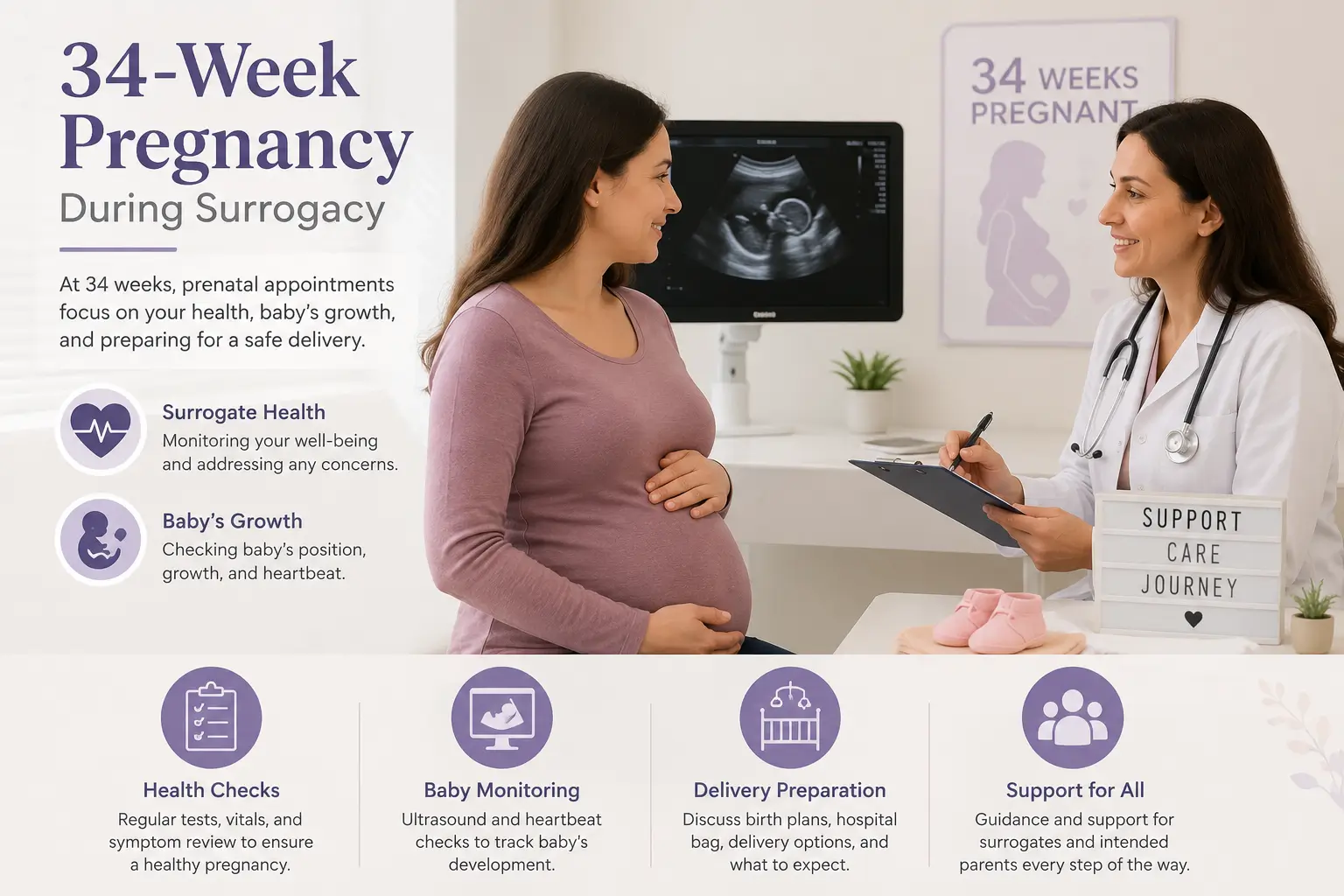
- At 34 weeks pregnant during surrogacy, prenatal appointments focus on monitoring the surrogate’s health, checking the baby’s growth and preparing for delivery.
- A 34-week pregnancy appointment helps doctors track baby development, review symptoms, discuss birth plans, and ensure the surrogacy journey is progressing safely.
- During a 34-week prenatal visit, surrogates and intended parents can expect health checks, baby monitoring, delivery preparation, and guidance for the final weeks of pregnancy.
- At 34 weeks, pregnancy care becomes more focused on delivery preparation, regular monitoring, and supporting both the surrogate and intended parents before birth.
Why the 34-Week Pregnancy Appointment Matters During Surrogacy
A 34-week appointment is an important checkpoint because doctors are closely watching the baby’s growth, movement and overall well-being. During this stage, prenatal care becomes more focused on preparing for birth and identifying any possible concerns early.
In a gestational surrogacy pregnancy, these appointments are also an opportunity to keep everyone involved informed. The surrogate’s health, the baby’s development and delivery planning are all discussed as the pregnancy moves closer to completion.
Every pregnancy is unique, and the exact monitoring schedule may depend on factors such as the surrogate’s health, the baby’s growth, and recommendations from the healthcare provider. At 34 weeks gestation, regular checkups help ensure that both the surrogate and baby are receiving appropriate care.
What Happens During a 34 Weeks Pregnant Appointment?
Many people wonder what a typical prenatal visit looks like at this stage. While every appointment may vary, doctors usually perform several routine checks to monitor progress.
| Check During Appointment | Why It Is Done |
| Blood pressure check | Helps identify signs of pregnancy-related conditions such as high blood pressure |
| Weight check | Tracks healthy changes throughout pregnancy |
| Baby heartbeat monitoring | Confirms that the baby is doing well |
| Fundal height measurement | Helps estimate baby growth and position |
| Baby position check | Determines whether the baby is head-down or in another position |
| Discussion of symptoms | Allows the doctor to address concerns or changes |
During the visit, the doctor may ask about symptoms such as swelling, contractions, changes in baby movement, sleep difficulties, or discomfort. These conversations help the medical team decide whether any additional monitoring is needed.
For anyone searching 34 week appointment what to expect, the main takeaway is that these visits focus on checking the baby’s growth, monitoring the surrogate’s health, and preparing for the upcoming delivery.
How Is the Baby Developing at 34 Weeks?
At this stage, the baby is continuing to mature and gain weight. The lungs are developing, the brain is growing rapidly, and the baby is practicing movements that prepare them for life after birth.
A 34 week fetus is usually becoming stronger, with more developed body systems compared with earlier stages of pregnancy. Although babies born around this time may require additional medical care, many can do well with proper support from healthcare professionals.
The baby at 34 weeks may respond to sounds, light, and movement. Intended parents may feel excited knowing that their baby is getting closer to being ready for birth.
During pregnancy 34 weeks pregnant, many babies have regular movement patterns, and doctors often encourage monitoring any noticeable changes in activity.
Do You Need an Ultrasound at 34 Weeks?
Every pregnancy doesn’t need to have regular ultrasounds around 34 weeks. Doctors generally recommend additional ultrasounds to meet medical requirements or to observe particular regions more carefully.
An ultrasound may be suggested to check:
- Baby’s growth and estimated weight
- Amniotic fluid levels
- Baby’s position
- Placenta location
- Overall pregnancy progress
If the healthcare professional is concerned about growth or other aspects, further tests could be recommended. These choices are according to the specific pregnancy and not a universal procedure for all.
What Should Surrogates and Intended Parents Prepare Before the Appointment?
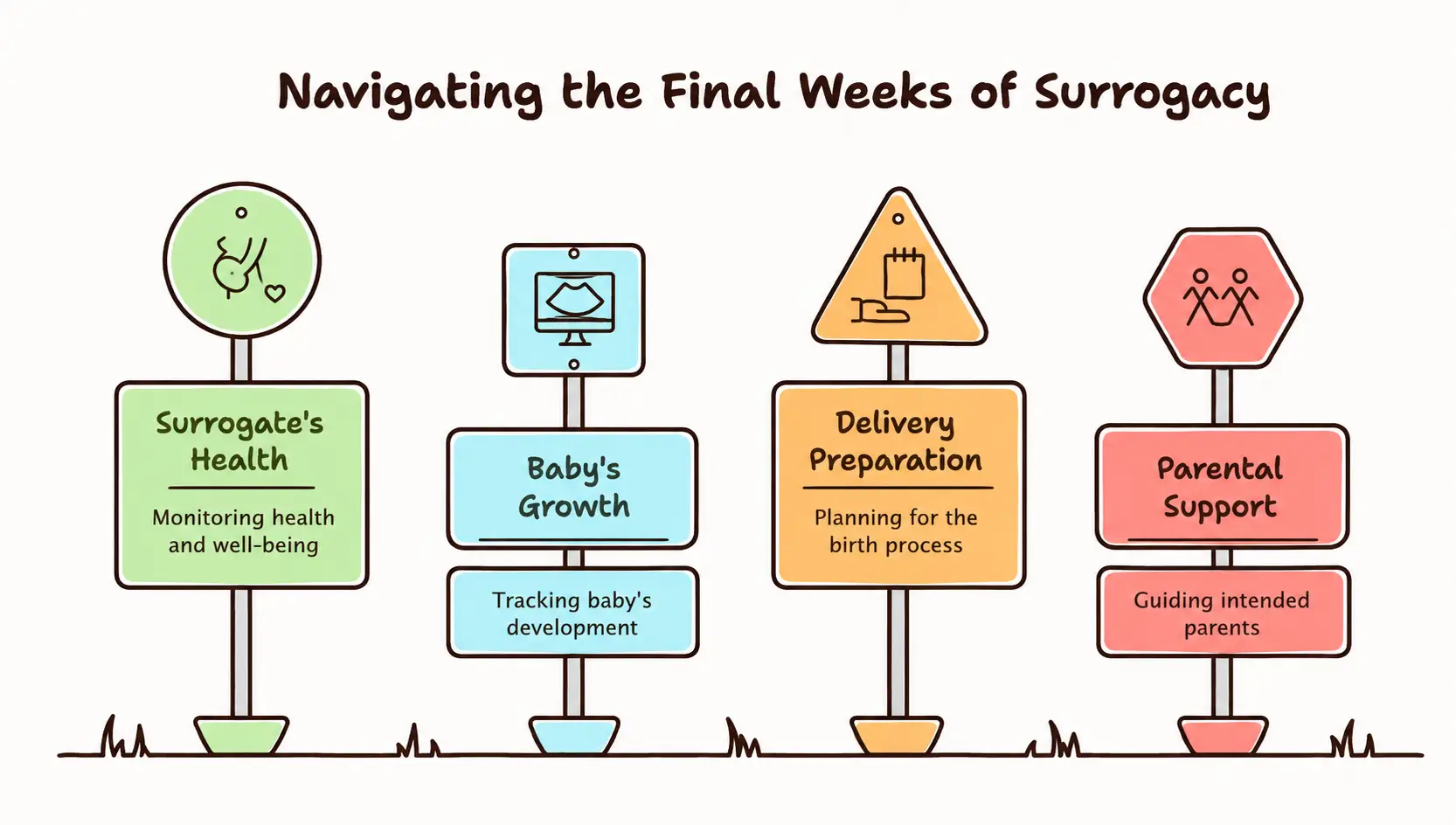
As delivery gets closer, preparation becomes an important part of the surrogacy journey. Before the appointment, surrogates may want to prepare questions about physical changes, delivery expectations, and any symptoms they have noticed.
Intended parents may also have questions about:
- Birth planning
- Hospital arrangements
- Communication during labor
- Delivery preferences
- What to expect after birth
Open communication between the surrogate, intended parents and medical team helps create a smoother experience for everyone involved.
What Happens After the 34-Week Appointment?
At this point, the prenatal visits are usually increasingly frequent as the birth date nears. Doctors keep track of the baby’s development and the surrogate’s health as they are getting ready for labor and delivery.
Many people also look back at earlier milestones and wonder about 32 week appointment what to expect compared with later visits. Around 32 weeks, monitoring typically focuses on growth and development. At the same time, appointments closer to delivery often place more attention on birth preparation and final health checks.
The final weeks of pregnancy can bring many emotions. Staying informed and maintaining regular communication with the healthcare team can help surrogates and intended parents feel more prepared.
FAQs About 34 Weeks Pregnancy
Q. When do you start every 2 week appointments in pregnancy?
A. Many doctors start scheduling sessions every 2 weeks in the middle of the third trimester. Typically, appointments are scheduled around 28 weeks. However, the exact date may vary based on the pregnant woman and the advice of your doctor.
Q. When do appointments become weekly in pregnancy?
A. The weekly appointments typically start at around 36 weeks of pregnancy. Certain women may need regular appointments earlier in the week if their medical professional requires more thorough surveillance due to particular health concerns.
Q. When do appointments become biweekly in pregnancy?
A. “Biweekly” appointments usually mean visits every two weeks. In many pregnancies, this schedule begins around the late second trimester or early third trimester, but timing depends on individual care plans.
Q. Is 34 weeks pregnant 8 or 9 months?
A. At 34 weeks, pregnancy is generally considered to be in the eighth month. Pregnancy months do not divide perfectly into four-week periods, which is why week counting is usually more accurate.
Q. Can a baby born at 34 weeks be normal?
A. A baby born at 34 weeks is considered premature and may need extra medical support, such as help with breathing, feeding, or temperature control. Many babies born at this stage develop well with appropriate newborn care.
Q. Is a 2 kg baby normal at 34 weeks?
A. A newborn weighing 2 kilograms at 34 weeks could be within a normal range, but weight estimates differ. Doctors take into consideration changes in growth patterns, ultrasound measurements, and overall health, rather than just weight.
Q. What is special about week 34?
A. Week 34 is a significant milestone because the baby continues developing important systems, especially the brain and lungs. It is also a time when many families begin focusing more on delivery preparation.
Q. Is it safe to have a C-section at 34 weeks?
A. A C-section at 34 weeks may be performed if there is a medical reason requiring early delivery. Doctors carefully consider the health of both the baby and the pregnant person before recommending delivery.
Q. What is the earliest a baby can be born safely?
A. No one week can guarantee the exact outcome for each baby. A baby born earlier might encounter more challenges, but advancements in neonatal care have helped the majority of premature babies.
Q. Is it safe to deliver at 36 weeks and 3 days?
A. A baby born at 36 weeks and 3 days is considered late preterm. Many babies do well, but some may need monitoring for issues such as feeding, breathing, or maintaining body temperature. Doctors evaluate each situation individually.
Final Words
The 34-week appointment for prenatal care is a crucial element of the surrogacy process. It assists the medical team in keeping track of the baby’s growth and supporting the surrogate’s health. Also, it prepares the family for the birth that is coming up
For surrogates and intended parents, staying informed and maintaining open communication with healthcare providers can make the final weeks of pregnancy feel more manageable and positive. Always follow the guidance of your medical team, as every pregnancy and birth journey is unique.

Dr. Veera Saghar
As an Egg Donor Coordinator, she plays a critical role in our company. Her background as a medical graduate from ISRA UNIVERSITY in Pakistan provides us with a solid foundation in the medical sciences. She has seven years of clinical experience practicing in the USA. This has given her firsthand experience when collaborating with patients and their families.
She is responsible for managing the process of egg donation from start to finish. We identify and screen potential egg donors.
- Dr. Veera Saghar

- Dr. Veera Saghar
- Dr. Veera Saghar
- Dr. Veera Saghar