
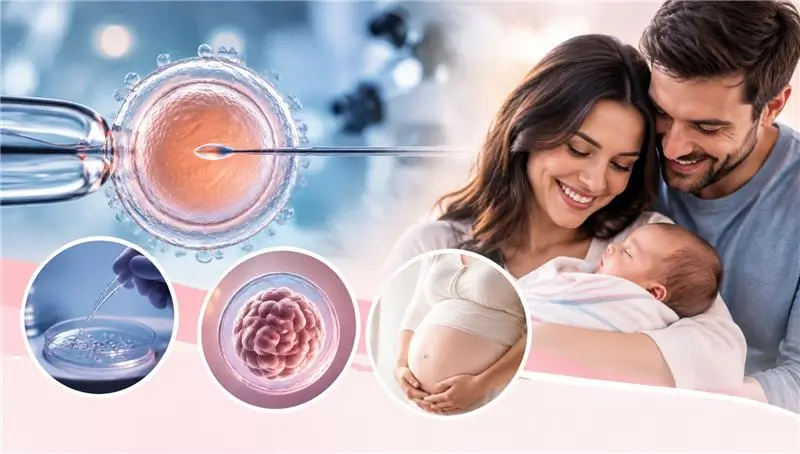
Fast Fact
- What is ART? ART can help individuals and couples have children through IVF using donor eggs or embryos, including when a gestational carrier is needed.
- Common treatments: IVF, ICSI, frozen embryo transfer, and donor egg IVF.
- How it works: Eggs are collected, fertilized in a laboratory, and embryos are transferred to the uterus.
- Who may benefit: People experiencing infertility, certain medical conditions, or needing donor assistance.
- Success rates: Results depend on age, egg and embryo quality, and fertility history.
- Possible risks: Multiple pregnancy, ovarian hyperstimulation, and treatment-related complications.
- Surrogacy: ART can help intended parents have a baby through a gestational carrier.
- Bottom Line: ART offers several ways to achieve pregnancy when natural conception is difficult or impossible. The right treatment depends on individual medical needs.
What Is Assisted Reproductive Technology?
Assisted reproductive technology includes medical procedures where eggs or embryos are handled outside the body to help achieve pregnancy.
Unlike natural conception, fertilization in IVF takes place in a laboratory. A fertility specialist then transfers an embryo into the uterus.
ART differs from other fertility treatments. For example, intrauterine insemination (IUI) places sperm directly into the uterus but doesn’t involve removing eggs, so it isn’t classified as ART under the usual US definition.
What Are the Different Types of Assisted Reproductive Technology?
Several types of assisted reproductive technology are available. Doctors recommend treatment based on age, fertility history, and medical conditions.
| Treatment | How it works |
| In vitro fertilization (IVF) | Eggs are collected and fertilized in a laboratory before an embryo is transferred. |
| ICSI | A single sperm is injected into an egg during IVF. |
| Frozen embryo transfer | A previously frozen embryo is thawed and transferred into the uterus. |
| Donor egg IVF | Eggs from a donor are fertilized to create embryos. |
| Donor embryo treatment | An embryo created using donated reproductive material is transferred to the recipient. |
These assisted reproductive technology examples may be used individually or together, depending on the treatment plan.
How Does the Assisted Reproductive Technology Process Work?
The assisted reproductive technology process usually involves several stages.
- Ovarian stimulation: Fertility medications help the ovaries develop multiple mature eggs.
- Egg retrieval: A doctor collects eggs using a minimally invasive procedure.
- Fertilization: Eggs are combined with sperm in a laboratory, sometimes using ICSI.
- Embryo development: Fertilized eggs are monitored as they develop.
- Embryo transfer: A selected embryo is placed into the uterus.
- Pregnancy testing: Blood tests check whether pregnancy has occurred.
Not every patient follows these exact steps. Frozen embryo transfers and donor embryo treatments may follow different protocols.
Who Can Benefit From Assisted Reproductive Technology?
ART may help people who have difficulty conceiving naturally.
Common reasons include:
- Blocked or damaged fallopian tubes.
- Ovulation disorders or other fertility conditions.
- Male-factor infertility.
- Age-related fertility difficulties.
- Certain genetic conditions.
- Family-building needs involving donor eggs, sperm, or embryos.
ART also plays an important role in surrogacy for same sex couples and some single-parent family-building arrangements.
A fertility specialist can assess which treatment is medically appropriate.
What Are the Benefits and Risks of ART?
Benefits of Assisted Reproductive Technology
The main benefits of assisted reproductive technology include:
- Helping people conceive when other treatments haven’t worked.
- Allowing pregnancy without functioning fallopian tubes through IVF.
- Providing options using donated eggs or embryos.
- Supporting fertility preservation through egg or embryo freezing.
- Helping intended parents pursue pregnancy through a gestational carrier.
Possible Risks of ART
ART also has medical and emotional challenges.
Possible risks include ovarian hyperstimulation syndrome (OHSS), complications from egg retrieval, ectopic pregnancy, and multiple pregnancy when more than one embryo is transferred.
Treatment may also involve considerable expense, repeated appointments, and unsuccessful cycles.
Discuss these risks with your fertility specialist before starting treatment.
What Affects Assisted Reproductive Technology Success Rates?
Assisted reproductive technology success rates vary considerably between patients.
Important factors include:
- Age when the eggs were retrieved.
- Egg and embryo quality.
- Underlying fertility conditions.
- Previous pregnancy and treatment history.
- Whether fresh or frozen embryos are used.
Success rates should also be interpreted carefully. Pregnancy rates and live birth rates measure different outcomes.
Ask your clinic about live birth rates for patients with similar medical circumstances rather than relying on a single advertised percentage.
How Is ART Used in Gestational Surrogacy?
Gestational surrogacy uses IVF to create an embryo that is transferred into the uterus of a gestational carrier.
The carrier becomes pregnant and delivers the baby for the intended parents. She has no genetic connection to the child through the embryo she carries.
This option may help people who cannot safely carry a pregnancy or do not have a uterus.
The arrangement involves fertility treatment, medical screening, legal agreements, and coordination between the intended parents and carrier.
FAQs about ART
Q. Is IVF the same as ART?
A. IVF is one type of ART, but ART includes other procedures involving eggs or embryos, such as ICSI and frozen embryo transfer.
Q. Is IUI considered assisted reproductive technology?
A. No. IUI involves placing sperm into the uterus without removing or handling eggs outside the body, so it isn’t classified as ART under the standard US definition.
Q. Can ART help after tubal ligation?
A. Yes. IVF can help some women conceive after tubal ligation because fertilization takes place outside the body, bypassing the fallopian tubes.
Q. Does ART guarantee pregnancy?
A. No. ART improves pregnancy opportunities for some patients, but treatment doesn’t always succeed. Outcomes depend on age, medical history, and other fertility factors.
Explore Your Family-Building Options With Surrogacy4All
If you’re considering IVF, egg donation, or IVF and surrogacy, understanding your options is a good place to start.
Surrogacy4All can help you explore family-building arrangements and learn more about the surrogacy process.
Contact Surrogacy4All to discuss your family-building options and next steps.

Dr. Veera Saghar
As an Egg Donor Coordinator, she plays a critical role in our company. Her background as a medical graduate from ISRA UNIVERSITY in Pakistan provides us with a solid foundation in the medical sciences. She has seven years of clinical experience practicing in the USA. This has given her firsthand experience when collaborating with patients and their families.
She is responsible for managing the process of egg donation from start to finish. We identify and screen potential egg donors.
- Dr. Veera Saghar

- Dr. Veera Saghar
- Dr. Veera Saghar
- Dr. Veera Saghar