Fast Facts
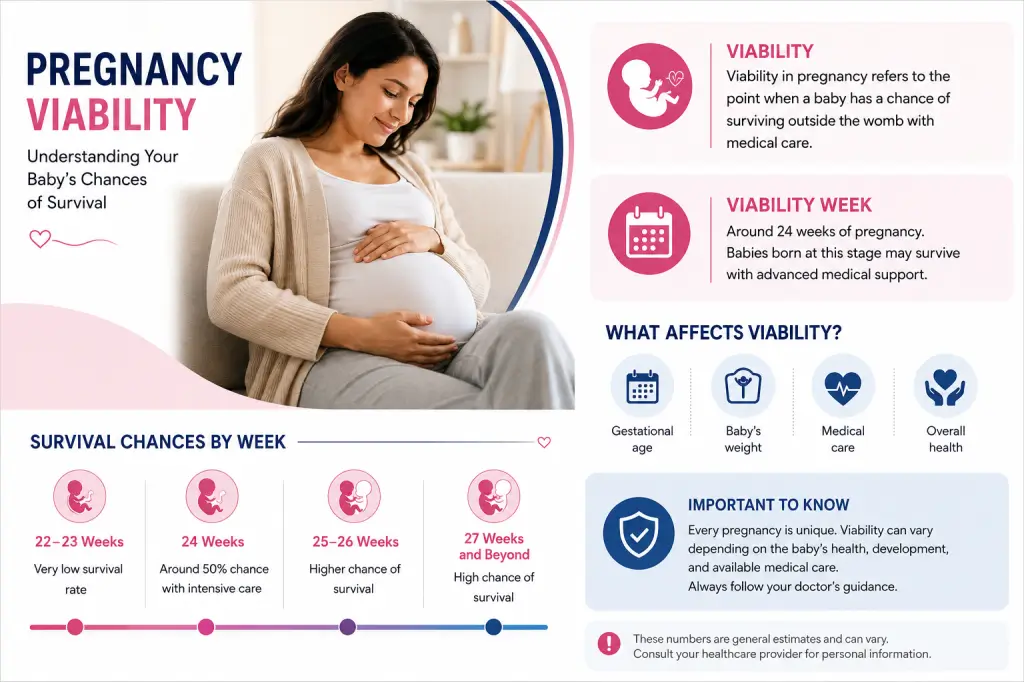
- Viability week means the stage of pregnancy when a fetus may have a chance of surviving outside the womb with medical support.
- Most experts consider 24 weeks of pregnancy an important milestone, although some babies born earlier may survive with advanced NICU care.
- Fetus viability by week depends on factors like development, birth weight, health conditions and available medical treatment.
- The edge of viability is usually around 22 to 24 weeks, when doctors carefully evaluate risks and possible outcomes.
- Understanding by week viability pregnancy helps expecting parents make informed decisions about pregnancy care and medical planning.
What Is Viability Week In Pregnancy?
Pregnancy has many important milestones, and viability week is one of the most discussed. It refers to the time when a fetus may have a chance of surviving outside the uterus with medical care. Every pregnancy is different, so viability depends on more than just the number of weeks.
Doctors look at fetal development, health, weight and available hospital support before making decisions. Understanding what is viability week in pregnancy can help parents better understand pregnancy stages and possible outcomes.
What Is Considered Viability Week In Pregnancy?
Viability week is the point when a fetus has developed enough to survive after a premature birth. In many cases, doctors consider around 24 weeks of pregnancy as an important viability milestone.
However, there is no exact week when every pregnancy becomes viable. Some babies born around 22 or 23 weeks may survive with intensive medical care, while others may face serious health challenges.
The week of viability is different for every pregnancy because each baby develops at a different rate.
When Is Viability Week During Pregnancy?
Many medical professionals consider 24 weeks viability as the beginning of the viability range. At this stage, the lungs, brain, and other organs have developed further compared with earlier weeks.
The chances of survival generally improve as pregnancy continues.
Pregnancy viability by week:
- Before 22 weeks: Survival outside the womb is extremely unlikely because major organs are still developing.
- 22–23 weeks: This is known as the edge of viability. Some babies may survive with advanced medical care.
- 24 weeks: A major milestone where survival chances begin to improve.
- 25–26 weeks: Babies usually have better outcomes compared with earlier premature births.
- 28 weeks and beyond: Survival rates are much higher, although premature babies may still need medical support.
Why Does Fetus Viability By Week Matter?
Understanding fetus viability by week helps doctors and families prepare for possible situations, especially when early delivery becomes a concern.
Doctors consider several factors, including:
- Baby’s development
- Birth weight
- Lung maturity
- Overall pregnancy health
- Medical facilities available
A baby’s survival is not guaranteed only because a certain pregnancy week has been reached. Medical support plays an important role.
What Happens If A Baby Is Born Before Viability?
If a baby is born before the viability stage, doctors carefully evaluate the baby’s condition and available treatment options.
Premature babies may require:
- Breathing support
- Specialized feeding support
- Temperature control
- Infection prevention
- Intensive NICU monitoring
The earlier a baby is born, the more medical support may be needed.
How Does Viability Week Relate To Surrogacy?
For intended parents working with a surrogate, understanding pregnancy milestones is an important part of the journey. The term surrogate meaning refers to a person who carries a pregnancy for intended parents, usually through assisted reproductive methods.
A professional surrogacy agency helps intended parents understand medical stages, pregnancy monitoring, and possible risks throughout the process.
Surrogacy4All focuses on providing guidance and support so families can better understand important pregnancy milestones, including viability and fetal development.
Why Is 24 Weeks Considered An Important Pregnancy Milestone?
The reason pregnancy 24 weeks viability is often discussed is that babies at this stage have more developed organs compared with earlier premature births.
At around 24 weeks:
- The lungs continue developing.
- The brain becomes more mature.
- Medical technology can provide stronger support.
- Survival chances improve compared with earlier weeks.
Still, every pregnancy requires individual medical evaluation.
How Can Families Prepare For Viability Concerns?
Families can prepare by:
- Attending regular prenatal appointments
- Following medical advice
- Understanding possible pregnancy risks
- Learning about NICU care options
- Maintaining open communication with healthcare providers
Knowledge about viability by week pregnancy helps families feel more prepared during unexpected situations.
Get Expert Guidance About Your Surrogacy Journey
Understanding pregnancy milestones like viability week can make the surrogacy process easier to navigate. If you need professional guidance about surrogacy options, contact Surrogacy4All today.
Call: (212) 661-7673
Email: info@surrogacy4all.com
Frequently Asked Questions –
Q. What is viability week in pregnancy?
A. Viability week is the stage when a fetus may have a chance of surviving outside the womb with medical support. Many experts consider around 24 weeks an important milestone.
Q. When is viability week usually reached?
A. The commonly discussed viability point is around 24 weeks of pregnancy. However, survival is possible for some babies born earlier with advanced medical care.
Q. Can a baby survive at 22 weeks?
A. Some babies born at 22 weeks may survive with intensive medical treatment, but the risks of serious health complications are higher.
Q. Is 24 weeks considered a viable pregnancy?
A. Yes, 24 weeks is often considered an important viability milestone because survival chances generally improve with specialized neonatal care.
Q. How can a surrogacy agency help during pregnancy?
A. A surrogacy agency provides guidance, coordination, and support for intended parents and surrogates throughout the pregnancy journey.

Dr. Veera Saghar
As an Egg Donor Coordinator, she plays a critical role in our company. Her background as a medical graduate from ISRA UNIVERSITY in Pakistan provides us with a solid foundation in the medical sciences. She has seven years of clinical experience practicing in the USA. This has given her firsthand experience when collaborating with patients and their families.
She is responsible for managing the process of egg donation from start to finish. We identify and screen potential egg donors.
- Dr. Veera Saghar

- Dr. Veera Saghar
- Dr. Veera Saghar
- Dr. Veera Saghar