Fast Facts:
- A hysterectomy is a surgery that removes the uterus (womb) to treat different health conditions.
- Depending on the type of hysterectomy, doctors may remove the uterus alone or also remove the cervix, fallopian tubes, or ovaries.
- After a hysterectomy, periods stop, and pregnancy cannot happen naturally because the uterus is no longer present.
- Recovery time depends on the type of surgery, but many people return to normal activities within several weeks.
- Nearby organs naturally adjust to the space left after removing the uterus.
- Fertility options like surrogacy may still be possible in some cases if the ovaries produce healthy eggs.
Introduction
A hysterectomy is a common surgery that removes the uterus from the body. Doctors may recommend it for problems like fibroids, heavy bleeding, pain or certain cancers. Many people have questions about what happens during the surgery, how the body changes afterward, and whether pregnancy is possible. Understanding the process can help you feel more prepared. This guide explains what a hysterectomy is, what it removes, recovery, side effects and life after surgery in simple terms.
What Is a Hysterectomy Uterus Surgery?
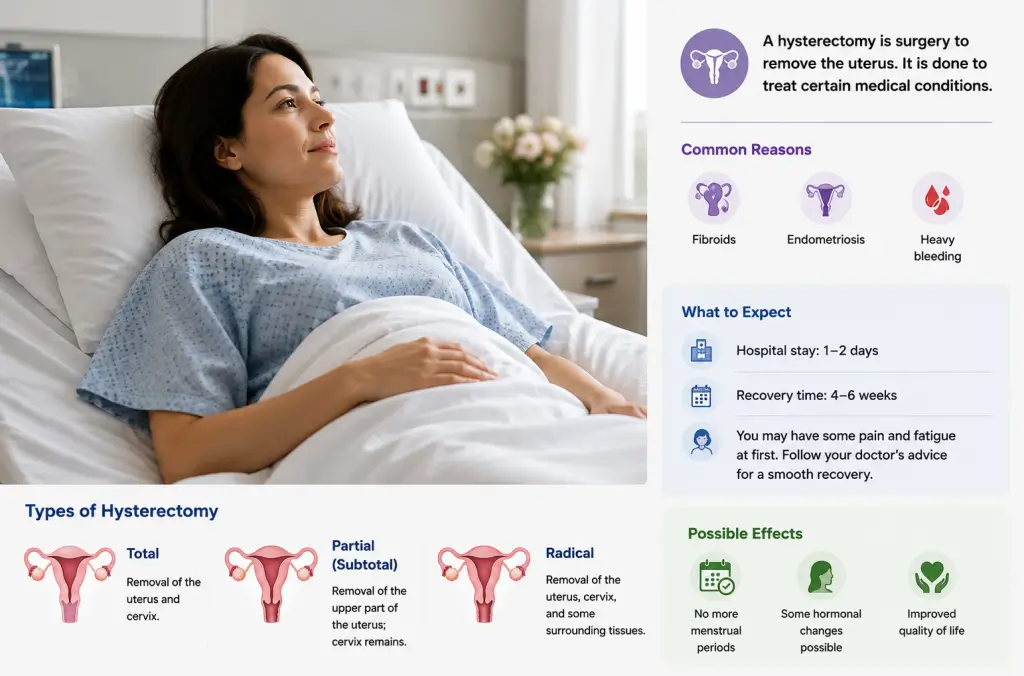
A hysterectomy is a surgical procedure in which a doctor removes the uterus, also called the womb. The uterus is the organ where a baby grows during pregnancy.
Doctors may suggest a hysterectomy when other treatments do not improve certain health problems.
Common reasons for having a hysterectomy include:
- Uterine fibroids
- Severe menstrual bleeding
- Endometriosis
- Chronic pelvic pain
- Uterine or cervical cancer
- Uterine prolapse
After a hysterectomy, a person cannot carry a pregnancy because the uterus is no longer available for embryo development.
Hysterectomy Removes What? Understanding the Procedure
It depends on what type of hysterectomy was performed. Doctors may also remove other reproductive organs if necessary.
What Is a Complete Hysterectomy?
A complete hysterectomy removes the uterus and cervix. This type of hysterectomy is commonly performed when doctors need to treat conditions affecting these organs. The main types include:
Partial hysterectomy:
Only the uterus is removed, while the cervix remains.
Complete hysterectomy:
The uterus and cervix are both removed.
Radical hysterectomy:
The uterus, cervix, nearby tissues and sometimes parts of the vagina are removed, usually for cancer treatment.
In some cases, doctors may also remove the ovaries and fallopian tubes.
How Do You Do a Hysterectomy Surgery?
A hysterectomy surgery is performed under anesthesia, meaning the patient does not feel pain during the procedure.
Doctors can perform the surgery in different ways:
Abdominal Hysterectomy
The doctor removes the uterus through an opening in the lower abdomen.
Vaginal Hysterectomy
The uterus is removed through the vagina without making a large abdominal cut.
Laparoscopic or Robotic Hysterectomy
Small cuts are made, and special instruments are used to complete the surgery.
The best method depends on the patient’s health, reason for surgery, and doctor’s recommendation.
What Happens After a Hysterectomy?
After surgery, patients are monitored while they wake up from anesthesia. It is normal to feel tired, confused, or uncomfortable at first.
Some common early experiences include:
- Mild to moderate pain
- Tiredness
- Temporary catheter use
- Light bleeding or discharge
- Feeling emotional after surgery
Doctors provide medication and instructions to support safe healing.
After a Hysterectomy, What Fills the Space?
Many people wonder, “After a hysterectomy what fills the space?”
The body naturally adjusts after the uterus is removed. Nearby organs, including the intestines and bladder, slightly shift to fill the available space.
The body does not require another organ to replace the uterus. The pelvic tissues continue supporting the surrounding organs.
What Are the Side Effects of a Hysterectomy?
Like any surgery, a hysterectomy can have possible side effects. These may vary from person to person.
Common hysterectomy side effects include:
- Temporary pain and swelling
- Fatigue during recovery
- Changes in hormone levels if ovaries are removed
- Emotional changes
- Changes in sexual experience
If the ovaries are removed, menopause symptoms may begin because the body produces fewer hormones.
What Is Hysterectomy Recovery Like?
Hysterectomy recovery depends on the type of surgery. Most people need several weeks to heal fully.
During recovery, doctors may recommend:
- Avoiding heavy lifting
- Getting enough rest
- Walking gently to improve circulation
- Following wound care instructions
- Attending follow-up appointments
Many patients feel better after recovery, especially if surgery removed long-term pain or heavy bleeding problems.
Where Does Sperm Go After Hysterectomy?
A common question is, “Where does sperm go after hysterectomy?”
After a hysterectomy, sperm does not travel to the uterus because the uterus has been removed. During sexual activity, sperm may enter the vagina but cannot reach the uterus.
The body naturally removes sperm through normal vaginal fluids.
Can You Have Children After a Hysterectomy?
After a hysterectomy, carrying a pregnancy is not possible because there is no uterus for an embryo to grow.
However, if the ovaries remain healthy, eggs may still be produced. Some people explore options like IVF and surrogacy, where another person carries the pregnancy.
Understanding surrogacy meaning is important: surrogacy is an arrangement where a woman carries a baby for intended parents.
For those exploring fertility options after hysterectomy, Surrogacy4All provides guidance and support through the surrogacy journey.
How Can Surrogacy4All Help After a Hysterectomy?
A hysterectomy can change your fertility options, but it does not always mean biological parenthood is impossible.
Choosing the best surrogacy agency can help intended parents understand fertility options after a hysterectomy. A professional agency guides IVF, surrogate matching, and legal processes.
Surrogacy4All helps intended parents understand available fertility paths, including egg retrieval, IVF coordination, and finding suitable surrogacy solutions.
If you want to learn more about surrogacy options, contact:
- Phone: (212) 661-7673
- Email: info@surrogacy4all.com
Their team can help explain the process and answer questions about your specific situation.
Frequently Asked Questions –
Q. Is a hysterectomy a major surgery?
A. Yes, a hysterectomy is considered major surgery. Recovery time depends on the surgical method and individual health.
Q. Do periods stop after a hysterectomy?
A. Yes. Since the uterus is removed, menstrual bleeding stops permanently.
Q. Can you get pregnant after a hysterectomy?
A. No, pregnancy cannot happen naturally after a hysterectomy because there is no uterus. However, fertility options like surrogacy may be available in some situations.
Q. Does a hysterectomy remove the ovaries?
A. Not always. Some hysterectomies remove only the uterus, while others may include removal of the ovaries depending on medical needs.
Q. How long does hysterectomy recovery take?
A. Recovery can take a few weeks to several months depending on the type of surgery and the person’s overall health.

Dr. Veera Saghar
As an Egg Donor Coordinator, she plays a critical role in our company. Her background as a medical graduate from ISRA UNIVERSITY in Pakistan provides us with a solid foundation in the medical sciences. She has seven years of clinical experience practicing in the USA. This has given her firsthand experience when collaborating with patients and their families.
She is responsible for managing the process of egg donation from start to finish. We identify and screen potential egg donors.
- Dr. Veera Saghar

- Dr. Veera Saghar
- Dr. Veera Saghar
- Dr. Veera Saghar